
PAC And The Police: Accountability Must Correct Errors Without Demeaning Professionals
+256 702 23 93 37: An inaccurate asset register is a serious accountability problem — but it is not, by itself, proof that police accountants are ‘street boys’

UgandaToday: PAC And The Police: Accountability Must Correct Errors Without Demeaning Professionals

By Barbara Nabuzaale | A Concerned Citizen’s Perspective
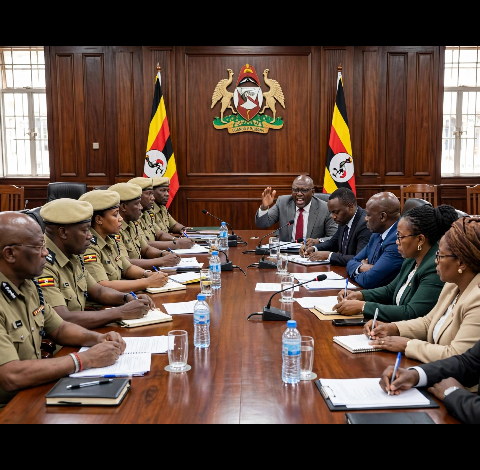
A recent appearance by the Uganda Police Force before Parliament’s Public Accounts Committee (PAC) has raised important questions about public accountability, the management of government assets and the preparedness of public institutions when answering parliamentary scrutiny.
The questions raised by the committee deserve serious attention. However, as a concerned citizen, I believe there is also a need to distinguish between an accounting failure, poor presentation of records and a conclusion about the competence or integrity of the individuals responsible for maintaining those records.
The concern is not to defend an error. It is to defend fairness.


When Figures Fail To Tell The Full Story
One of the most striking issues raised during the engagement was the apparent discrepancy between physical assets associated with the Uganda Police Force and figures appearing in its books.
Questions were reportedly raised about police vehicles, motorcycles and other equipment, including claims that more than 20 Land Cruisers were visible at the police premises while the accounts appeared to reflect transport equipment worth far less than the apparent value of the vehicles.
There were also questions concerning hundreds of motorcycles, vehicles and helicopters and how these assets were reflected in the Police Force’s records.
These are not minor issues.
If public assets worth billions of shillings are not accurately reflected in an institution’s asset register, Parliament is entirely justified in demanding answers.
Indeed, the Auditor General’s 2025 audit of the Uganda Police Force identified weaknesses in asset records. The report found inaccurate and illogical entries in purchase and service dates affecting assets valued at Shs90.40 billion, and recommended stronger controls and regular review of the asset register.
That finding reinforces the need for corrective action.
But an inaccurate asset register does not, by itself, prove that police accountants are unqualified or that they were simply picked from the streets.
Accountability Should Not Become Name-Calling
The question reportedly posed to police officials — whether the Force gets “boys from the streets” to handle its accounts — may have been intended to underline the seriousness of the accounting discrepancies.
But words matter.
Behind every government accounting desk is a person who has been entrusted with a professional responsibility. If an officer has failed to maintain accurate records, the appropriate response should be to establish what went wrong, who was responsible, why the controls failed and how the problem will be corrected.
That is accountability.
Calling professionals “street boys”, however, risks shifting the conversation from the problem in the books to the dignity of the people expected to manage those books.
Human beings make mistakes. Institutions make mistakes. Even laws made by Parliament can subsequently require amendment or correction.
The appropriate question, therefore, should not simply be “Who made this mistake?” but also:
How did the system allow the mistake to remain undetected?
The Police Need To Explain The Numbers — Clearly
The Uganda Police Force should not shy away from the questions raised by PAC.
If there are hundreds of motorcycles and vehicles in its possession, the Force should be able to reconcile every asset with its procurement records, registration documents, location, condition, depreciation and current book value.
If an asset register is outdated, it should be updated.
If assets have been transferred, disposed of, damaged or written off, that information should be properly documented.
If errors were caused by a transition to a new accounting or asset-management system, that should be clearly explained.
And if there was negligence or deliberate manipulation of records, the responsible individuals should face the appropriate administrative or legal consequences.
The Auditor General’s findings make clear that asset management is not merely a clerical matter. Under the public financial management framework, accounting officers are required to safeguard public assets through accurate and reliable records, while government votes are expected to maintain complete, current and verifiable asset registers.
A Physical Verification Exercise Could Provide Answers
Rather than allowing the matter to become a battle of accusations, the Police administration should undertake an urgent physical verification and reconciliation exercise.
A comprehensive verification could establish:
- What assets the Police Force physically possesses;
- Where each asset is located;
- Its purchase price and date;
- Its current book value;
- Whether it is operational;
- Whether it has been transferred or disposed of;
- Whether the asset appears in the official register; and
- Whether the corresponding accounting entries are correct.
Such an exercise would turn an embarrassing accounting discrepancy into an opportunity to strengthen public financial management.
The proposed 14-day verification period, therefore, should be understood as a practical citizen’s suggestion rather than an official PAC directive.
The principle is simple: do not merely look at where the institution fell; look at what caused the fall and fix it.
The Bigger Question: Is Police Administration Prepared For Parliamentary Scrutiny?
The episode also exposes another weakness — the ability of public institutions to communicate effectively when appearing before Parliament.
The police may have highly qualified professionals, but if officials arrive before a parliamentary committee without reconciled figures, supporting schedules or a clear explanation of discrepancies, the institution risks appearing incompetent even when the underlying problem may be administrative rather than professional.
This is where the Police administration needs to improve.
Before appearing before PAC or any parliamentary committee, institutions handling large public resources should conduct internal reviews, reconcile figures and ensure that the officers appearing before legislators understand the records thoroughly.
Good accounting is not enough; good presentation and institutional preparedness matter too.
Should Police Have A Voice In Parliament?
Barbara Nabuzaale’s argument goes further.
She asks why the Uganda Police Force does not have its own representatives in Parliament while the Uganda People’s Defence Forces (UPDF) does.
There is an important constitutional distinction here.
Article 78 of the Constitution provides for representatives of the army, youth, workers, persons with disabilities and other groups as Parliament may determine. Under the Parliamentary Elections Act, the UPDF currently has 10 representatives in Parliament.
The current 12th Parliament likewise has 10 UPDF representatives.
The Constitution separately establishes the Uganda Police Force and describes it as nationalistic, patriotic, professional, disciplined, competent and productive. It assigns the Force responsibilities including protecting life and property, preserving law and order, preventing and detecting crime, and cooperating with civilian authorities and other security organs.
There is currently no special-interest parliamentary category specifically reserved for the Police Force.
That does not necessarily mean the issue should be dismissed.
If there is a national conversation about whether the Police should have institutional representation in Parliament, it should be handled through the constitutional and legislative processes rather than simply assumed to be an existing entitlement.
Representation Could Build Institutional Understanding — But Must Be Carefully Designed
There is a legitimate argument that greater institutional interaction between law-enforcement professionals and lawmakers could improve mutual understanding.
Police officers implement laws passed by Parliament. Parliament, meanwhile, scrutinises the institutions responsible for implementing those laws.
The people who make laws and the people who implement them therefore need effective channels of communication.
But parliamentary representation for police officers would raise important questions of its own.
Would serving police officers become legislators?
Would they remain operational members of the Force?
How would political neutrality and parliamentary independence be protected?
Would such representatives speak for the institution or for the wider public?
These questions would have to be carefully addressed before any such proposal could become policy.
Parliament And Police Need Each Other
The answer should not be to weaken Parliament’s oversight role.
PAC must continue asking difficult questions. Public resources belong to Ugandans, and Parliament has a constitutional responsibility to scrutinise how those resources are used.
At the same time, parliamentary oversight should seek to correct systems rather than humiliate institutions.
The Police Force must accept scrutiny.
Parliament must demand accurate accounts.
Accountants must ensure that public assets are properly recorded.
And the administration must provide its officers with the systems, training and resources necessary to perform their duties effectively.
The Institute of Certified Public Accountants of Uganda continues to engage accountants, auditors and finance professionals — including Uganda Police academicians and students — in professional training on auditing and financial management.
That broader professional environment demonstrates why the debate should be about systems, competence, controls and accountability, rather than reducing an entire professional group to a derogatory label.
The Police Deserve Better — And So Do Ugandan Taxpayers
This is not an argument for shielding the Police Force from accountability.
On the contrary, Ugandans deserve to know exactly how many vehicles, motorcycles, aircraft and other assets their Police Force owns, where they are, what they cost and how they are reflected in the national accounts.
That information should be readily available and internally reconciled.
At the same time, police officers who perform professional duties under difficult circumstances deserve to be treated with dignity.
A mistake in an asset register should lead to an investigation and correction — not automatically to an assumption that the person responsible is unqualified.
Conclusion: Correct The Books, Build The Institution
The PAC episode should ultimately become a lesson for both sides.
For the Police: public money demands accurate records, proper asset management and officials who are fully prepared to account for every shilling and every government asset.
For Parliament: robust oversight is essential, but accountability is strongest when it exposes weaknesses, identifies responsibility and produces solutions rather than humiliation.
And for the public, the debate should be bigger than one uncomfortable parliamentary exchange.
We should ask why such discrepancies were allowed to persist, why internal controls did not detect them earlier and what reforms are required to prevent them from recurring.
As the saying goes, “The child who is not embraced by the village will burn it down to feel its warmth.”
Let us embrace our institutions while demanding that they perform.
Let us correct the asset register.
Let us strengthen financial controls.
Let us build the capacity of police professionals.
And, if the question of police representation in Parliament is to be pursued, let it be subjected to a serious constitutional and national debate.
Uganda does not need weaker accountability. It needs better accountability — accountability that corrects mistakes without destroying morale, and institutions that are strong enough to admit their weaknesses and fix them.
#UgandaToday #PAC #UgandaPoliceForce #PublicAccountability #ParliamentOfUganda #PoliceReforms #AssetManagement #PublicFunds #GoodGovernance #Accountability #Uganda #FinancialManagement #PoliceProfessionalism #PhoenixNewsFeeds #OperaNewsFeeds