Otafiire, Muhoozi And Museveni: The Constitutional Questions Behind A Generational Clash In Uganda’s Military And Politics
+256 702 23 93 37: What Otafiire Told Parliament On September 30, 2026, Otafiire addressed Parliament and spoke about political tolerance, disagreement and the dangers of resorting to violence to settle disputes. His remarks came amid public concerns about the treatment of opposition politicians and activists, as well as broader debates about the conduct of security agencies. In remarks reported by local media, Otafiire stated: “The hallmark of civilization is how people resolve contradiction without violence.” He continued: “When you see a general who prefers violence as the best means of solving problems, then there is a problem.” Otafiire also offered a reflection on military leadership: “The greatest generals I know of are those who resolve problems without shooting a bullet.”

UgandaToday: Otafiire, Muhoozi And Museveni: The Constitutional Questions Behind A Generational Clash In Uganda’s Military And Politics
Uganda Today | Political Analysis | October 10, 2026
The demand for an apology by Gen Muhoozi Kainerugaba to veteran bush-war commander Gen (Rtd) Kahinda Otafiire exposed deeper questions about military discipline, political succession, constitutional accountability and the principles upon which Uganda’s National Resistance Movement was founded.
An Old Photograph, A New Political Storm
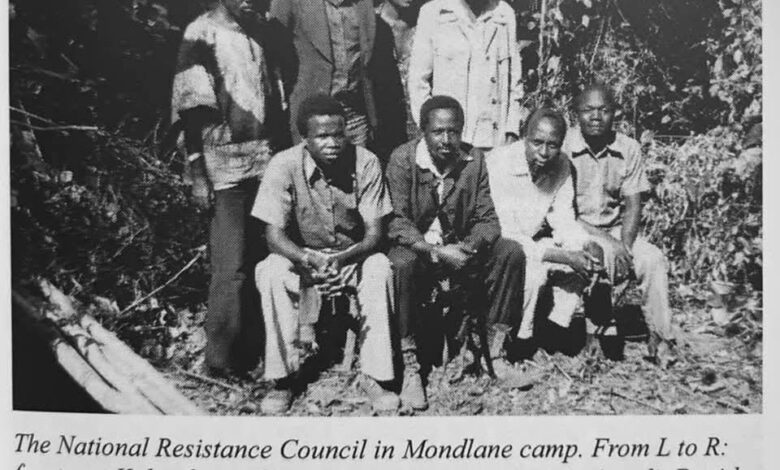
A historical photograph of the National Resistance Council at Mondlane Camp has resurfaced at a moment when Uganda’s political establishment is grappling with a public disagreement between two figures associated with the country’s liberation struggle and subsequent military-political order.
The image offers a historical backdrop to the present debate: the evolution of Uganda’s resistance movement into a governing political organisation, and the question of whether the principles that brought its founding generation together are being consistently applied today.
The latest controversy involves Gen Muhoozi Kainerugaba, Uganda’s Chief of Defence Forces (CDF), and Gen (Rtd) Kahinda Otafiire, the Minister of Water and Environment and a veteran of the National Resistance Army’s bush war.
Their disagreement is not merely a personal quarrel. It raises important questions about how military officers should conduct themselves, the limits of political expression by serving members of the armed forces, and whether public disagreements within the ruling establishment can be resolved through dialogue rather than threats.
What Otafiire Told Parliament
On September 30, 2026, Otafiire addressed Parliament and spoke about political tolerance, disagreement and the dangers of resorting to violence to settle disputes.
His remarks came amid public concerns about the treatment of opposition politicians and activists, as well as broader debates about the conduct of security agencies.
In remarks reported by local media, Otafiire stated:
“The hallmark of civilization is how people resolve contradiction without violence.”
He continued:
“When you see a general who prefers violence as the best means of solving problems, then there is a problem.”
Otafiire also offered a reflection on military leadership:
“The greatest generals I know of are those who resolve problems without shooting a bullet.”
He did not name Muhoozi during the parliamentary address. Nevertheless, his words were subsequently interpreted by some as a criticism of the CDF, against the background of disagreements over Muhoozi’s political ambitions and public conduct.

Otafiire further argued that opposition parties have a legitimate role in a functioning political system, describing the opposition as a mirror through which the ruling National Resistance Movement can examine itself.
His message was that disagreement is inevitable, but leaders must distinguish between legitimate differences of opinion and confrontations that threaten national cohesion.
Read the reported parliamentary remarks: The Independent – Otafiire: The Hallmark Of Civilisation Is How People Resolve Contradiction Without Violence.
Muhoozi’s Response: An Ultimatum And A Shortened Deadline
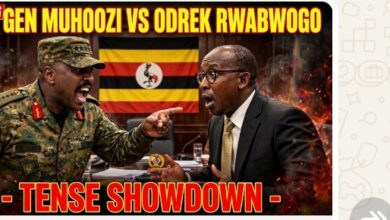
The disagreement escalated publicly on October 2, 2026, when Muhoozi took to X and demanded an apology from Otafiire.
“I hear my junior MG.Otafiire made some statements in parliament against me. I’m giving him exactly 1 week to apologise to me or else he will see.”
He subsequently shortened the deadline, posting:
“One week is too long, he has 3 days to apologise.”
The statements introduced a new dimension to the controversy. Rather than remaining a debate about political tolerance and military leadership, the dispute became a public confrontation between a serving army chief and a retired general who holds ministerial office.
The use of the word junior also drew attention to the relationship between military seniority, retirement and present institutional authority.
Otafiire is a retired major general and therefore participates in civilian politics as a minister. Muhoozi, by contrast, remains a serving military officer and the head of the UPDF.
Their respective positions make the constitutional and institutional questions surrounding the dispute particularly significant.
Did Muhoozi Eventually Apologise?
This is where the story requires particular care.
A screenshot circulated on social media purporting to show Muhoozi apologising to Otafiire and Otafiire accepting the apology. The alleged exchange was presented as evidence that the dispute had been resolved.
However, a fact-check published by the Debunk Media Initiative on October 7, 2026, found no verified evidence that the purported apology had appeared on Muhoozi’s official X account.
The fact-check identified inconsistencies in the circulating screenshot, including an incorrect account handle attributed to Otafiire. It concluded that the screenshot was fabricated and should not be treated as an authentic exchange.
Consequently, Uganda Today cannot responsibly report that Muhoozi apologised to Otafiire or that Otafiire accepted an apology as an established fact.
The appropriate journalistic position is to distinguish between the verified demand for an apology and the unverified claim that Muhoozi subsequently issued one.
The distinction is important in an era when fabricated screenshots can quickly acquire the appearance of authoritative public statements.
Read the fact-check: Debunk Media Initiative – False: No Verified Evidence That Gen Muhoozi Kainerugaba Apologised To Kahinda Otafiire On X.
Otafiire’s Earlier Position On Muhoozi’s Presidential Ambitions
The latest confrontation cannot be understood fully without considering Otafiire’s previously expressed reservations about Muhoozi becoming Uganda’s next president.
In February 2026, Otafiire publicly stated that he did not support Muhoozi’s prospective presidency, while distinguishing his political position from his personal regard for the President’s son.
According to Daily Express, Otafiire told Crooze FM:
“I do not hate Kainerugaba as a person. I simply do not want him as President of Uganda.”
He also said:
“I respect and love Kainerugaba as the son of Museveni, but I do not support Kainerugaba as president, and I make that position openly and without apology.”
The significance of these statements lies in the distinction between personal relationships and political judgment. Otafiire’s position was that respect for an individual does not necessarily translate into support for that individual’s presidential ambitions.
The debate also touches on a fundamental democratic principle: a country’s highest political office should be determined through constitutional processes and the choices of eligible voters, rather than assumptions that succession is guaranteed by family connections or political influence.
What Does President Museveni Say About Political Statements By Serving Soldiers?
The debate also invites renewed scrutiny of President Yoweri Museveni’s own public position on political statements by serving military officers.

In an interview reported by Daily Monitor on December 19, 2022, Museveni was asked about senior military officers, including Muhoozi, making political statements.
The President responded:
“These are small matters. Not every matter needs action or punishment.”
He added:
“We don’t have to arrest people. We guide. We have many issues, let’s concentrate on them. Time for the election will come.”
Museveni’s remarks reflected his stated preference for guidance rather than automatic punishment in the circumstances discussed during that interview.
However, the statements also raise a continuing question about the relationship between presidential discretion and the legal standards governing the armed forces.
Guidance from a commander-in-chief may be a management approach, but it does not, by itself, remove statutory or constitutional obligations.
The relevant question is whether the same standards of discipline and political neutrality are applied consistently to all serving officers, regardless of their rank, family connections or political influence.
Read the original report: Daily Monitor – Museveni Defends Son On Political Comments.
What The Constitution And UPDF Act Say
Article 208(2) of Uganda’s Constitution establishes the UPDF as a force that must be non-partisan, national in character, patriotic, professional, disciplined and subordinate to civilian authority.
Section 2(2) of the Uganda Peoples’ Defence Forces Act similarly provides for a non-partisan and professional national defence force.
These provisions establish an institutional standard. The armed forces are expected to serve Uganda as a nation, rather than operate as the partisan instrument of an individual political figure or political organisation.
The legal question, however, requires precision.
A serving officer expressing a political opinion, a serving officer campaigning for a candidate, an officer participating in partisan political activities, and an officer committing a specific disciplinary offence are not necessarily identical legal situations. Each must be assessed against the applicable constitutional provisions, legislation, regulations and relevant facts.
Muhoozi’s position as CDF makes scrutiny of his public political interventions particularly consequential. It does not, on its own, establish that every political statement he makes is unlawful. Equally, his senior rank does not exempt him from the rules governing serving members of the armed forces.
Otafiire’s position is different. Having retired from active military service, he can participate in civilian political life as a minister and parliamentarian, subject to the law applicable to those offices.
The central issue is therefore not whether retired and serving generals should be treated as though they hold identical legal positions. They do not. It is whether the rules governing each office are being observed and enforced fairly.
Legal reference: Uganda Peoples’ Defence Forces Act – Uganda Legal Information Institute.
The Historical Photograph And The Meaning Of The Resistance Legacy
The supplied photograph is a useful historical illustration of the people associated with Uganda’s resistance movement. Its caption identifies Otafiire among the front-row members of the National Resistance Council at Mondlane Camp.
It should not, however, be treated as proof of every historical claim made about the individuals pictured, nor as evidence that the people shown shared identical political views at every stage of their lives.
Its broader significance is that Uganda’s political and military institutions emerged from a movement whose members operated within a particular historical struggle. Over subsequent decades, the country developed a constitutional framework intended to govern the relationship between the armed forces, elected leadership and civilian political life.
The test of that legacy is not simply how often leaders invoke the history of the struggle. It is whether the institutions they helped establish can accommodate disagreement, enforce common rules and resolve disputes without intimidation.
Otafiire’s parliamentary message about resolving contradictions without violence speaks directly to that question.
The response to his remarks, in turn, raises questions about whether senior public officials can disagree without turning political differences into contests of personal authority.
A Question Of Consistency, Not Personalities Alone
There are at least three institutional questions arising from this dispute.
First, can the public distinguish between the political views of a serving military commander and the official position of the UPDF as a non-partisan institution?
Second, can senior political and military figures disagree openly while remaining within the boundaries of their respective constitutional responsibilities?
Third, can Uganda demonstrate that its laws and disciplinary standards apply consistently, irrespective of personal relationships or proximity to the highest office?
These questions extend beyond the individuals involved. They concern the credibility of Uganda’s institutions and the public’s confidence that constitutional rules mean the same thing for powerful people as they do for ordinary citizens.
The historical generation represented in the photograph helped shape the country’s present political order. The responsibility of the current generation is to ensure that this order remains governed by institutions, not merely by personalities.
The Verdict: An Apology Is Not The Same As Accountability
A genuine apology, if one is made, can help de-escalate a public disagreement. But an apology alone cannot settle the wider questions about political conduct, military professionalism and constitutional consistency.
As of October 10, 2026, the available fact-checking evidence does not establish that Muhoozi apologised to Otafiire. The purported screenshot should therefore not be published as an authentic exchange.
What is established is that Otafiire urged leaders to resolve disagreements peacefully, Muhoozi publicly demanded an apology, and President Museveni previously advocated guidance rather than automatic punishment for the political statements discussed in his 2022 interview.
Taken together, these developments present Uganda with a larger test: whether the country’s constitutional principles can be upheld consistently when disagreements involve some of its most powerful political and military figures.
Ultimately, the measure of leadership is not who can demand an apology, issue an ultimatum or command the greatest authority. It is who can uphold the law, respect institutional boundaries and demonstrate that public office carries obligations as well as power.
Uganda Today will continue to distinguish verified public statements from unsubstantiated social-media claims as this story develops.
#UgandaToday #MuhooziKainerugaba #KahindaOtafiire #UPDF #UgandaPolitics #Constitutionalism