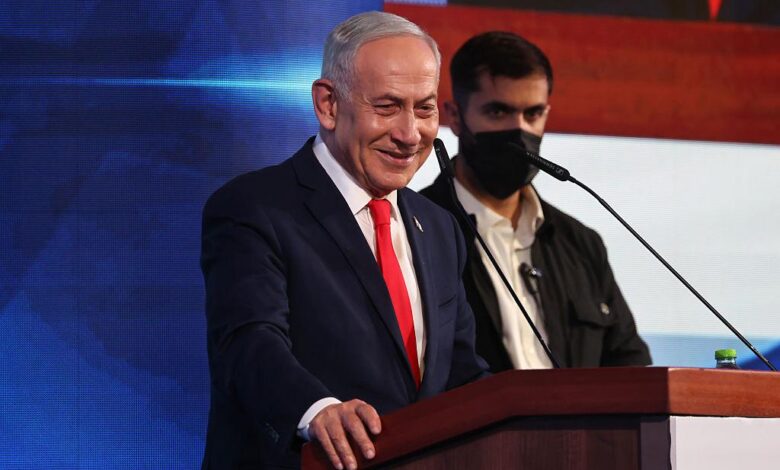
Netanyahu Faces Uncertain Future As Israel Election Ends In Political Deadlock
+256 702 23 93 37: Netanyahu’s Political Future At Stake Netanyahu, Israel’s longest-serving prime minister, went into the election seeking another mandate after years marked by conflict, domestic political divisions and scrutiny over the government’s handling of security.

UgandaToday: Netanyahu Faces Uncertain Future As Israel Election Ends In Political Deadlock
By Our International Desk | Uganda Today
Israel is facing a potentially prolonged political struggle after its October 27 parliamentary election failed to produce a clear winner, leaving Prime Minister Benjamin Netanyahu and his main challenger, Gadi Eisenkot, competing to assemble a governing majority.

Preliminary projections reported by the Associated Press on Wednesday, October 28, put Netanyahu’s Likud-led bloc at 53 seats, Eisenkot’s opposition-aligned bloc at 48, and Arab-led parties at 19 in Israel’s 120-member parliament, the Knesset. Neither of the two main blocs has reached the 61 seats required for a majority. Final results are expected later this week.
Netanyahu’s Political Future At Stake
Netanyahu, Israel’s longest-serving prime minister, went into the election seeking another mandate after years marked by conflict, domestic political divisions and scrutiny over the government’s handling of security.
The October 7, 2023, Hamas-led attacks and the subsequent wars have intensified debate over national security and political accountability. Netanyahu’s supporters point to his security policies and international relationships, while critics question his government’s record and demand accountability for the failures surrounding the attacks.
His immediate challenge is not simply winning votes but finding enough parliamentary partners to sustain a government.
Eisenkot And The Opposition Seek An Alternative
Former military chief Gadi Eisenkot has emerged as Netanyahu’s principal challenger through his Yashar party.

The opposition faces its own difficulty: parties that oppose Netanyahu do not necessarily agree on every policy or on which partners they are willing to work with. Arab-led parties have made a strong showing in preliminary projections, potentially increasing their influence in negotiations.
However, whether they will be included in a governing arrangement remains uncertain.
What Happens Next?
Israel’s President Isaac Herzog is expected to consult political factions after the official results are confirmed before assigning a candidate to form a government.

Under Israel’s parliamentary system, the largest party does not automatically secure the premiership. The decisive question is whether a candidate can command sufficient support in the Knesset.
If negotiations fail, Israel could face another election, with Netanyahu continuing as caretaker prime minister in the meantime.
Why The Outcome Matters Beyond Israel
The election carries implications beyond Israel’s borders. The next government will face continuing questions over Gaza, relations with Iran, regional security and the future of negotiations concerning the Palestinians.
For international partners, including countries in Africa, the composition of Israel’s next government will help shape its diplomatic relationships and regional policy.
For now, the election has delivered no definitive answer to the question of who will govern Israel. The coming coalition negotiations may prove just as consequential as the vote itself.
#UgandaToday #IsraelElections #BenjaminNetanyahu #MiddleEast #WorldNews #GadiEisenkot