
DR Congo Summons Uganda’s Envoy Over Gen Muhoozi’s Controversial Rebel Support Remarks
+256 702 23 93 37: The Congolese government is particularly concerned about a series of posts published by Gen Kainerugaba on X (formerly Twitter), which appeared to endorse a rebel group's efforts to capture Walikale, a mineral-rich territory in North Kivu Province in eastern DR Congo.

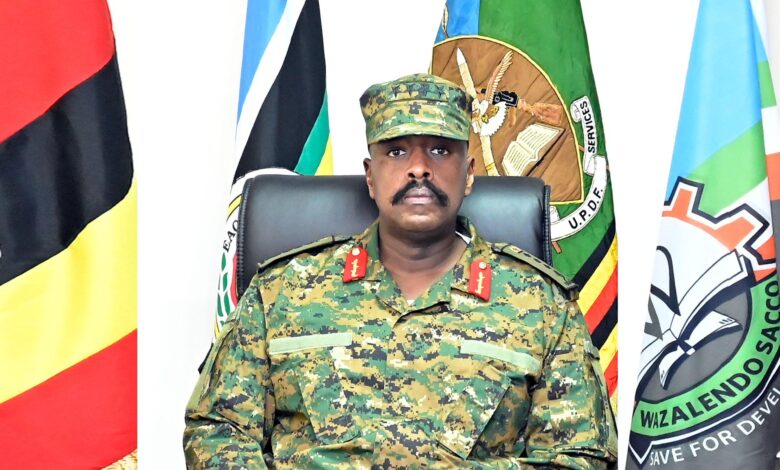
UgandaToday: DR Congo Summons Uganda’s Envoy Over Gen Muhoozi’s Controversial Rebel Support Remarks

Diplomacy | Regional Security | Uganda–DR Congo Relations
The diplomatic relationship between Uganda and the Democratic Republic of Congo (DR Congo) has come under fresh scrutiny after Kinshasa summoned Uganda’s top diplomatic representative to explain controversial social media statements made by the country’s Chief of Defence Forces, Gen Muhoozi Kainerugaba.
The Congolese government is particularly concerned about a series of posts published by Gen Kainerugaba on X (formerly Twitter), which appeared to endorse a rebel group’s efforts to capture Walikale, a mineral-rich territory in North Kivu Province in eastern DR Congo.
The remarks have triggered diplomatic protests from Kinshasa, which considers them a serious breach of the restraint expected between neighbouring sovereign states.
According to a BBC report published on Thursday, November 26, 2026, DR Congo’s Ministry of Foreign Affairs summoned Uganda’s head of mission in Kinshasa to demand an explanation over the military chief’s statements.
The ministry described the remarks as “particularly serious”, arguing that they had generated a major diplomatic and media incident while undermining relations between the two countries.
The development places Kampala in a delicate diplomatic position, particularly given Uganda’s ongoing military cooperation with DR Congo in the fight against armed groups operating in the eastern part of the country.
Muhoozi’s Posts Trigger Diplomatic Protest
Gen Kainerugaba, who is also the son of President Yoweri Kaguta Museveni, reportedly expressed support for the advance of the Front for the Refoundation of the Nation (FRN), a movement associated with former Congolese President Joseph Kabila.
In his posts, the Ugandan military chief indicated that Uganda would not oppose the group’s reported efforts to take control of Walikale.
He went further to suggest that Uganda’s military could move to capture the territory itself if the rebel movement delayed its operations.
The statements have raised concerns in Kinshasa because they appear to touch directly on the sovereignty and territorial integrity of DR Congo.
Although Gen Kainerugaba defended Uganda’s military involvement in eastern DR Congo as being motivated exclusively by security considerations, his apparent endorsement of a rebel advance has created questions about the relationship between Uganda’s security objectives and the political conflict unfolding in its neighbour.
The general’s X account, which reportedly had approximately 1.4 million followers, subsequently became inaccessible. It remains unclear whether it was deactivated by its owner or suspended by the platform.
Walikale’s Strategic Importance Raises the Stakes

Walikale is located in North Kivu, an eastern Congolese province that has experienced prolonged armed conflict involving government forces and various rebel movements.
The territory is particularly significant because of its mineral wealth, including substantial tin deposits and gold mining activities.
Control of mineral-rich territories has long been an important dimension of the conflict in eastern DR Congo, where armed groups, political interests and competition over natural resources have complicated efforts to restore lasting peace.
Gen Kainerugaba’s comments have therefore attracted particular attention because they appear to support an armed group’s territorial ambitions in an area that remains strategically and economically important to the Congolese government.
Kinshasa’s objection is not simply about the general expressing an opinion on the conflict. It is also about the implications of a serving military chief appearing to endorse the territorial advance of an armed movement inside another sovereign country.
Uganda’s Military Presence In Eastern Congo

The diplomatic controversy is particularly sensitive because Uganda and DR Congo have maintained close military cooperation in recent years.
Since November 2021, the Uganda People’s Defence Forces (UPDF) and the Armed Forces of the Democratic Republic of Congo (FARDC) have conducted joint military operations against the Allied Democratic Forces (ADF), an armed organisation linked to the Islamic State group.
The operations, commonly associated with Operation Shujaa, were initiated to dismantle ADF bases and disrupt the group’s activities in eastern DR Congo, particularly in areas bordering Uganda.
The military partnership has been important to Uganda’s national security interests because the ADF has carried out deadly attacks against civilians and security targets in both countries.
Uganda has also recently participated in diplomatic efforts aimed at facilitating dialogue between the Congolese government and an armed group led by former warlord Thomas Lubanga in Ituri Province.
These engagements illustrate the complicated relationship between the two neighbours: Uganda is simultaneously a military partner in the fight against the ADF and a country whose senior military leadership is now facing questions over statements concerning another armed movement operating in Congolese territory.
Kinshasa Demands Official Clarification From Kampala

In its diplomatic protest, the Congolese Ministry of Foreign Affairs reportedly demanded clear explanations from Ugandan authorities and called on Kampala to clarify its official position.
The ministry also emphasised that respect for national sovereignty and territorial integrity remains fundamental to relations between independent states.
It maintained that such principles must be respected even on digital platforms, a pointed reference to the growing influence of social media in shaping diplomatic and political relations.
The Ugandan government had not publicly issued an official response to the latest diplomatic summons by Thursday, November 26, according to the BBC report.
The absence of an official clarification leaves questions about whether the military chief’s statements represent his personal political views or reflect any position adopted by the Ugandan government.
That distinction is particularly important because Gen Kainerugaba is not an ordinary commentator. As Chief of Defence Forces, he occupies Uganda’s highest military command position, making his public statements on regional security matters especially consequential.
Not The First Time Muhoozi’s Comments Have Caused Diplomatic Concern
The latest controversy also revives memories of previous diplomatic tensions associated with Gen Kainerugaba’s social media activity.
In February 2025, he attracted criticism after making threats concerning Bunia, the capital of Ituri Province, amid tensions involving armed groups and security concerns affecting communities in the region.
His earlier statements concerning foreign military contractors operating in eastern DR Congo also generated diplomatic unease.
The latest Walikale remarks consequently raise renewed questions about the responsibility that comes with occupying a senior military office, particularly when public statements touch on the sovereignty, territorial integrity and security interests of neighbouring countries.
For Uganda, the challenge is to protect its legitimate security interests in eastern Congo without undermining the diplomatic relationships necessary for regional stability.
Regional Security Cooperation At Risk
The diplomatic dispute presents a potentially difficult test for relations between Kampala and Kinshasa, especially at a time when both countries have a shared interest in containing insecurity in the Great Lakes region.
Uganda’s military operations in eastern DR Congo depend, in part, on cooperation with Congolese authorities. Any deterioration in diplomatic relations could complicate intelligence sharing, military coordination and broader efforts to stabilise conflict-affected areas.
The controversy also comes at a sensitive time for the Great Lakes region, where competing political and security interests involving DR Congo, Rwanda and Uganda have repeatedly complicated peace initiatives.
For Kinshasa, statements appearing to endorse an armed group’s territorial ambitions could be interpreted as interference in its internal affairs, irrespective of Uganda’s stated security interests.
For Kampala, the priority will be to maintain its security partnership with DR Congo while addressing the concerns raised by its neighbour.
The Bigger Question: Personal Statements Or Official Policy?
Beyond the immediate diplomatic summons, the incident raises a fundamental question about the boundaries between personal expression and official state communication.
When a serving military chief comments publicly on another country’s armed conflict, his position carries a different weight from that of an ordinary social media user.
Gen Kainerugaba’s dual public profile as President Museveni’s son and Uganda’s military chief makes his statements particularly sensitive in regional diplomatic circles.
The Congolese government’s demand for clarification therefore places responsibility on Kampala to establish whether the remarks represent any official Ugandan position.
A clear diplomatic response could help contain the controversy and prevent it from undermining years of security cooperation between the two countries.
For now, the immediate question is whether Uganda will move to reassure Kinshasa that its military engagement in eastern Congo remains guided by agreed security objectives and respect for Congolese sovereignty.
The unfolding situation will be closely watched across the Great Lakes region, where peace and stability depend heavily on cooperation between neighbouring governments.