Today In History: The Day Ethiopia’s “Bloodless Revolution” Executed 59 Prisoners And Killed Its Own Chairman
+256 702 23 93 37: Why This History Matters To Uganda The events in Ethiopia are not Uganda's history, and the two countries' experiences should not be casually equated. Nevertheless, the massacre speaks to a wider African question: what happens when a government begins to regard political opponents as threats to be eliminated rather than citizens entitled to legal protection?

UgandaToday: Today In History: The Day Ethiopia’s “Bloodless Revolution” Executed 59 Prisoners And Killed Its Own Chairman

Today In History: The Uganda Today Historical Perspective
23 November 2026 | 52 Years Ago Today
What began as a revolution promising to dismantle an oppressive imperial system turned into a deadly struggle for power. On November 23, 1974, Ethiopia’s new military rulers executed 59 political detainees without trial, while the country’s first revolutionary head of state, General Aman Andom, was killed in a separate confrontation. The tragedy became known as the Massacre of the Sixty — an early warning of the terror that would engulf Ethiopia.

Fifty-two years ago today, Ethiopia experienced one of the darkest turning points in its modern political history when a military revolution that had promised change turned violently against people who had once occupied the highest positions of government.
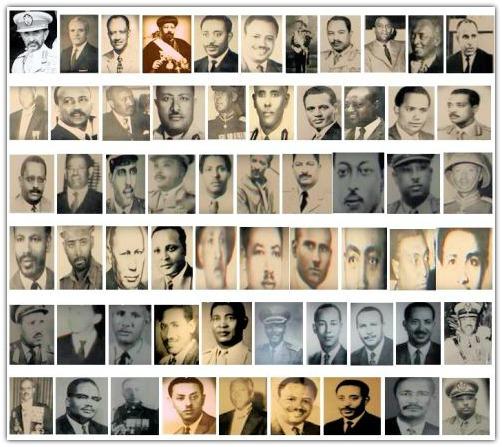
On November 23, 1974, the military government known as the Derg summarily executed 59 political detainees, including former senior government officials, military officers and prominent figures associated with the imperial administration of Emperor Haile Selassie.
On the same date, Brigadier General Aman Mikael Andom, the revolutionary government’s first head of state and chairman, was killed during a confrontation with soldiers sent to arrest him at his residence.
The killings are remembered collectively as the Massacre Of The Sixty, also known as Black Saturday or Bloody Saturday.
The episode was not merely the elimination of former imperial officials. It marked a decisive rupture within the military council itself, exposing the growing power struggle between those advocating political accommodation and the hardliners determined to consolidate control through force.
The tragedy would become an early indication of the brutality that later characterised the Derg regime.
A Revolution Born Out Of Public Anger And Unfulfilled Expectations
The Ethiopian Revolution of 1974 did not emerge from a vacuum.
Widespread dissatisfaction with the imperial government had been growing amid economic hardship, inflation, unequal land ownership, public protests, labour strikes, military grievances and the government’s handling of famine.
The crisis intensified during February 1974, when strikes, demonstrations and mutinies spread across the country. The military progressively assumed political authority, eventually overthrowing Emperor Haile Selassie on September 12, 1974.
The new military council, known as the Provisional Military Administrative Council or Derg, presented itself as the force capable of transforming Ethiopia.
For many Ethiopians, the revolution initially represented an opportunity to dismantle entrenched privilege, address economic inequality, reform land ownership and create a more responsive state.
But the military council was not a united political organisation.
Its members differed over the future of the country, the role of civilian political groups, the Eritrean conflict, the treatment of former imperial officials and the extent to which the military should retain control.
These divisions would soon become deadly.
Aman Andom: The General Who Clashed With His Own Revolution
General Aman Andom was one of the most prominent figures in the military leadership that emerged after the overthrow of Haile Selassie.
He was widely respected for his military career and was appointed head of state, chairman of the Council of Ministers, defence minister and chairman of the military council.
However, his authority quickly became contested.
Aman reportedly opposed the council’s growing concentration of power, questioned its size and structure, and favoured a negotiated approach to the Eritrean insurgency rather than an expanded military campaign.
He also opposed the summary execution of former government and military officials who had been arrested following the revolution.
These disagreements placed him increasingly at odds with the majority of the Derg, including powerful officers who favoured a harder military approach.
By November, Aman had become politically isolated within the council.
On November 23, soldiers sent to arrest him confronted him at his home. He was killed during the ensuing fighting.
His death was significant because it demonstrated that the revolution was no longer simply removing the old imperial leadership. It was now eliminating those within its own ranks who stood in the way of the emerging power structure.
Fifty-Nine Prisoners Were Executed Without Trial

The executions targeted a group of 59 political detainees who had been arrested during the gradual military takeover.
Among the victims were two former prime ministers, Aklilu Habte-Wold and Endelkachew Makonnen, alongside senior military officers, ministers, members of the royal establishment and other prominent figures.
The victims included individuals who had occupied important positions under the former imperial government, as well as people connected to divisions within the new military leadership.
The executions were carried out without judicial trials.
Amnesty International’s 1978 report on human rights violations in Ethiopia recorded that 59 political detainees were summarily executed on November 23, 1974, together with Brigadier General Aman Andom.
The organisation noted that the victims had been selected for killing without any form of legal proceeding, while the alleged circumstances surrounding Aman’s death pointed to a power struggle within the military council.
The name Massacre Of The Sixty is commonly used for the wider episode, although contemporary human rights documentation distinguishes the 59 detainees executed from Aman, who died in a separate confrontation.
This distinction is important because some historical accounts vary in their victim counts and in whether they describe the killings as occurring during the night of November 22 or on November 23.
The date November 23 is widely used for the anniversary of the massacre.
The Old Guard Was Eliminated, But The New Regime Was Not Yet United
The execution of the detainees and the killing of Aman Andom did not immediately produce a stable or unified government.
The Derg continued to experience internal struggles, with different officers competing for influence over the military council and the direction of Ethiopia’s political future.
On November 28, 1974, Brigadier General Tafari Benti succeeded Aman as chairman and head of state.
Mengistu Haile Mariam retained his position as first vice-chairman and gradually emerged as the dominant force within the military government.
The November killings weakened moderates and eliminated several prominent figures who had opposed the more radical approach to political and military questions.
The episode therefore represented more than a purge of former imperial officials. It was also a consolidation of power within the new military regime.
The political trajectory that followed would increasingly be marked by repression, armed conflict and the destruction of opposition movements.
The Red Terror, which escalated in 1977 and 1978, would later claim thousands of lives and leave deep scars on Ethiopian society.
The Prison That Became A Symbol — Then Disappeared

The massacre is closely associated with Alem Bekagn, the former central prison in Addis Ababa, whose name is often translated as “Farewell To The World.”
The prison became notorious under successive regimes for holding political prisoners and people suspected of opposing the government.
During the Derg period, it was associated with executions, torture, detention and the repression of political dissent.
The African Union’s Human Rights Memorial project later acknowledged the historical significance of Alem Bekagn, noting that the new AU Conference and Office Complex stood on the site of the former prison.
Plans were proposed to preserve the prison as a memorial and museum dedicated to victims of atrocities, including the Red Terror and the Rwandan genocide.
However, the prison was eventually demolished in 2007 to make way for the African Union’s new buildings.
The disappearance of the physical prison raised a difficult question about African historical memory: can a continent preserve the lessons of political violence while replacing the very places where that violence occurred with symbols of progress, diplomacy and modernity?
The story of Alem Bekagn remains a powerful reminder that remembrance requires more than acknowledging the past. It requires preserving evidence, documenting victims’ experiences and ensuring that history is not erased by the changing priorities of political institutions.
Why This History Matters To Uganda
The events in Ethiopia are not Uganda’s history, and the two countries’ experiences should not be casually equated.
Nevertheless, the massacre speaks to a wider African question: what happens when a government begins to regard political opponents as threats to be eliminated rather than citizens entitled to legal protection?
Amnesty International’s 1974/75 annual report placed Ethiopia’s summary executions within a wider continental human rights crisis. In the same report, it documented continuing reports of massacres, disappearances and imprisonment under Idi Amin’s government in Uganda.
The historical record therefore offers a reminder that the protection of human life, fair trials, independent scrutiny and accountability are not privileges reserved for political allies.
They are safeguards that matter most when a nation is experiencing instability, political transition or security threats.
For Uganda, the history of changing governments, political violence and contested accountability makes the preservation of historical records especially important.
The lesson is not that revolutions or governments should never change. It is that political change loses its moral legitimacy when it abandons the protection of human beings and replaces justice with revenge.
A government may claim to be correcting the injustices of the past, but it cannot build a just future through unlawful killings and the denial of due process.
The Revolution That Began To Consume Its Own Leaders
The Massacre of the Sixty was an early warning of what Ethiopia would endure under the Derg.
The killing of former officials and the death of the military council’s own chairman showed that the new leadership was prepared to use lethal force to settle political disputes and consolidate power.
The events of November 23, 1974, helped set the tone for a period in which political disagreements increasingly became matters of life and death.
The Derg would eventually fall in 1991, after nearly 17 years of military rule, civil war and repression.
But the memory of Black Saturday remains a warning that the language of revolution, national security and political transformation can be used to justify violence when institutions fail to restrain those who hold power.
Fifty-two years later, the story of the 59 detainees and General Aman Andom is not simply an account of Ethiopia’s political past.
It is a reminder to Africa that the greatest danger to a revolution may sometimes emerge from within its own leadership — when the promise of justice gives way to the pursuit of power.
Today In History: The Uganda Today Historical Perspective — One Date, One Story, A Fresh Histo