Today In History: The Day The World Put War Leaders In The Dock — And The Question Of Justice Reached Africa
+256 702 23 93 37: On November 20, 1945, an international tribunal opened the trial of leading Nazi officials in Germany, challenging the long-standing assumption that those exercising state power could escape criminal accountability. Eighty-one years later, the legacy of Nuremberg continues to resonate in Uganda, where courts are still confronting the difficult question of how to prosecute atrocities committed during armed conflict.

UgandaToday: Today In History: The Day The World Put War Leaders In The Dock — And The Question Of Justice Reached Africa

Today In History: The Uganda Today Historical Perspective
20 November 2026 | 81 Years Since The Nuremberg Trials Began
On November 20, 1945, an international tribunal opened the trial of leading Nazi officials in Germany, challenging the long-standing assumption that those exercising state power could escape criminal accountability. Eighty-one years later, the legacy of Nuremberg continues to resonate in Uganda, where courts are still confronting the difficult question of how to prosecute atrocities committed during armed conflict.

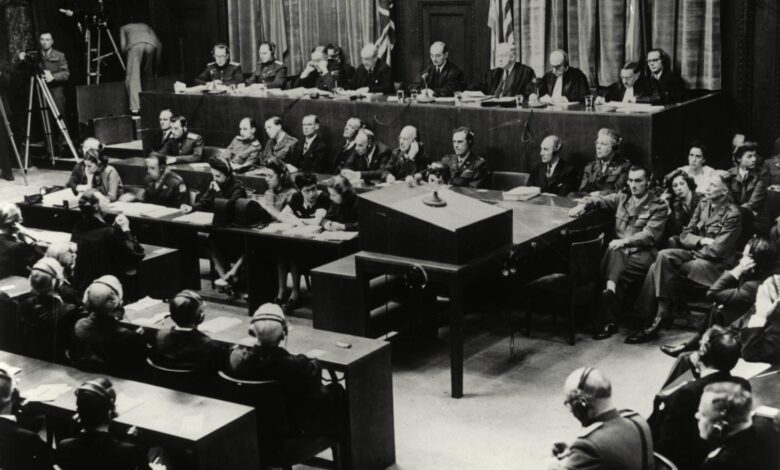
On this day, 20 November 1945, the Palace of Justice in Nuremberg, Germany, became the stage for one of the most consequential legal proceedings in modern history.
Representatives of the United States, Britain, France and the Soviet Union opened the International Military Tribunal against leading figures of Nazi Germany, accused of crimes committed during the Second World War.
The trial was not simply about punishing defeated German leaders. It confronted a question that had long troubled international law: could individuals who wielded enormous political and military power be personally held responsible for crimes committed in the name of their country?
The Nuremberg proceedings helped establish a lasting principle that political office, national authority and obedience to orders could not automatically shield individuals from responsibility for grave international crimes.
The trial opened in Nuremberg on November 20, 1945, following an earlier preliminary session in Berlin on October 18. The distinction matters: November 20 was the opening of the substantive trial in Nuremberg, not the Tribunal’s first sitting anywhere.
From The Ruins Of War To A Courtroom

Germany had surrendered in May 1945, leaving much of Europe devastated by years of warfare, occupation, mass killings and the Holocaust.
The Allied powers faced a dilemma. They could execute captured leaders, pursue political revenge or attempt to establish a judicial process capable of examining evidence, hearing arguments and delivering verdicts.
The decision to pursue trials represented a major experiment in international justice.
The Palace of Justice in Nuremberg was selected partly because it remained sufficiently intact and had a large courtroom and an attached prison capable of accommodating the defendants.
The courtroom was remodelled to accommodate the proceedings, including the press, prosecutors, judges, defendants, interpreters and technical equipment.
Four victorious Allied powers jointly constituted the tribunal, each providing judges and prosecution teams.
Twenty-four leading Nazi officials were indicted, although 22 ultimately stood trial. The charges included crimes against peace, war crimes, crimes against humanity and conspiracy.
The Accused Were Not Just Soldiers

The prosecution went beyond battlefield conduct.
It sought to establish responsibility among political leaders, military commanders, officials and individuals who helped organise or implement the machinery of Nazi persecution and war.
The significance of the proceedings lay partly in the proposition that crimes committed through the structures of a government could still attract individual criminal responsibility.
The tribunal examined documentary evidence, testimony, records of orders, official correspondence and material showing how the Nazi state functioned.
The courtroom became an arena in which the prosecution attempted to reconstruct the workings of a system of organised violence rather than treating atrocities as isolated incidents committed by a few soldiers.
This was a critical development in international criminal law: responsibility could extend beyond the person who physically carried out an act to those who planned, directed, organised or participated in criminal conduct.
The proceedings also sought to demonstrate that crimes committed against civilians and other victims could not simply be dismissed as internal affairs of a sovereign state.
The Legal Principle That Changed The Meaning Of Power
One of the most enduring legacies of Nuremberg was the development and affirmation of principles of individual responsibility under international law.
Among the principles subsequently formulated were:
-
Individuals could be held responsible for crimes under international law.
-
A person’s official position, including being a head of state or senior government official, did not automatically exempt them from criminal responsibility.
-
Following orders from a government or superior did not necessarily absolve a person of responsibility where a moral choice was possible.
-
Those accused of international crimes were entitled to a fair trial.
These principles were later affirmed by the United Nations and became important reference points in the development of international criminal justice.
Nuremberg did not create every principle of accountability from nothing. It built upon earlier legal debates, conventions and wartime developments, but its proceedings gave the ideas a new international prominence and helped shape later tribunals.
The principle that authority does not automatically erase personal responsibility remains among the most consequential lessons of the trial.
Nuremberg Was Not Without Controversy
Despite its historic significance, the Nuremberg Tribunal was not universally regarded as an unquestionable model of justice.
Critics argued that the victorious Allied powers had created a tribunal to prosecute defeated enemies while avoiding comparable scrutiny for their own conduct during the war.
The debate over so-called “victors’ justice” raised questions about impartiality, the retroactive application of some legal concepts, the selection of defendants and whether the same standards would apply to powerful states and their leaders.
These criticisms remain important to any honest historical assessment.
Nuremberg was a landmark in international justice, but it also exposed the difficulty of reconciling law with power when the states enforcing the law are themselves politically and militarily dominant.
The legacy therefore includes both an advance in accountability and an enduring challenge: justice must be applied consistently, or its legitimacy risks being undermined.
Why Nuremberg Still Matters To Uganda
Uganda has its own experience with international criminal justice, particularly in the prosecution of crimes arising from the Lord’s Resistance Army insurgency.
In December 2003, Uganda referred the situation concerning the LRA to the International Criminal Court. It became the first state referral to the newly established Court.
The ICC opened its investigation in July 2004, focusing on alleged war crimes and crimes against humanity arising from the conflict in northern Uganda.
The process eventually resulted in arrest warrants against senior LRA commanders. Dominic Ongwen, who surrendered in 2015, was subsequently tried, convicted and sentenced by the ICC.
Joseph Kony remains a fugitive from international justice.
The Uganda situation is an important African case in the wider development of international criminal accountability. It also illustrates the limitations of international justice: investigations, arrest warrants and court proceedings do not automatically deliver justice to affected communities, particularly when suspects remain beyond the reach of courts.
Uganda has also pursued domestic accountability.
In October 2024, former LRA commander Thomas Kwoyelo was sentenced to 40 years’ imprisonment after being convicted of 44 offences, including war crimes and crimes against humanity. His case was a landmark prosecution within Uganda’s own courts.
The prosecution demonstrated that international crimes can be addressed within a national judicial system, rather than relying exclusively on courts located abroad.
The case also raised difficult questions about victims’ rights, rehabilitation, reconciliation, the treatment of former abductees who became perpetrators, and the long road towards healing in communities affected by war.
Nuremberg and Uganda’s cases are not identical, nor are they directly interchangeable. But they belong to a broader historical conversation about the development of legal systems capable of holding individuals responsible for serious crimes.
The Record Is As Important As The Verdict
A particularly striking development in the Nuremberg story occurred on the 80th anniversary of the trial’s opening, on November 20, 2025.
Harvard Law School Library made available a major searchable digital collection of Nuremberg trial records, comprising more than 750,000 pages of transcripts, legal briefs, evidence exhibits and other official material from all 13 Nuremberg proceedings.
The digitisation project, which took decades to complete, allows researchers, students, journalists and members of the public to explore primary evidence rather than depend only on summaries or popular retellings.
The records help preserve the testimony, documents and legal arguments through which crimes were investigated and responsibility assessed.
This is an important lesson for African institutions, including Uganda’s courts, archives, media and human rights organisations: historical memory depends on evidence being preserved, accessible and protected from distortion.
The verdict may end a case, but the record allows future generations to examine how the case was conducted, what evidence was relied upon and whether justice was achieved.
Eighty-One Years Later, The Question Remains
Nuremberg did not end war crimes. It did not eliminate dictatorships, prevent atrocities or guarantee that powerful leaders would always face justice.
But it changed the international conversation about the relationship between political authority and criminal responsibility.
The courtroom in Germany on November 20, 1945, was an attempt to move beyond vengeance towards a process of evidence, law and judgement.
For Uganda and Africa, its legacy is neither simply European history nor a distant legal experiment. It speaks to the continuing struggles over accountability, victims’ rights, the rule of law and the responsibility of those who exercise power.
The history of Nuremberg is therefore not finished.
Every time a court examines crimes committed during conflict, every time investigators preserve evidence, every time victims demand that their suffering be recognised, and every time a powerful individual is called to answer before the law, the questions raised at Nuremberg return.
And the most important question remains:
Can justice be made to apply equally to the powerful and the powerless?
Today In History: The Uganda Today Historical Perspective — One Date, One Story, A Fresh Historical Lens.