PNUAA President Kriss Namakola Sets Out Vision For A More United And Empowered Ugandan Diaspora In America
+256 702 23 93 37: Having assumed office in October, Namakola wants to reposition PNUAA into an institution that goes beyond cultural celebrations to address the practical needs of Ugandans abroad through economic empowerment, welfare programmes, investment opportunities, professional networking and community development.

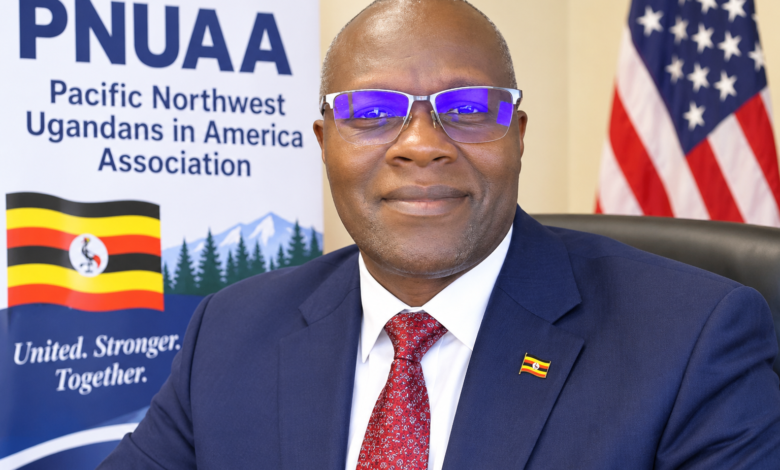
UgandaToday: PNUAA President Kriss Namakola Sets Out Vision For A More United And Empowered Ugandan Diaspora In America
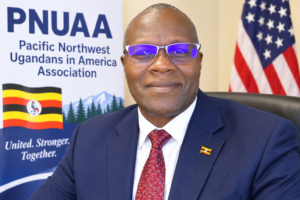
By Chris Kato | Uganda Today
For thousands of Ugandans living in America’s Pacific Northwest, home is more than a geographical location. It represents family, culture, heritage, language and the memories of a country they left behind in pursuit of opportunities abroad.
Yet building a meaningful life in a foreign country comes with challenges, including loneliness, cultural adjustment, employment difficulties and the struggle to maintain connections with one’s roots.
For nearly three decades, the Pacific Northwest Ugandans in America Association (PNUAA) has provided a platform for Ugandans living in Washington, Oregon and Idaho to connect, preserve their cultural identity and support one another.
However, its newly elected president, Kriss Namakola, believes the association must now embrace a broader and more transformative role.
Having assumed office in October, Namakola wants to reposition PNUAA into an institution that goes beyond cultural celebrations to address the practical needs of Ugandans abroad through economic empowerment, welfare programmes, investment opportunities, professional networking and community development.
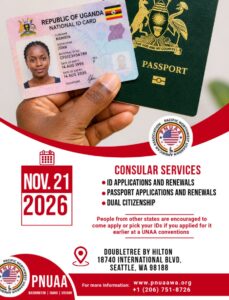
An important step towards this vision will be the association’s Special General Members Meeting scheduled for November 21 in Seattle, which will coincide with a visit by officials from the Ugandan Embassy in Washington, D.C., to provide consular services.
Uganda Today’s Chris Kato spoke to Namakola about his leadership priorities, the importance of diaspora unity, the challenges facing Ugandan immigrants and his ambitions for the association.
Building A New Chapter For PNUAA

Chris Kato: Congratulations on your election. You have barely settled into office, yet you are already convening a major meeting in Seattle. Why the urgency?
Kriss Namakola: Thank you, Chris. I believe this is precisely the right time to bring our members together.
When you assume leadership, you must establish what you intend to achieve and, more importantly, how you plan to achieve it.
PNUAA belongs to its members. It is not my personal organisation. We therefore need to engage people, listen to their concerns and collectively agree on our priorities.
We must ask ourselves three fundamental questions: Where are we today? Where do we want to go? And how do we get there?
That is what this meeting is about.
Unity Beyond Politics, Religion And Tribal Differences
Kato: Diaspora associations sometimes experience divisions arising from politics, personalities, religion and other differences. How do you intend to bring Ugandans together?
Namakola: We must remind ourselves why we are here in the first place.
We may disagree politically, belong to different religions or come from different tribes. But we share a common Ugandan heritage, and many of our challenges are similar.
If someone loses a loved one, struggles to find employment or needs assistance settling in America, their political affiliation should not determine whether we support them.
We must learn to separate our differences from our common interests. That is how communities grow.
PNUAA: A Home Away From Home

Kato: How would you explain PNUAA to a young Ugandan who has just arrived in Seattle and knows little about the association?
Namakola: I would tell them that PNUAA is their home away from home.
The association was established approximately 30 years ago to bring together Ugandans living in Washington, Oregon and Idaho.
Imagine arriving in America for the first time. Everything is different: the food, the weather, the way people interact and even the simplest things you previously took for granted.
Back in Uganda, if you encounter a problem, you probably have relatives, friends or neighbours you can turn to. Here, you might not know a single person.
PNUAA exists to bridge that gap. It is where we meet, share experiences, celebrate our culture and support one another. It gives us a place where we can feel Ugandan without having to explain ourselves.
The Hidden Challenges Of Immigrant Life
Kato: Many immigrants have good jobs, beautiful homes and the conveniences of American life but still experience loneliness. Is this something you encounter among Ugandans in the Pacific Northwest?
Namakola: Absolutely. I think people sometimes underestimate the challenges of immigration.
Immigration is not simply about obtaining a visa and boarding an aircraft. There is an entire process of adjusting to a different society.
You must find accommodation, transportation, employment and medical care. You must understand how different systems work. Sometimes you also encounter prejudice or experience the feeling that you do not quite belong.
Then there is the emotional side. You have left behind everything familiar.
That is why community organisations are important. Sometimes what someone needs most is simply another Ugandan to talk to, someone who understands what they are going through.
Preserving Ugandan Identity Across Generations
Kato: What about children born and raised in America? Some have never visited Uganda, while others barely speak their parents’ languages. Is maintaining a Ugandan identity after two or three generations realistic?
Namakola: Of course it is, although we must be deliberate about it.
You can become an American citizen without ceasing to be Ugandan by heritage. These identities do not have to compete.
There are Ugandans who have lived here for more than 30 years. Their children and grandchildren are American in almost every aspect of their lives. Some of these families may never permanently return to Uganda.
But their roots remain Ugandan.
Our children should know where their grandparents came from. They should understand our traditions, food, languages and the values that shaped their families.
That is part of what PNUAA must preserve.
November 21: More Than A Consular Services Exercise
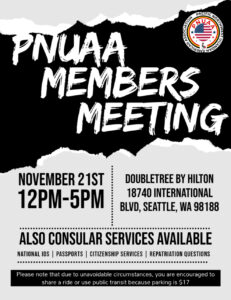
Kato: Some Ugandans may look at the November 21 announcement and assume the event is only for people seeking passports or national identity cards. Why should those who do not require these services attend?
Namakola: They would be missing the bigger picture.
The consular services are important, but this is fundamentally a community meeting.
Come and meet your leaders. Tell us what is working and what is not. Share your ideas and meet other Ugandans.
You might meet someone who can introduce you to a business opportunity, help you find employment or offer useful advice.
We have enormous resources within this community, but those resources mean very little if we remain strangers to one another.
Remember, this is your association. If you want it to improve, you must participate.
Strengthening Governance And Accountability
Kato: You have mentioned reorganising PNUAA’s leadership structures. What changes should members expect?
Namakola: We want to examine the state of the association and collectively agree on its future direction.
We also intend to introduce important committees, including the Board of Trustees, Constitutional Review Committee, Finance and Investments Committee, and committees responsible for welfare and community engagement.
These are not structures we are creating simply to give people titles. They must serve practical purposes.
Our welfare structures should help us respond to members facing hardship. The finance and investment structures should help us explore opportunities that benefit the association and its members.
We also want people to volunteer. There are Ugandans here with tremendous professional experience and expertise. We need that knowledge.
Kato: Will ordinary members genuinely have a voice in decision-making, or will decisions remain the preserve of the executive?
Namakola: That is exactly the culture I want us to avoid.
I welcome constructive criticism. If you think we are doing something wrong, say so. If you have a better proposal, bring it forward.
I do not expect everyone to agree with me. In fact, I would be concerned if everyone agreed with everything I said.
What matters is that our disagreements remain respectful and focused on improving the association.
Leadership must listen, but members must also participate. It is a shared responsibility.
Bringing Ugandan Consular Services Closer To The Community
Kato: The Ugandan Embassy in Washington, D.C., has agreed to bring consular services to the Pacific Northwest. How did this initiative come about?
Namakola: It came from listening to our people.
We have attended Ugandan conventions where people apply for national identity cards and other documents. Some applicants never return to subsequent conventions to collect them.
Then consider the geography. Seattle is on the opposite side of the country from Washington, D.C.
A person may have to pay for an airline ticket, hotel accommodation, meals and transportation simply to access a service at the embassy.
Under the current immigration environment, some people are also uncomfortable travelling long distances.
We felt there had to be a better way.
We approached the embassy, explained the situation and requested that these services be brought closer to our community.
Ambassador Robie Kakonge and her team graciously agreed, and we are extremely grateful.
Kato: Why should Ugandans who already possess American identification documents still consider obtaining or maintaining their Ugandan national identity documents?
Namakola: Both patriotism and practical considerations are important.
Our national documents are symbols of citizenship, identity and sovereignty. There is pride in having them.
But there are practical reasons as well. In Uganda, a national identity card is required for many transactions, including banking and certain property dealings.
You may not need those services today, but what happens when you suddenly need them tomorrow?
There is a saying that it is better to have something and not need it than to need it and not have it.
I have also heard stories of people spending weeks and considerable sums of money trying to obtain national identity cards in Uganda.
Now eligible Ugandans have an opportunity to access the national identity card application service here, without the usual application fee, and with embassy officials coming to us.
We should make good use of that opportunity.
A Regional Mobilisation Across America
Kato: We understand that some people are planning to travel from as far away as Chicago, Denver and California to attend the Seattle gathering. What does that tell you?
Namakola: It demonstrates how important these services are to our people.
We are expecting participants from outside Washington, including other parts of the Pacific Northwest.
I particularly want to encourage those who previously applied for documents at UNAA conventions in places such as Dallas and Denver to follow up on their applications and possible collection arrangements.
My appeal is that people should not let this opportunity pass. We do not know when the embassy will next bring these services to the West Coast.
Beyond Cultural Celebrations: Economic Empowerment And Development
Kato: You have repeatedly emphasised that PNUAA must move beyond cultural celebrations. Does this mean traditional activities such as Independence Day celebrations, children’s events and social gatherings are becoming less important?
Namakola: Not at all. Those activities are important, and we should continue organising them.
But Chris, we cannot measure the success of an association simply by how many parties it organises.
We must ask what difference the organisation is making in people’s lives.
Are we helping new immigrants settle? Are we connecting people to employment and business opportunities? Are we helping families build financial security? Are we responding when members face difficulties?
I want us to explore projects that help members acquire property and build long-term assets.
We need settlement resources for newly arriving Ugandans, stronger welfare programmes and practical development initiatives.
Ultimately, I want PNUAA to have a permanent home: a community centre that belongs to our people.
That is the direction I want us to pursue.
Turning Ambitions Into Sustainable Projects
Kato: Community associations often struggle with finances, volunteer participation and continuity when leadership changes. What makes you confident that these ambitions can become reality?
Namakola: I am confident because of the people we have.
Look at the Ugandan community in this region. We have business owners, healthcare professionals, engineers, educators, technology specialists and people with experience in almost every field.
Our greatest challenge is not necessarily a lack of resources. It is how we organise ourselves and bring those resources together.
We need proper structures, realistic plans, accountability and members who are willing to contribute.
A community centre, for example, cannot simply remain a presidential promise. We would need to examine the costs, possible funding sources, partnerships and how the project would be managed.
That is why planning and member involvement are so important.
A Call To Every Ugandan In The Pacific Northwest
Kato: Finally, what message would you give a Ugandan who is considering staying away from the November 21 meeting because of previous disappointments with community leadership or the belief that their contribution will not make a difference?
Namakola: I would tell them that staying away does not solve the problem.
If you believe the association can do better, come and help us make it better.
If you disagree with our direction, come and tell us why. If you have ideas, bring them. If you have expertise, share it.
One of the greatest problems in any society is when people who recognise what needs to change choose to remain silent.
We cannot complain about the direction of our community while refusing to participate in determining that direction.
I am not asking people to come and endorse everything I say. I am asking them to help us build something worthwhile.
The future of PNUAA does not belong to its president or executive committee. It belongs to the entire Ugandan community.
If we can put our heads together, respect our differences and agree on what matters, I believe there is a great deal we can accomplish.
The Road Ahead For Uganda’s Diaspora Community
For Namakola, the November 21 gathering represents an opportunity to begin translating leadership promises into a common community agenda.
His vision places considerable emphasis on transforming PNUAA from an organisation primarily associated with cultural and social activities into a platform for economic empowerment, immigrant support, professional networking, investment and long-term community development.
However, turning these ambitions into reality will require more than presidential goodwill. It will depend on transparent leadership, effective governance, sustainable financing and, above all, active participation by the people the association was established to serve.
Nearly 30 years after its establishment, PNUAA stands at an important point in its journey.
The question is no longer simply how Ugandans in America’s Pacific Northwest can remain connected to their homeland, but how they can use their collective strength, professional experience and economic potential to build a stronger future for themselves and the generations that follow.
As Namakola puts it, the future of the association belongs to the entire Ugandan community.
Chris Kato | Uganda Today
#UgandaToday #UgandanDiaspora #PNUAA #KrissNamakola #UgandansInAmerica #DiasporaUnity