Today In History: From 28 To 56: Six Years Later, Uganda Still Has Questions About The November 2020 Deaths
+256 702 23 93 37: An arrest in Luuka on 18 November 2020 triggered protests that spread across Kampala and other towns. Official death figures changed, two security personnel were convicted over three killings, and a later government statement acknowledged that the circumstances surrounding most of the deaths had not been conclusively established.

UgandaToday: Today In History: From 28 To 56: Six Years Later, Uganda Still Has Questions About The November 2020 Deaths

An arrest in Luuka on 18 November 2020 triggered protests that spread across Kampala and other towns. Official death figures changed, two security personnel were convicted over three killings, and a later government statement acknowledged that the circumstances surrounding most of the deaths had not been conclusively established.
18 November 2026
Six years ago today, Uganda experienced one of the most painful episodes of its recent electoral history.
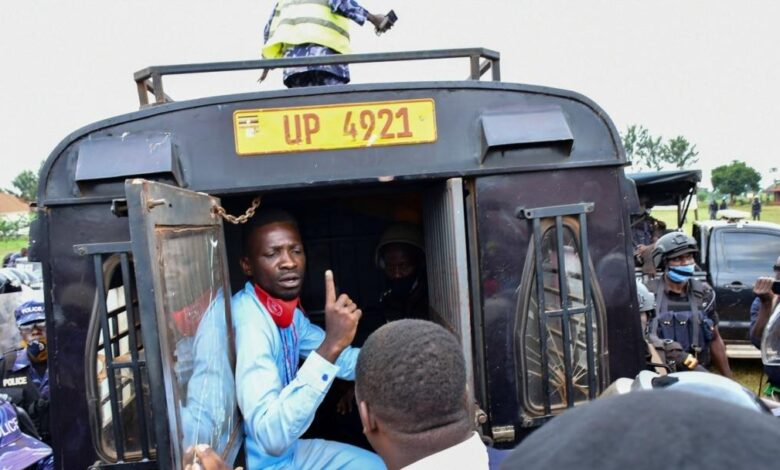
On 18 November 2020, presidential candidate Robert Kyagulanyi Ssentamu, popularly known as Bobi Wine, was arrested in Luuka District while campaigning ahead of the January 2021 general election.
Police said he had breached COVID-19 restrictions governing campaign gatherings. His arrest quickly generated protests in Kampala and other parts of the country. Roads were blocked, tyres were set alight and confrontations erupted between demonstrators and security personnel.
Security forces deployed tear gas and live ammunition. There were also incidents of stone-throwing, destruction of property and attacks on individuals and security personnel, according to subsequent government accounts.
Within hours, the country was confronting reports of deaths, injuries, arrests and disrupted businesses. The events of 18–20 November would become widely remembered as the November 2020 protests or riots.
The arrest was not the only opposition-related incident that day. Human Rights Watch also reported the arrest and subsequent release of Forum for Democratic Change presidential candidate Patrick Oboi Amuriat in Gulu.
But it was the events following Kyagulanyi’s detention that produced the much wider national crisis.
The First Numbers Were Not The Last

One of the most troubling aspects of the November events is how the official death toll changed over time.
On the afternoon of 18 November 2020, the Associated Press reported police figures of three people dead and 38 injured in Kampala.
By 20 November, the Uganda Police Force had announced that 28 people had died and 577 suspects had been arrested.
Later, in a televised address on 29 November, President Yoweri Museveni acknowledged that 54 people had died during the disturbances.
The figures changed again in a written response submitted to Parliament by the Minister of Internal Affairs, Maj Gen (Rtd) Kahinda Otafiire, dated 28 November 2023. The government then stated that 56 people had lost their lives in connection with the unrest.
The ministerial response said 48 of the victims came from the Kampala Metropolitan area, including Kampala, Wakiso and Mukono, while the others came from Jinja, Luweero, Rakai, Lwengo, Butambala and Mpigi.
The figures represent official accounts made at different stages, not a single independently verified count. The changing totals remain an important part of the historical record.
What The Police Investigation Revealed
In December 2020, the Criminal Investigations Directorate prepared an internal report examining deaths and other incidents arising from the protests.
Details of the investigation were later published by Daily Monitor in May 2021.
The report’s summary recorded 54 deaths and classified 42 victims as having been hit by what investigators described as stray bullets. Eleven were classified as rioters, while one person died after being struck by a vehicle involved in the disturbances.
However, Daily Monitor’s examination of the underlying incident records found discrepancies between the summary and the detailed entries. The newspaper’s reporting raised questions about whether the official documentation fully accounted for every death.
The government’s subsequent response to Parliament in November 2023 acknowledged that investigations had established causes of death and injury but had not conclusively established the circumstances surrounding every case.
That admission is particularly important. It means that even the government’s own account did not present a complete explanation of every fatality.
Two Security Personnel Were Convicted Over Three Deaths
The November events did result in criminal convictions.
On 8 December 2021, the UPDF First Division Court Martial at Kakiri convicted two security personnel over the killing of three people.
Mustapha Ssali, a Local Defence Unit personnel, was sentenced to 35 years in prison for the killing of Ibrahim Mutaasa Kirevu at Wandegeya Police Station on 18 November 2020.
Lance Corporal Augustine Mugisha was sentenced to life imprisonment after being convicted of killing mechanic Grace Walungama and fellow LDU member Hussein Ssenoga in the Lungujja area.
The convictions were subsequently acknowledged in the Ministry of Internal Affairs’ November 2023 response to Parliament.
These proceedings were significant, but they addressed three deaths, not the full number of people who died during the disturbances.
The Mother Who Took Her Son’s Death To Court

Among the most painful individual stories was that of 15-year-old Amos Ssegawa, a student at Lubiri High School.
Ssegawa was shot dead on 19 November 2020 as he walked with his mother, Hajara Nakitto, in Kampala during the unrest. His mother had been taking him to assist with her clothing business in Kisenyi.
Nakitto later petitioned the High Court, seeking compensation for the death of her son.
On 26 September 2023, the Kampala High Court ordered the government to pay her UGX50 million in compensation, finding that Ssegawa’s right to life had been violated.
The judgment was important because it established state responsibility in a specific civilian death. It was, however, one family’s civil case and did not resolve the claims of all the other bereaved families.
Nakitto had sought UGX200 million and told Local Media that she was dissatisfied with the amount awarded. The report did not establish whether the award was subsequently paid.
The Families Have Continued To Remember

The passage of time has not ended the grief.
On 19 November 2025, relatives of people killed during the November 2020 disturbances gathered at the National Unity Platform headquarters in Makerere-Kavule for a memorial prayer service.
A report by local media said the families described years of emotional and financial hardship. NUP leaders also acknowledged that the party’s ability to support bereaved families had been weakened by financial constraints.
The party renewed its calls for accountability, saying families still lacked a credible explanation of the deaths.
Those were the views expressed by the party and relatives at the memorial. They should be considered alongside the government’s own account presented to Parliament in 2023, which said investigations had been conducted, two security personnel had been convicted and compensation arrangements remained available for eligible victims.
A Promise Of Compensation And The Question Of Accountability
In the days following the protests, President Museveni publicly promised compensation for families of people who had died but were not involved in the violence, as well as businesses affected by the disturbances.
The Ministry of Internal Affairs later told Parliament that government would compensate victims of deaths and injuries who chose to settle out of court, while cases filed in court would be handled according to their outcomes.
The same ministerial response said government remained open to fresh and credible evidence concerning alleged excessive use of force.
However, the experiences reported by families, the court proceedings and the unresolved circumstances surrounding many deaths show why a clear public account remains important.
A promise of compensation is not the same as proof that compensation has been paid. A conviction in an individual case is not the same as a complete investigation into all the deaths.
As of this edition, I have not located a comprehensive 2026 public update reconciling the official death toll, the status of all compensation claims and the outcomes of every investigation.
Why 18 November Should Remain In Uganda’s Historical Record
The November 2020 events should not be remembered solely as a confrontation between political supporters and security forces.
They also affected ordinary people: students, mechanics, market vendors, boda boda riders, traders, workers and bystanders who found themselves caught in a rapidly escalating crisis.
The events also raised important questions about election management, the enforcement of public-health restrictions, the use of firearms by security personnel, media freedom and the protection of citizens during political campaigns.
Six years later, the historical lesson is that a country cannot build public confidence merely by announcing figures or promising investigations. It must also preserve evidence, publish credible findings, explain individual cases and ensure that victims have access to justice.
The 18 November anniversary is therefore not only about recalling the arrest that triggered the unrest. It is about remembering those who lost their lives and asking whether the country has done enough to establish the full truth.
Uganda’s history must preserve the names and experiences of ordinary citizens alongside the decisions of political leaders.
Six years later, the most important question is no longer simply how the protests began. It is whether every family affected has received a credible account of what happened to their loved one.
#UgandaToday #PhoenixNewsFeeds #OperaNewsFeeds #TodayInHistory #UgandaHistory #HumanRights