Today In History: “Dr Livingstone,” — The Famous African Encounter Whose Date History Still Disputes
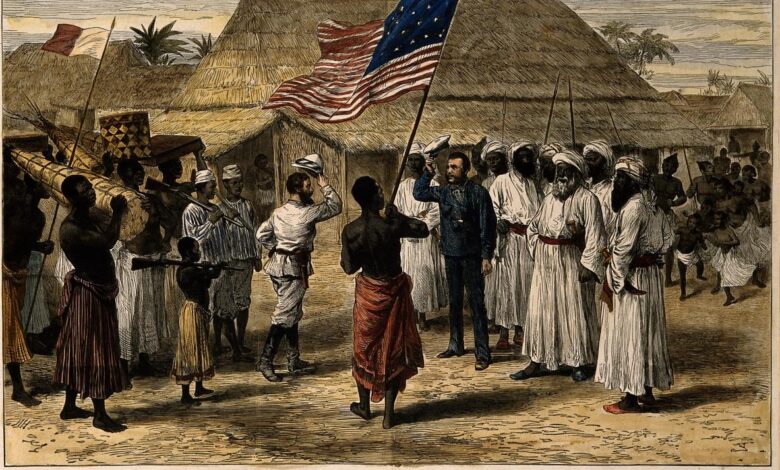
+256 702 23 93 37: On 10 November 1871, a meeting between two European men in Ujiji, on the shores of Lake Tanganyika in present-day Tanzania, became one of the most celebrated encounters in the history of African exploration. But behind Henry Morton Stanley's famous greeting to Dr David Livingstone lies a fascinating story of African messengers, forgotten expedition companions, established trading networks and a historical mystery: did the meeting actually take place on 10 November?

UgandaToday: Today In History: “Dr Livingstone,” — The Famous African Encounter Whose Date History Still Disputes
Uganda Today | The Uganda Today Historical Perspective | Tuesday, 10 November 2026
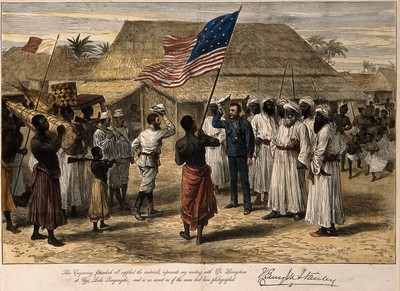
On 10 November 1871, a meeting between two European men in Ujiji, on the shores of Lake Tanganyika in present-day Tanzania, became one of the most celebrated encounters in the history of African exploration. But behind Henry Morton Stanley’s famous greeting to Dr David Livingstone lies a fascinating story of African messengers, forgotten expedition companions, established trading networks and a historical mystery: did the meeting actually take place on 10 November?
A Greeting That Became Immortal
Few historical expressions have achieved the international recognition of the words:
“Dr Livingstone, I presume?”
The greeting is attributed to Henry Morton Stanley, a journalist working for the American newspaper, the New York Herald, who had been dispatched into the African interior to locate the Scottish missionary and explorer David Livingstone.
Livingstone had spent years exploring Central and East Africa, investigating geographical questions surrounding the Nile and campaigning against the slave trade. By 1871, communication with Europe had broken down, leaving many people overseas uncertain about his whereabouts and even whether he was still alive.
The newspaper’s proprietor, James Gordon Bennett Jr., commissioned Stanley to undertake the search.
Stanley departed from the East African coast and organised a major expedition through the interior. After months of difficult travel, illness, food shortages and logistical challenges, he eventually reached Ujiji, a settlement on Lake Tanganyika.
Stanley’s published account places the famous encounter on 10 November 1871.
The greeting became an international sensation, transforming the journalist into a celebrated public figure and further elevating Livingstone’s reputation.
But the popular story, which has traditionally presented the meeting as a dramatic encounter between two extraordinary European personalities, leaves out several important African contributions. Project Gutenberg
The African Messenger Who Announced Stanley’s Arrival
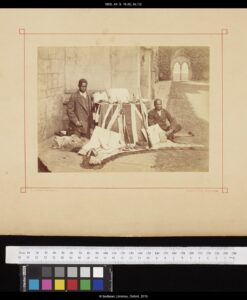
Perhaps the most overlooked character in this celebrated historical episode is a man known as Abdullah Susi.
According to Livingstone’s own journal, he was the person who first brought news of Stanley’s approaching expedition.
Livingstone described how, at a moment when his spirits were at their lowest, Susi came running towards him with an extraordinary announcement:
“An Englishman — I see him!”
The significance of this moment deserves greater attention.
Before Stanley could meet Livingstone, before the famous greeting could enter international history, an African companion had to recognise the approaching stranger, communicate the news and help bring the two men together.
Stanley’s own published account also describes meeting Susi and another of Livingstone’s African companions, James Chuma, before reaching the explorer.
Stanley records Susi introducing himself as Livingstone’s attendant. Chuma also identified himself to the journalist.

These were not incidental characters in the expedition’s history. They were among the people whose knowledge, experience and assistance sustained Livingstone through years of travel in Africa.
Their contribution reminds us that the celebrated explorers of the nineteenth century rarely travelled alone. Their journeys depended on African guides, interpreters, porters, cooks, messengers and companions.
Yet the international historical narrative frequently placed the European traveller at the centre while relegating the Africans who made the journey possible to supporting roles.
The Ujiji encounter offers an opportunity to correct that imbalance. Livingstone Online
Ujiji Was Not An Unknown African Wilderness

Another important aspect of this story is the location itself.
Ujiji, situated near present-day Kigoma in western Tanzania, was already an established commercial centre long before Stanley arrived.
During the nineteenth century, it was an important terminal of the central East African caravan trade.
Merchants, traders, travellers and communities from different parts of the African interior used established routes connecting the Great Lakes region with the Indian Ocean coast.
The central caravan route connected Ujiji with Bagamoyo, covering more than 1,200 kilometres.
The commercial networks carried goods including ivory and other commodities. They were also deeply implicated in the slave trade, whose human consequences devastated communities across the region.
Research published in the Journal of African History by historian Stephen J. Rockel has demonstrated that Nyamwezi long-distance trading caravans played a major role in connecting the coast with Ujiji. Importantly, many caravan porters were free wage workers, demonstrating the existence of organised African labour markets before formal colonial administration.
This history challenges the old portrayal of nineteenth-century Africa as an empty or disconnected continent awaiting European exploration.
Ujiji was part of an active commercial and social world with established institutions, routes, markets and knowledgeable populations.
Stanley’s arrival was therefore not the discovery of an unknown African settlement. It was an encounter within an already functioning African society. UNESCO World Heritage Centre

The Historical Mystery: Did They Really Meet On 10 November?
Here is where the story becomes particularly interesting.
Although 10 November 1871 is widely commemorated as the anniversary of the meeting, historical researchers have discovered inconsistencies in the surviving records.
Both Stanley and Livingstone experienced difficulties keeping accurate dates during their travels. Illness, disrupted routines and confusion over the relationship between the Gregorian calendar and the Islamic lunar calendar contributed to errors in their diaries.
A scholarly investigation by Justin D. Livingstone and Adrian S. Wisnicki, published through the University of Maryland’s Livingstone Online research project, examines the surviving manuscripts and the conflicting accounts.
The investigation identifies several possible dates for the meeting:
- 27 October 1871.
- 28 October 1871.
- 29 October 1871.
- 3 November 1871.
- 10 November 1871.
Livingstone’s journal contains a marginal date of 28 October, although the continuous entry makes it difficult to establish precisely where the account of the meeting begins.
Stanley’s own accounts also contain discrepancies. His newspaper dispatch gives 3 November, while his published book, How I Found Livingstone, records 10 November.
The researchers conclude that the available evidence cannot conclusively settle the precise date.
Consequently, 10 November remains the traditional anniversary, but it should not be presented as an uncontested historical fact.
This is a useful reminder that even famous historical events can contain unresolved questions when researchers return to original documents rather than simply repeating established narratives. Livingstone Online
Was The Famous Greeting Actually Spoken?
There is another intriguing question surrounding the encounter.
The expression “Dr Livingstone, I presume?” is commonly repeated as though it were a verified word-for-word transcript.
However, the historical record is less straightforward.
The celebrated wording comes from Stanley’s published narrative. Livingstone Online’s scholarly examination describes the phrase as possibly apocryphal.
Livingstone’s own surviving account emphasises Susi’s announcement and the arrival of Stanley, rather than preserving the famous greeting as a verbatim exchange.
This does not establish that Stanley invented the words. It simply means that the precise wording cannot be independently confirmed from the surviving accounts.
The distinction matters because historical memory often turns complicated encounters into polished stories that are easier to remember and reproduce.
In this case, a single sentence eventually became more famous than many of the people and circumstances that made the meeting possible. Livingstone Online
Why This Story Matters To Uganda And The Great Lakes Region
The significance of the Ujiji encounter extends beyond Tanzania.
The nineteenth-century Great Lakes region was characterised by extensive commercial, political and cultural relationships.
Buganda, under Kabaka Mutesa I, was an important political and commercial power during this period.
Historical research by Gerald W. Hartwig, published in the Journal of African History, documents the involvement of Ganda traders and their assistance in regional commerce around Lake Victoria. It also examines the influence of Mutesa and other African political actors on the development of these networks.
These developments remind us that Uganda’s historical communities were participants in wider regional systems of trade, diplomacy and political influence.
The Ujiji story therefore belongs to a much larger East African historical narrative.
It is also an opportunity to appreciate the importance of preserving African historical records, oral traditions, manuscripts and community memories.
For too long, many African historical accounts have been told primarily through the writings of European travellers and colonial administrators.
Their records are valuable, but they should not be mistaken for the entirety of African history.
The people who guided the travellers, carried their equipment, interpreted conversations, organised supplies and facilitated encounters also deserve recognition. African Union Library
Beyond The Famous Two Men: History Must Remember The Others

The meeting at Ujiji remains an extraordinary moment in the history of exploration and international journalism.
Stanley went on to become one of the most celebrated explorers of his generation. Livingstone continued his African investigations and died on 1 May 1873 in present-day Zambia.
After his death, African companions, including Susi and Chuma, played a remarkable role in preserving his body and ensuring that his remains were transported towards the East African coast for eventual return to Britain.
Their story demonstrates that the contributions of African companions did not end when European explorers completed their expeditions.
They were also custodians of historical memory.
As Uganda Today reflects on this celebrated encounter, perhaps the most important lesson is that history should not be remembered exclusively through the personalities whose names became famous.
It should also recognise the communities, individuals and networks whose contributions made those historic moments possible.
The famous greeting may have immortalised two men.
But the story of Ujiji belongs to Africa.
On this day in history, Uganda Today remembers not only the meeting of Stanley and Livingstone, but also the African people whose presence, knowledge and contributions helped make it possible.
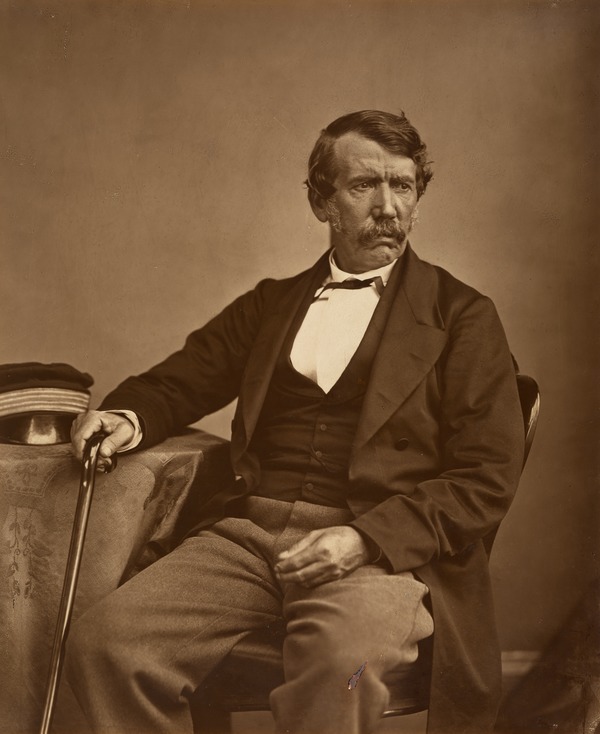
Image rights advisory: The Susi and Chuma photograph is held by the Bodleian Library and is identified as used by permission. The Livingstone manuscript images carry specific non-commercial or permission requirements. The National Galleries of Scotland portrait has a personal-use licence, with commercial use requiring separate permission. Uganda Today should obtain the necessary permissions before commercial republication. The Wellcome engraving is available through its historical collection, with attribution and applicable reuse conditions to be checked.
UGANDA TODAY EDITORIAL DISTINCTION
The defining feature of this edition is that it does not simply repeat the familiar story of Stanley finding Livingstone. It examines three less frequently explored dimensions: the African people behind the encounter, the historical importance of Ujiji as an established African commercial centre, and the unresolved question surrounding the date itself.
#TodayInHistory #UgandaToday #AfricanHistory #GreatLakesHistory #DavidLivingstone #PhoenixNewsFeeds