
UgandaToday: Kyankwanzi Patriotism Training Sparks Fresh Debate As Kyagulanyi Questions Government’s Motives
‘How Can A Government That Punished Us For Holding The Ugandan Flag Now Teach Our Children Patriotism?’ — Kyagulanyi Relays Mother’s Protest
A fresh political and civic debate is unfolding in Uganda following the government’s announcement that all Senior Six school leavers will undergo an estimated six months of patriotism training at the National Leadership Institute (NALI), Kyankwanzi.
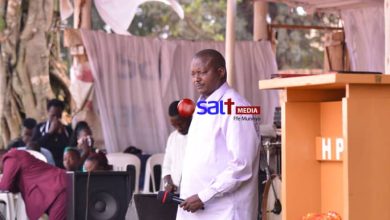
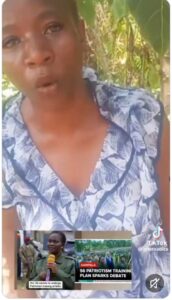
VIDEO: Kyagulanyi Questions Government’s Kyankwanzi Patriotism Programme
Watch Robert Kyagulanyi’s original X video
Video courtesy of Robert Kyagulanyi Ssentamu/X. The views expressed in the video are those of the speaker and the participants featured.
The announcement has drawn sharp criticism from opposition leader Robert Kyagulanyi Ssentamu, popularly known as Bobi Wine, who has questioned the timing, compulsory nature and political neutrality of the programme.
In a video shared by Kyagulanyi, a mother raises an emotionally charged question: how can a government accused of brutalising citizens during the January 2026 elections over their possession of the Ugandan national flag now demand that the same families send their children for government-directed “patriotism” training?


Government Announces Six-Month Kyankwanzi Programme
The controversy follows an announcement by Hellen Seku, Commissioner of the National Secretariat for Patriotism Corps (NSPC), that this year’s Senior Six leavers will be taken to Kyankwanzi for approximately six months.
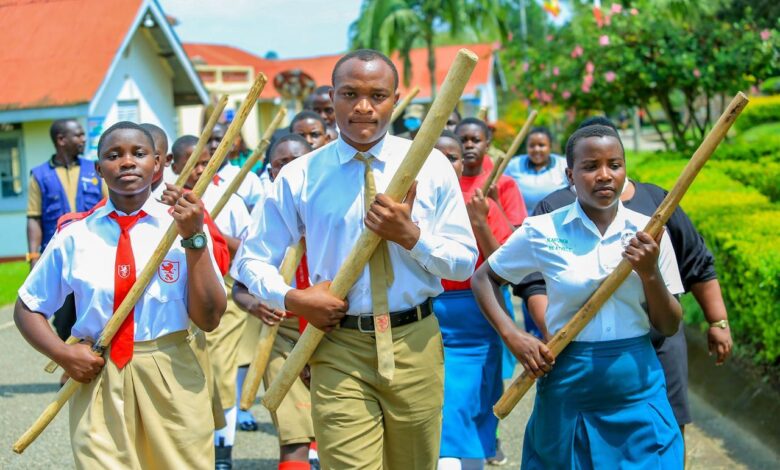
Seku made the announcement at Immaculate Heart Girls’ Secondary School Nyakibale in Rukungiri District, where more than 1,700 students from four institutions had completed a week-long patriotism programme.
According to the State House, the expanded programme is intended to promote discipline, patriotism, national identity and responsibility among young Ugandans.
The programme is not entirely new. The government has for years conducted patriotism and ideological programmes in schools and other institutions, with the Office of the President describing its objective as nurturing responsible citizens who value discipline, unity, hard work and national service.
However, sending an entire generation of Senior Six leavers to Kyankwanzi for an extended residential programme would represent a significant expansion of the initiative.
Kyagulanyi: ‘We Must Not Allow It’
Kyagulanyi’s intervention turns the government announcement into a much broader political question.
In the video accompanying his message, the mother questions the apparent contradiction between the government’s promotion of patriotism and what she describes as the treatment of ordinary citizens during the 2026 electoral period.
Her concern is particularly centred on the Ugandan flag.
For many opposition supporters, the national flag became a prominent symbol during the 2026 campaign and was frequently carried at opposition events. Kyagulanyi himself prominently displayed the flag during his campaign.
Kyagulanyi argues that a government that, in his view, treated citizens carrying the national flag as a security threat cannot simply demand unquestioning acceptance when it introduces a state-directed programme intended to teach young people patriotism.
He has consequently characterised the new initiative as an attempt to influence the political outlook of young Ugandans and warned parents against allowing their children to be politically indoctrinated.
That is Kyagulanyi’s political interpretation, rather than an established fact, and it is a distinction that remains important in reporting the controversy.
The Shadow Of The 2026 Elections
The argument gains its emotional force from the turbulent political environment surrounding Uganda’s January 15, 2026 elections.
Human Rights Watch reported that Ugandan authorities intensified their crackdown on opposition supporters following the elections, including mass arrests and alleged enforced disappearances. The organisation also documented restrictions around Kyagulanyi’s residence and reported allegations of violence against opposition figures.
Human Rights Watch separately reported that the election period was characterised by arrests, violence against opposition supporters, restrictions on assembly and a nationwide internet shutdown immediately before polling.
The Armed Conflict Location & Event Data project (ACLED) likewise reported repeated use of tear gas, roadblocks, arrests and violence against National Unity Platform activities during the campaign period.
The government and security agencies, however, have maintained that their interventions were undertaken within the framework of maintaining public order and national security.
Uganda Police itself acknowledged that some officers had been accused of caning civilians during a confrontation involving Kyagulanyi’s campaign in Gulu, describing such conduct as regrettable and stating that officers should exercise their powers within lawful limits.
What Does The Constitution Actually Say?
An important dimension of the debate is the government’s reference to the Constitution.
The Office of the President and government officials have invoked Article 17 in explaining citizens’ duties and the government’s patriotism programme.
But the wording of Article 17(2) deserves careful attention.
The Constitution states that it is the duty of able-bodied citizens to undergo military training for the defence of the Constitution and protection of Uganda’s territorial integrity whenever called upon to do so, with the State required to provide facilities for such training.
It does not literally describe Article 17(2) as a blanket constitutional requirement for six months of ideological or patriotism training at Kyankwanzi.
This distinction is likely to become increasingly important as the programme is rolled out.
The government’s position is that patriotism education is part of its wider constitutional and national responsibility. Its official programme describes patriotism as including loyalty to Uganda, responsibility, discipline, national pride, Pan-Africanism, environmental protection and service to the country.
Is Patriotism Training The Same As Political Indoctrination?
This is perhaps the central question confronting Uganda.
The government rejects the suggestion that the programme is partisan.
The Office of the President explicitly describes its patriotism programme as non-partisan, while its stated curriculum includes national identity, discipline, Pan-Africanism, political history, integrity, environmental protection and civic responsibility.
Recent students who completed patriotism training in Rukungiri said they benefited from lessons on Uganda’s history, resilience, discipline, entrepreneurship, environmental protection and integrity. They also participated in drills, mentorship and ideological discussions.
Opposition groups, however, have questioned whether training conducted under a programme administered from the Office of the President and involving UPDF instructors can be sufficiently insulated from the ideology of the ruling establishment.
Nile Post reported that opposition parties, including the People’s Front for Freedom and the Democratic Party, have raised concerns about the curriculum, compulsory nature and the possibility of exposing students to NRM ideology. Government representatives have rejected those accusations.
The Question Parents Are Now Asking
For parents, the issue goes beyond political party competition.
Senior Six leavers are normally preparing for university, tertiary education, employment or other stages of adult life.
A six-month residential programme could therefore affect university admission schedules, employment plans and family arrangements.
There are also unanswered practical questions.
When exactly will the programme begin? Who will pay for the students? What precisely will they be taught? Will participation be compulsory? How will parents challenge or seek clarification about the curriculum? And what independent oversight will exist over the programme?
Recent reporting has noted that some of these implementation details have not yet been publicly clarified.
These questions deserve answers before the programme is implemented on a nationwide scale.
The Ugandan Flag At The Heart Of The Controversy
There is also a powerful irony in the political argument.
Uganda’s Constitution itself places a duty on every citizen to respect the national anthem, flag, coat of arms and currency.
Consequently, the national flag has a constitutional significance that extends beyond political parties.
For Kyagulanyi and his supporters, displaying the flag during political mobilisation has represented patriotism and resistance.
For the government, however, political gatherings and demonstrations remain subject to security and public-order considerations.
That unresolved tension has now moved from the streets and campaign rallies into the classroom and family home.
A Generation At The Centre Of Uganda’s Political Contest
The dispute over Kyankwanzi may ultimately become larger than the question of whether young Ugandans should receive patriotism education.
Few Ugandans would object to teaching young people to love their country, respect other citizens, reject corruption, protect the environment, work hard and defend the Constitution.
The harder question is who gets to define patriotism, what political history young people are taught, and whether they are allowed to distinguish patriotism towards Uganda from loyalty to a particular government or political organisation.
That distinction is fundamental in any democracy.
A genuinely national patriotism programme, if that is its objective, would arguably need to give young Ugandans room to understand Uganda’s history from multiple perspectives—including the country’s achievements, its conflicts, its human-rights controversies, electoral disputes and the responsibilities of both citizens and government.
Kyankwanzi Debate Could Test Government’s Credibility
The government’s decision to expand the programme therefore presents both an opportunity and a challenge.
If Kyankwanzi becomes a place where young Ugandans are taught constitutionalism, national history, civic responsibility, accountability, peaceful political participation and respect for human rights, it could potentially strengthen citizenship.
But if parents and political actors perceive it as an institution for manufacturing political loyalty, resistance is likely to intensify.
Kyagulanyi’s video has tapped into precisely that fear.
And the mother featured in the video poses a question that Uganda’s political leadership will have to confront:
Can the State persuade a politically awakened generation to embrace its definition of patriotism without first convincing them that the programme belongs to Uganda—not to a political party or government?
That is the real debate now emerging around Kyankwanzi.
Uganda Today Editorial Note
The allegations and political characterisations attributed to Robert Kyagulanyi and the mother in the video are presented as their views. Uganda Today does not independently establish that every incident alleged in the video occurred as described. The government position that the patriotism programme is intended to promote national values, discipline and civic responsibility is included to provide balance.
Original video/message: Robert Kyagulanyi Ssentamu’s X post/video


#UgandaToday #Kyankwanzi #PatriotismTraining #BobiWine #UgandaPolitics #Uganda