The Mystery of King Oyo’s Heir: Inside the Tooro Succession Dispute Pitting Queen Mother Against the Babiito Royal Clan
+256 702 23 93 37: Who is the reported child? Where is he? Who is his mother? When was he born? Why was his existence not known to the wider royal family? And, most importantly, will the Babiito recognise him as the legitimate successor to the Tooro throne?


UgandaToday: The Mystery of King Oyo’s Heir: Inside the Tooro Succession Dispute Pitting Queen Mother Against the Babiito Royal Clan
By UgandaToday Editorial Desk
The death of Omukama Oyo Nyimba Kabamba Iguru Rukidi IV has opened an unexpected and potentially historic chapter in the affairs of the Tooro Kingdom—not because the institution lacks a possible successor, but because the very existence and legitimacy of the reported heir has become the subject of disagreement within the royal establishment.
King Oyo, who died on August 27, 2026, aged 34, after a 31-year reign, was officially described by the Tooro Kingdom as having left behind a Prince who would succeed him. The Kingdom said the identity of the child would be revealed at an appropriate time in accordance with Tooro customs and traditions.
But days after that announcement, the head of the Babiito royal clan, Omusuuga Charles Kayondo Kamurasi, publicly challenged the assertion, saying the royal clan had never been informed that Oyo had fathered a child.
The result is an extraordinary succession question:
Who is the reported child? Where is he? Who is his mother? When was he born? Why was his existence not known to the wider royal family? And, most importantly, will the Babiito recognise him as the legitimate successor to the Tooro throne?
For now, many of those questions remain unanswered.
The Announcement That Changed the Succession Debate
When Tooro Prime Minister Calvin Armstrong Rwomiire Akiiki announced King Oyo’s death on August 27, he did not merely announce the passing of the monarch.
He also delivered a significant message concerning the future of the Crown.
The Prime Minister said that the continuity of the Tooro Crown was assured because Oyo had left behind a Prince who would be his heir, adding that the child’s identity would be formally disclosed at the appropriate time under Tooro customs.
At first, the statement appeared to settle the question of succession.
Then President Yoweri Museveni reinforced it.
In remarks following Oyo’s death, Museveni said that he had spoken by telephone with the Queen Mother, Best Kemigisa, who informed him that Oyo had left behind a young boy who would eventually be introduced to the public.
The President’s intervention gave the claim considerable national weight because it meant that the information was not merely coming from an unidentified source within the Kingdom administration. It was being publicly attributed to the mother of the late King herself.
Yet the royal clan subsequently raised an entirely different account.
Then Came The Royal Clan’s Rejection
At the centre of the dispute is Omusuuga Charles Kayondo Kamurasi, the head of the Babiito royal clan.
The title is important.
Kamurasi is not simply another member of the Tooro royal establishment. The Babiito are the royal clan from which the Tooro monarch is traditionally drawn, while the Office of the Musuuga has a central role in the cultural succession process.
Kamurasi, who is also an uncle of the late King Oyo and was closely involved in the King’s upbringing, said the royal clan had no knowledge of the reported child.
He questioned where the Prime Minister obtained the information and challenged the authority of the Kingdom administration to declare an heir before the traditional structures had dealt with the matter.
His position was blunt: the royal clan had not been told that Oyo had a child.
That immediately transformed what initially looked like a routine royal succession into a potentially complicated constitutional, cultural and family question.
Who Is The Child At The Centre Of The Controversy?
At the time of publication, the most important fact about the alleged heir is also the most frustrating:
His identity has not officially been made public.
No official announcement has disclosed:
- his name;
- his age;
- his mother’s identity;
- where he has been living;
- when he was born;
- whether he has previously appeared before members of the Babiito royal clan;
- or what documentation exists to establish his relationship with the late King.
The Tooro Kingdom’s original announcement deliberately said that the identity of the Prince would be revealed at the appropriate time in accordance with tradition.
That means Uganda’s public debate is currently taking place without the public having access to the most basic particulars concerning the child.
And that is precisely why the Babiito have demanded that the matter be handled through the customary succession process.
Why The Queen Mother’s Assertion Matters
The Queen Mother’s position carries particular significance because Best Kemigisa is Oyo’s mother and was deeply involved in his life from the moment he became King.
The official Tooro Kingdom biography of Queen Best records that she became a defender and regent of the Crown after Oyo ascended to the throne as a three-year-old in 1995.
She therefore witnessed Oyo’s transformation from a child monarch into an adult King.
Museveni’s account is that it was Queen Best who personally informed him that Oyo had left a young son.
That creates a striking situation:
On one side is the King’s mother saying that there is a young heir. On the other is the head of the royal clan saying the clan does not know the child.
Neither position, by itself, publicly establishes the child’s biological status or his automatic entitlement to the Crown.
That determination now falls into the hands of Tooro’s customary institutions and, if necessary, the legal framework governing traditional leadership in Uganda.
The Man Challenging The Claim: Who Is Omusuuga Charles Kamurasi?
The title is Omusuuga,
Omusuuga Charles Kayondo Kamurasi is the head of the Babiito royal clan and occupies a particularly influential traditional position in matters concerning the Tooro Crown. He is also an uncle of the late King Oyo.
https://x.com/uganda43443/status/2095771235921633537/video/1
His connection to Oyo goes back to the King’s childhood.
In an earlier account of Oyo’s enthronement, Kamurasi recalled that he was entrusted with responsibilities concerning the young prince from the time of his birth. He said Queen Best Kemigisa gave birth to Oyo at Nsambya Hospital on April 16, 1992, and that he subsequently helped care for the young prince and his mother.
He was also among those involved in the ceremonies surrounding Oyo’s installation as King in 1995.
That history makes his current position particularly consequential.
He is effectively saying:
If Oyo had a biological son who is intended to inherit the Crown, why did the people responsible for safeguarding the royal lineage not know about him?
The Babiito Have Already Activated Their Succession Machinery
The dispute is not merely rhetorical.
The Babiito royal clan has established a 21-member committee of elders to oversee the succession process.
According to the clan’s announcement, the committee is chaired by Omusuuga Kamurasi and has a mandate that includes identifying the successor, formally presenting the successor to relevant stakeholders and preparing the traditional and cultural ceremonies connected with succession.
This is significant because it demonstrates that the Babiito do not regard the announcement of a reported heir by the Prime Minister as the final word on who becomes the next Omukama.
The royal clan’s position is that succession is a customary process, not simply an administrative announcement.
If There Is No Recognised Son, Where Does Tooro Go?
Kamurasi has indicated that, if the reported child is not established as a legitimate biological heir through the customary process, the Babiito would have to look within the wider royal lineage.
Reports indicate that he has referred to returning to the lineage of Omukama George Rukidi III, Oyo’s grandfather, and examining existing princes within that lineage.
This does not necessarily mean that a particular prince has already been selected.
Rather, it demonstrates the alternative pathway available to the Babiito if no direct successor is formally recognised.
The key point is that the reported child has not yet publicly been installed as Omukama.
There is therefore a difference between saying “Oyo left a son” and saying “the son has been formally recognised as the next Omukama.”
Those are two separate stages.
The Prime Minister’s Position Is Also Under Scrutiny
Another issue raised by Kamurasi concerns the role of the Tooro Prime Minister.
The Prime Minister is the head of the Kingdom’s administrative government, but the Babiito maintain that questions concerning the identity and legitimacy of a successor belong to the traditional structures of the royal clan.
This explains why Kamurasi questioned the Prime Minister’s announcement.
The disagreement, therefore, is not simply about whether a child exists.
It is also about who has the traditional authority to authenticate and announce a successor.
The distinction could become one of the most important elements in the coming days.
A Question Of Biology, Custom And Recognition
There are actually three separate questions hidden inside the current controversy.
1. Does the child exist?
The Prime Minister says yes.
President Museveni says the Queen Mother told him yes.
The Babiito leadership says the royal clan has not been informed and does not know the child.
2. Is the child biologically King Oyo’s son?
That has not been publicly established through evidence disclosed by the Kingdom.
There has been public discussion about verification, including suggestions of DNA testing, but no official DNA result has been announced. Therefore, UgandaToday cannot responsibly state that the child’s biological relationship to Oyo has been proven or disproven.
3. If he is Oyo’s biological son, does that automatically make him the next Omukama?
This is where customary succession becomes crucial.
The existence of a biological child and the formal recognition of a new cultural leader are not necessarily identical processes.
The Babiito have made it clear that they intend to follow the traditional structures governing succession.
Uganda’s Law Now Enters The Picture
The dispute is unfolding within a legal framework.
Government has referred to Section 15 of the Institution of Traditional or Cultural Leaders Act, 2011, which provides a mechanism for resolving disputes concerning traditional leadership.
The government has urged the Royal Family, Kingdom leadership, clan leaders and elders to use recognised cultural mechanisms first, with the law providing for further recourse where necessary.
Minister for Gender, Labour and Social Development Gen. (Rtd) Henry Tumukunde has said government will follow the law as consultations continue between the President and Tooro’s cultural leadership.
This is important because the dispute is therefore unlikely to be resolved simply through competing public statements.
There is a recognised process through which a disagreement over cultural leadership can be handled.
Why The Silence Around The Child Has Become So Important
There may be perfectly legitimate cultural reasons for not immediately revealing the child’s identity.
The Tooro Kingdom itself said the identity would be revealed at an appropriate time according to tradition.
But the decision to keep the child out of the public eye has also created a vacuum that has quickly filled with speculation.
Questions are now circulating about the child’s mother, his age, where he has lived, whether Oyo acknowledged him publicly or privately, and whether senior members of the royal clan knew of his existence.
For the moment, these questions should remain questions rather than be converted into allegations.
There is no credible public evidence currently establishing that the child is fictitious, nor is there publicly disclosed evidence that conclusively establishes his biological relationship with Oyo.
That distinction is essential for responsible journalism.
Oyo’s Own Private Life Adds Another Layer To The Mystery
King Oyo’s personal life was remarkably private.
He never publicly established a queen consort and, until his death, was often portrayed as one of Uganda’s most prominent unmarried traditional rulers.
Indeed, in September 2025, Queen Best Kemigisa publicly encouraged her son to marry and bring an Omugo, or queen consort, into the royal family.
That history partly explains why the announcement of a previously undisclosed young son came as a surprise to many Ugandans.
But it should not be interpreted to mean that an unmarried King could not have fathered a child.
The crucial issue is not whether Oyo had a publicly known wife.
It is whether a child exists and whether that child can be legitimately established as the late King’s biological son and recognised within Tooro’s customary succession framework.
The Extraordinary Parallel With Oyo’s Own Accession
There is an intriguing historical parallel.
When Oyo became King in 1995, he was only three years old.
His father, Omukama Patrick David Matthew Kaboyo Olimi III, had died on August 26, 1995, and the young Oyo was enthroned on September 12 that year. He subsequently remained under a regency arrangement until he reached adulthood.
Now, 31 years later, Oyo’s death has produced another unusual succession question—this time concerning a child who, according to the Kingdom administration and the President, could inherit the Crown.
The possibility that Tooro could again have a very young monarch therefore makes the present dispute even more consequential.
What Happens Next?
The immediate answer appears to lie with the Babiito elders.
The 21-member committee has been tasked with handling the customary succession process. Government has meanwhile urged restraint and warned the public against spreading unverified information.
The late King’s burial preparations are also continuing, with government coordinating with the Kingdom on the official arrangements.
The latest developments indicate that dialogue may now become necessary.
Tooro Prime Minister Rwomiire has expressed willingness to engage with the Musuuga in resolving differences within the Kingdom.
That could provide an avenue for the competing accounts to be reconciled without turning a delicate royal transition into a public confrontation.
The Real Question Is Not Simply “Who Is The Child?”
Ultimately, the unfolding Tooro succession story is bigger than one boy.
It is a test of how family knowledge, royal tradition, customary authority, biological descent, cultural legitimacy and Ugandan law interact when a traditional monarch dies unexpectedly.
President Museveni says the Queen Mother told him that Oyo left a young son.
The Tooro Kingdom administration says the Crown’s continuity is assured because the late King left a Prince.
The Babiito royal clan, through Omusuuga Charles Kamurasi, says it was not aware of such a child and insists that succession must pass through the recognised traditional process.
For now, the child’s name, identity, mother, age and biological status remain undisclosed to the public.
That is the central fact.
Until the child is formally presented and his status determined by the appropriate royal and customary structures, Uganda should resist the temptation to declare either side victorious.
The question before Tooro is not merely whether Oyo left a child.
It is whether that child will be formally recognised as Oyo’s son, accepted by the Babiito royal clan and ultimately installed as the next Omukama of Tooro.
That answer may determine the next chapter of one of Uganda’s most historic traditional institutions.


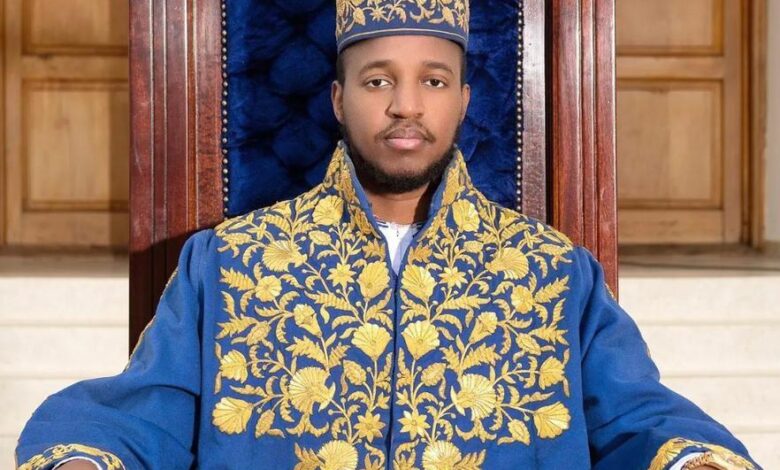
- King Oyo Nyimba Kabamba Iguru Rukidi IV, whose death has triggered a sensitive debate over the future of the Tooro Crown.
- Queen Mother Best Kemigisa, mother of the late King Oyo, is at the centre of the reported heir question after telling President Museveni that her son left behind a young boy.
- Omusuuga Charles Kayondo Kamurasi, head of the Babiito royal clan, has challenged the claim that King Oyo left a known biological heir.
Editorial Note:
Because the child is a minor and has not been publicly identified, UgandaToday deemed itprudent not to publish his name, photograph, location, mother’s identity or other identifying details unless and until they are officially disclosed and there is a clear public-interest justification.
Reporting basis: This feature draws on the Tooro Kingdom’s official announcement, current reporting by various local media, Reuters and other contemporaneous reports. The most important claims have been cross-checked against multiple sources.