Alex Mukulu: The Curtain Falls on a Theatre Giant Who Turned Uganda’s Story into Art
+256 702 23 93 37: Alex Mukulu Dies At 72: The Extraordinary Life, Music, Theatre And Legacy Of Uganda's Legendary Storyteller

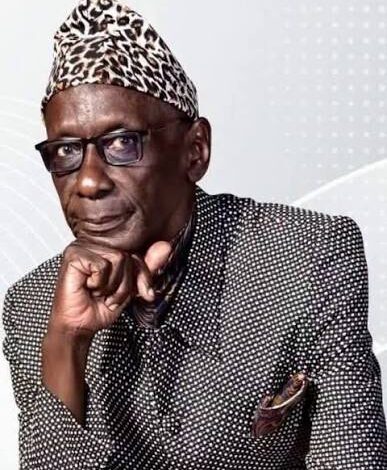
UgandaToday: Alex Mukulu: The Curtain Falls on a Theatre Giant Who Turned Uganda’s Story into Art
By UgandaToday Editorial Desk
Uganda’s creative industry is mourning the death of one of its most distinctive storytellers, playwrights, actors, directors and musicians, Alex Mukulu, whose career stretched across nearly five decades and whose work became a mirror through which generations of Ugandans examined their society, politics, culture, faith and humanity.
Mukulu died on August 15, 2026, aged 72, bringing to an end the life of a man who, for more than 40 years, helped define Ugandan theatre. New Vision reports that he was born in 1954 in Misebe, Ssingo County, and died 72 years later after a career that took him from the stage to music, television and international cultural platforms.
According to media reports, Mukulu died at Kiruddu Hospital after suffering liver complications. His death has since triggered preparations involving his family, members of the arts fraternity and government officials, with discussions underway over an official send-off in recognition of his contribution to Uganda’s cultural life.
A Childhood Shaped By Loss, Culture And Performance
Mukulu was born to Paulo Kayizi Lugaizi and Victoria Ndagire, who is identified in biographical accounts as a daughter of Prince Yokana Kimbugwe of Lungujja.
In later reflections about his childhood, Mukulu recalled deeply painful experiences, including seeing his father in a coffin and his mother being shot. Those memories, alongside his upbringing in central Uganda, became part of the emotional and social reservoir from which he later drew his stories.
He also remembered growing up in Namutamba village in the Mityana area, where the vibrancy of neighbouring communities influenced his appreciation of music, movement and storytelling. His artistic inclination was also linked to his family: an aunt reportedly played the violin in the Kabaka’s palace.
https://x.com/uganda43443/status/2090065118235148705/video/1
His early education included Namilyango Primary School and later Kololo Secondary School, where his interest in drama became increasingly pronounced. At Kololo, he became president of the school’s drama club.
Mukulu subsequently left school after Senior Four and joined the Rwenzori Band, beginning a musical chapter that would eventually intersect with his theatre career.
He later returned to formal education, studying at Caltec Academy for his A-levels before joining Makerere University, where he studied Film and Drama/Music, Dance and Drama.
From Music To Theatre
Music was not merely a side interest for Mukulu. He could sing, compose, play guitar and incorporate music into his dramatic productions.
@historytimenuuhumc ALEX MUKULU WITH THE WOUNDS OF AFRICA 31 May 1994 #history #historytimenuuhumc #foryou #fyp #historia
His musical journey connected him with some of Uganda’s most influential musicians of the era, including the late Philly Bongole Lutaaya. The two were close friends and, during their formative years, reportedly shared accommodation around Namirembe.
The relationship between the two artists was more than friendship. They belonged to a generation of Ugandan creatives who used music and performance not simply for entertainment but as vehicles for storytelling and social commentary.
Mukulu’s musical catalogue includes songs such as “Bana Kampala,” “Dolikalijjo,” “Bakubanja,” “Bakisiimba,” “Nabutono,” “Empilivuma,” “Ogye Odemu Onkwaane” and others.
His music carried the same characteristic that defined his theatre: ordinary Ugandan life became the subject of observation, humour, criticism and reflection.
The Video: Alex Mukulu In His Own Voice
The video accompanying this article offers readers and viewers an opportunity to reconnect with Mukulu through his music and performance.
Watch the embedded Alex Mukulu video and follow the lyrics/performance here:
Watch Alex Mukulu’s video on X
Editorial note: UgandaToday has embedded the original X post/video in the published article rather than reproducing the full song lyrics as text. This preserves the original performance while respecting copyright.
The Theatre Revolution
Mukulu’s professional theatre career began in earnest in the 1970s.
His 1977 production Muzukulu wa Kabangala marked the beginning of a remarkable catalogue of plays that would eventually make him one of Uganda’s leading playwrights.
Over the following decades came works including Engule ya Kamukukulu, Springs of Tears, The Cigarette, Opera Bakisimba, Twin Opera, The Celebrity, I Killed the Archbishop, Gwanga Mujje, Mbasalidde ga Nkolwa, Stop It with 11 Men, Liberator Kid, The Drunkards, Wounds of Africa, Peasants Cry, 30 Years of Bananas, Excuse Me Mzungu, The Guest of Honour, Seven Workers of Uganda and Radio Mambo Bado, among others.
He was not interested in theatre that merely made audiences laugh and then sent them home.
Mukulu believed theatre should provoke thought.
Media’s obituary describes him as a perfectionist who wanted audiences to laugh, cry, become angry and think about what they had witnessed. For him, music and dance were not decorative additions to a production; they had to advance the story and reinforce its message.
That philosophy earned him a reputation as one of Uganda’s most influential practitioners of what has often been described as social and protest theatre.
“30 Years Of Bananas” And A Nation Looking At Itself
Among Mukulu’s most celebrated works was 30 Years of Bananas, first staged around Uganda’s 30th anniversary of independence.
The play became a powerful examination of the country’s post-independence experience, with audiences reading it as a satire of Uganda’s political and social journey.
It subsequently became one of the country’s best-known theatrical works.
The script was published by Oxford University Press in 1993, giving the work a life beyond the stage and placing Mukulu’s writing within the broader African literary tradition.
More than three decades later, the play continued to attract audiences. In 2025, it returned to the stage in Kampala, demonstrating the remarkable durability of Mukulu’s themes.
The title itself became almost synonymous with his ability to use humour and metaphor to confront uncomfortable national questions.
A Theatre Shaped By Uganda’s Political History
Mukulu’s lifetime coincided with some of the most turbulent chapters in Uganda’s modern history.
He grew up during the early years of independence and witnessed the political upheavals that followed: the destruction associated with the 1970s, the overthrow of governments, the expulsion of Asians, coups and counter-coups, and the continuing political and social transformation of the country.
Rather than stand outside these developments, he turned them into material for his art.
His theatre became a form of social commentary in which political leaders, ordinary citizens, poverty, corruption, culture, religion, conflict and human relationships could all become characters in a much larger Ugandan story.
This explains why his works have continued to attract interest decades after their first staging.
The CHOGM Moment
One of the most visible international moments in Mukulu’s career came in 2007, when Uganda hosted the Commonwealth Heads of Government Meeting.
Mukulu presented Journey to Self-Realization during the opening ceremony of CHOGM in Kampala, placing Ugandan theatre and storytelling before an international audience.
It was a fitting platform for an artist whose work had consistently attempted to explain Uganda to Ugandans while also presenting Uganda’s experiences to the wider world.
A Long Absence — Then A Dramatic Return
Although Mukulu remained active in creative circles, he eventually stepped away from performing regularly on Uganda’s main theatre stage.
After a lengthy absence, he returned to the National Theatre in 2024, 17 years after his previous major appearance there.
His comeback production, Kulunkalu ne Kulumbisi, was an Africanised adaptation of William Shakespeare’s Romeo and Juliet.
But Mukulu did not simply reproduce Shakespeare.
He transplanted the story into Uganda, using local language, music, dance, costumes, political symbolism and contemporary social realities.
The production explored the divisions between the wealthy and the poor and used the imagery of the “Yellow City” and “Red Ghetto” to examine Uganda’s political and social tensions.
The production was staged free of charge at the National Theatre from March 29 to April 21, 2024, in part because Mukulu wanted to help restore theatre as a space where Ugandans could gather, think and engage with society.
His return was warmly received.
The Katikkiro of Buganda, Charles Peter Mayiga, praised Mukulu for his enormous contribution to Ugandan theatre and for using his talent to portray the good, bad and ugly in society.
His Theatre Was Also A School
Beyond the productions themselves, Mukulu’s influence can be measured through the generations of actors, directors, playwrights and performers he mentored.
Colleagues and younger practitioners have repeatedly described him as a teacher whose influence extended well beyond what audiences saw on stage.
Ugandan media has noted that much of Mukulu’s contribution was not necessarily visible to the general public, while the arts fraternity has credited him with helping shape Uganda’s theatre ecosystem.
He was therefore not merely an actor or playwright.
He was a teacher, director, cultural critic, storyteller and institution-builder.

Family: A Father Of Four
Away from the stage, Mukulu was a father of four children — two boys and two girls.
In a 2019 interview, he spoke about his children, saying they had grown into adulthood and had pursued different paths. He particularly mentioned his daughter Gwendolyn Mukulu, who followed the family’s artistic tradition as a musician, as well as a son who became a choreographer.
Gwendolyn later became known internationally as the mother of singer Israella Kojo, who won the 2022 edition of The Voice Kids UK. Contemporary reporting identified Gwendolyn as Alex Mukulu’s daughter and noted the family’s continuing connection to music.
Mukulu’s family life was not always conventional.
In an earlier interview, he spoke openly about divorce and later relationships. In 2019, he described his wife Christine as living in the United States, where she had reportedly spent many years, and explained that modern communication made the long-distance relationship manageable.
Some of his children live abroad, a factor that has influenced the timing of his funeral arrangements following his death.
The Man Behind The Legend
Those who knew Mukulu outside the theatre often encountered a man who was difficult to categorise.
He exercised, played football, played guitar and continued to work with young people.
He described himself as someone who enjoyed solitude, reading and writing. He also retained a strong spiritual dimension and once said that if stranded on a desert island he would take his Bible and guitar.
His reflections on politics could be as unconventional as his theatre.
In one interview, he proposed changing Uganda’s voting system so that political candidates would be required to answer questions from voters about how they intended to solve national problems.
His ideas often carried the same mixture of humour, provocation and seriousness that characterised his productions.
A Cultural Ambassador
Mukulu’s influence was never confined to Uganda.
His productions travelled internationally, including Wounds of Africa, which was performed during a tour in the United States in the 1990s.
His work demonstrated that Ugandan theatre could simultaneously be local and universal — rooted in Buganda, Uganda and Africa while addressing questions of power, identity, conflict, love, faith and human dignity that audiences anywhere could understand.
His international work helped position him as one of Uganda’s cultural ambassadors.
His Final Chapter
Mukulu’s last major return to the stage in 2024 was significant because it showed that age had not diminished his appetite for experimentation.
Even in his seventies, he remained engaged with the question that had occupied him throughout his career: What can art do for society?
His answer was consistent.
Art should entertain, but entertainment alone was never enough.
It should disturb complacency.
It should make people question themselves.
It should preserve memory.
And, above all, it should tell the truth about the society that produces it.
On August 15, that voice fell silent.
But his stories remain.
His plays remain.
His music remains.
And the generations of Ugandan artists who learnt from him remain.
The Curtain Falls — But The Story Continues
The death of Alex Mukulu is therefore more than the passing of an individual artist.
It marks the departure of one of the last major figures of a generation that treated the theatre as a national classroom, a political forum, a cultural archive and a place of entertainment at the same time.
The government’s involvement in discussions over his final send-off reflects the growing recognition of the scale of his contribution. According to the funeral committee, government officials joined the family and arts fraternity because Mukulu was regarded as a national cultural asset.
The burial programme was still being finalised as of August 18, with the family seeking time for children living abroad to return home.
Mukulu’s own website preserves recordings of his theatre, music, interviews and other creative work, offering future generations a digital archive through which to encounter the man and his art.
For Uganda’s theatre community, the curtain has fallen.
For Alex Mukulu’s work, however, the performance is far from over.
His stage has become history — and history, as Mukulu spent a lifetime demonstrating, is never truly silent.