Can Corruption Fight Corruption? Kyagulanyi Questions Museveni Government’s Anti-Graft Crusade
+256 702 23 93 37: In a strongly worded statement titled “Can Corruption Fight Corruption? Hell No!”, Kyagulanyi questioned the sincerity of ministers who have recently been exposing alleged corruption, financial mismanagement and abuse of office in government institutions and local governments.

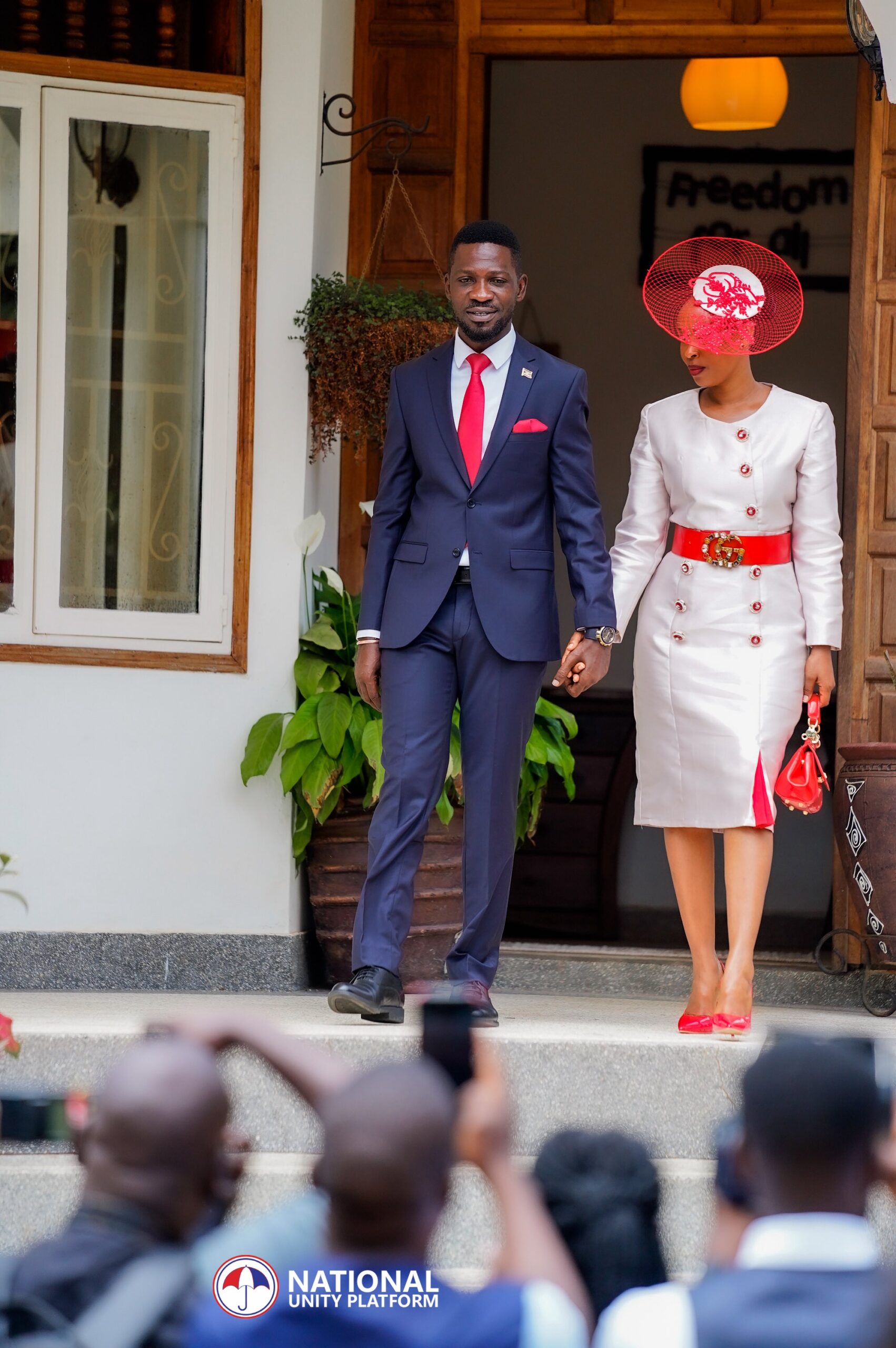
UgandaToday: Can Corruption Fight Corruption? Kyagulanyi Questions Museveni Government’s Anti-Graft Crusade
By UgandaToday Reporter
National Unity Platform (NUP) leader Robert Kyagulanyi Ssentamu has launched a scathing attack on the government’s renewed anti-corruption campaign, arguing that an administration he accuses of presiding over corruption cannot credibly lead the fight against the vice.
In a strongly worded statement titled “Can Corruption Fight Corruption? Hell No!”, Kyagulanyi questioned the sincerity of ministers who have recently been exposing alleged corruption, financial mismanagement and abuse of office in government institutions and local governments.
His comments come amid a series of government actions targeting alleged financial impropriety in local governments and other public institutions.
Kyagulanyi Recalls 2024 Anti-Corruption Protests
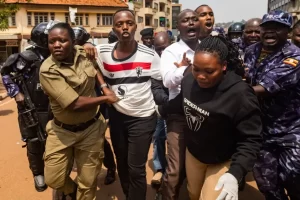
Kyagulanyi began his criticism by recalling the youth-led anti-corruption demonstrations of July 2024, when young Ugandans attempted to march to Parliament demanding accountability.
At the time, President Yoweri Museveni warned the organisers that they were “playing with fire.” Police subsequently arrested scores of protesters as authorities blocked the demonstrations.
Human Rights Watch reported that Ugandan authorities arrested young people associated with the protests, while Al Jazeera reported that at least 45 people were detained during the crackdown. Reuters also reported arrests during the demonstrations. (Human Rights Watch)
Kyagulanyi argues that the government’s response to those protests demonstrated what he considers a fundamental contradiction in its approach to corruption.
He alleges that protesters demanding accountability were suppressed while those responsible for corruption were protected.
Ministers Now Exposing Graft
The NUP leader’s criticism follows a number of recent government interventions against alleged corruption and mismanagement.
Newly appointed Local Government Minister Balaam Barugahara, for instance, has publicly warned officials accused of mismanaging Parish Development Model funds and pledged to use community accountability meetings to expose and pursue those implicated in corruption.
The ministry has since taken disciplinary action against several local government officials.
In July, four senior officials in Bulambuli were interdicted following what the ministry described as serious administrative and financial management failures. Four officials in Mbale were similarly interdicted after allegations involving abuse of office, mismanagement of public resources and possible financial impropriety.
In Jinja, the district Chief Administrative Officer was recalled to the ministry headquarters to facilitate a high-level investigation into alleged corruption.
These developments appear to have provided the backdrop for Kyagulanyi’s latest criticism.
‘They Are Confirming What We Have Always Said’
According to Kyagulanyi, the revelations by government officials are inadvertently strengthening the opposition’s longstanding argument that corruption is deeply entrenched within the state.
He claims that inflated government project costs, procurement irregularities and misuse of public resources have become systemic rather than isolated incidents.
Kyagulanyi alleges that public infrastructure projects such as roads, hospitals and schools can cost several times what they should because of inflated procurement and project costs.
He contends that such practices create a network of officials and beneficiaries with a vested interest in preserving the political status quo.
These claims, however, remain political allegations and should be distinguished from corruption cases established through investigations and court proceedings.
‘Corruption Begins From State House’
The opposition leader went further, accusing the presidency of being at the centre of what he describes as Uganda’s corruption problem.
Kyagulanyi alleged that corruption extends from State House into public institutions and accused the government of patronage, nepotism, cronyism and abuse of public resources.
He also questioned the use of classified expenditure in national budgets, arguing that large sums allocated under classified items lack sufficient public scrutiny.
His broader argument is that corruption cannot be effectively eliminated without addressing what he describes as corruption at the highest levels of political leadership.
Lifestyle Audits And The ‘Big Fish’
Kyagulanyi also revisited the controversial question of lifestyle audits for public officials.
In 2021, Museveni launched a lifestyle audit campaign as part of the government’s anti-corruption strategy. The Inspectorate of Government said at the time that thousands of corruption cases had been reported and that lifestyle audits could help investigators pursue officials whose wealth appeared inconsistent with their known income. (IGG)
Museveni, however, cautioned then-IGG Beti Kamya to be careful with the approach, warning that corrupt individuals could move illicit wealth abroad.
Kyagulanyi maintains that attempts to pursue powerful individuals have historically encountered political obstacles.
He alleged that a former Inspector General of Government found powerful individuals shielded by political connections when attempts were made to investigate them.
Government’s Anti-Corruption Drive Intensifies
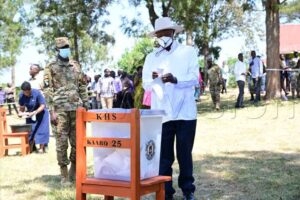
Despite Kyagulanyi’s criticism, the government has continued to announce measures aimed at tackling corruption.
In May 2026, Museveni ordered three senior officials in the Ministry of Internal Affairs and Uganda Police Force to take forced leave pending investigations into alleged corruption and extortion linked to the National CCTV and Command Centre project. The allegations involved claims that a Ugandan contractor was denied payment after allegedly refusing to pay bribes.
Meanwhile, the Inspectorate of Government has continued investigating alleged corruption involving senior political figures.
The IGG widened its investigation into former Speaker Anita Among to include several associates amid allegations including corruption, illicit enrichment and abuse of office. The allegations remain subject to investigation and due process.
The government’s anti-corruption campaign has therefore produced both disciplinary measures and renewed political debate over whether the crackdown is sufficiently broad and independent.
‘Exposing Corruption Is Not Enough’
For Kyagulanyi, exposing individual cases does not amount to solving Uganda’s wider corruption problem.
He argues that a government confronted with decades of corruption scandals should undertake deeper institutional reforms rather than merely announce investigations and disciplinary actions against individual officials.
“The people of Uganda must remain steadfast and not be distracted by the superficial crusades,” Kyagulanyi said in his statement, arguing that the current leadership lacks the credibility to lead a comprehensive anti-corruption campaign.
His central question is whether a political system accused of benefiting from corruption can genuinely dismantle the networks that sustain it.
Electoral Corruption Enters The Debate
Kyagulanyi also linked corruption to Uganda’s electoral system.
He alleged that public resources are used to influence political support and accused the government of manipulating elections and institutions to maintain political power.
He particularly questioned the credibility of the January 2026 presidential election results, in which the Electoral Commission declared Museveni the winner with about 71.7 percent of the vote, while Kyagulanyi was declared to have received about 24.7 percent.
Kyagulanyi and the NUP disputed the outcome, alleging electoral irregularities and intimidation. International reporting also documented allegations of repression and interference surrounding the election, while the government has rejected accusations that the election was illegitimate. (The Washington Post)
For Kyagulanyi, electoral manipulation itself constitutes a form of corruption because it undermines citizens’ ability to hold leaders accountable through the ballot.
A Broader Question About Accountability
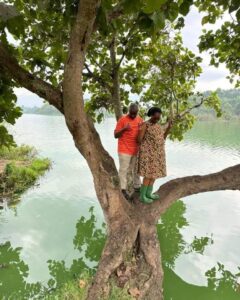
Kyagulanyi’s statement ultimately shifts the debate from individual corruption cases to the structure of governance itself.
The government has demonstrated that it can investigate, suspend and prosecute officials accused of corruption. Recent cases involving local governments, public procurement and senior officials demonstrate that anti-corruption institutions remain active.
But the opposition maintains that isolated investigations cannot address systemic corruption unless institutions are sufficiently independent to investigate wrongdoing regardless of political status.
That leaves Uganda facing a difficult question: Is the current anti-corruption campaign a genuine institutional cleanup, or another political cycle of exposing selected offenders while leaving the wider system untouched?
For Kyagulanyi, the answer is unequivocal.
He argues that Uganda needs a government that is directly accountable to citizens and capable of being held to account by independent institutions.
His closing message is therefore both a condemnation of the current system and a political call for change: a government of the people, by the people and for the people.