Ssemujju Blasts Museveni Government Over Budget Priorities, Says Social Sectors Are Being Neglected
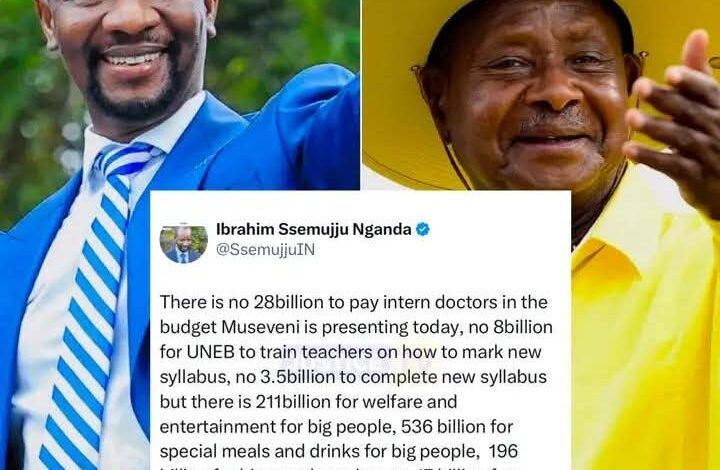
+256 702 239 337: Ssemujju cited allocations amounting to Shs211 billion for welfare and entertainment, Shs536 billion for special meals and drinks, Shs196 billion for donations, Shs17 billion for firewood, gas and charcoal, and approximately Shs2.6 trillion categorized as classified expenditure.

UgandaToday: Ssemujju Blasts Museveni Government Over Budget Priorities, Says Social Sectors Are Being Neglected
By Uganda Today Editorial Team
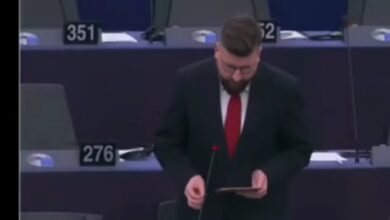
KAMPALA – Former Kira Municipality Member of Parliament and opposition budget critic, Ibrahim Ssemujju Nganda has launched a scathing attack on President Yoweri Kaguta Museveni‘s government, accusing it of prioritizing elite consumption and classified expenditures while neglecting critical sectors such as health and education.
Ssemujju’s criticism came in the wake of the presentation of Uganda’s national budget, where he questioned the government’s spending priorities, arguing that billions of shillings needed for essential public services are consistently unavailable, yet substantial allocations are made to welfare, entertainment, donations, and classified expenditure.
“No Money for Intern Doctors, But Plenty for Big People”
In remarks that have since sparked debate across social media and political circles, Ssemujju pointed to what he described as glaring contradictions within government spending.
According to the former legislator, the budget lacks funding for several urgent public needs, including Shs28 billion required for remuneration of intern doctors, Shs8 billion for training teachers under the new UNEB curriculum assessment framework, and Shs3.5 billion needed to complete implementation of Uganda’s revised competency-based curriculum.
Yet, he noted, government has allocated hundreds of billions of shillings to expenditure categories that many Ugandans may struggle to connect directly to improved service delivery.
Ssemujju cited allocations amounting to Shs211 billion for welfare and entertainment, Shs536 billion for special meals and drinks, Shs196 billion for donations, Shs17 billion for firewood, gas and charcoal, and approximately Shs2.6 trillion categorized as classified expenditure.
“These figures raise serious questions about the government’s priorities,” Ssemujju argued, maintaining that a country seeking socio-economic transformation should place greater emphasis on healthcare, education, and productive sectors.
Health Sector Challenges Persist
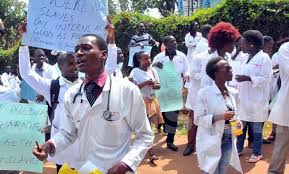
The debate comes against a backdrop of recurring concerns raised by medical interns and healthcare workers over delayed deployments, inadequate facilitation, and staffing shortages in public health facilities.
For several years, intern doctors have petitioned government over allowances and working conditions, arguing that the country’s health system cannot function effectively without adequate support for young medical professionals.
Health experts have repeatedly warned that underfunding frontline healthcare services risks undermining Uganda’s efforts to improve maternal health, emergency care, disease surveillance, and overall healthcare outcomes.
Ssemujju contends that if government can mobilize resources for less urgent expenditures, it should equally be able to prioritize healthcare personnel who form the backbone of the nation’s medical system.
Education Reforms Face Funding Questions
The opposition politician also highlighted challenges facing Uganda’s education sector, particularly the rollout of the new lower secondary school curriculum.
The reforms require extensive teacher retraining, new assessment mechanisms, and updated learning materials. However, concerns have persisted regarding whether sufficient resources have been allocated to ensure smooth implementation nationwide.
Education stakeholders have previously warned that curriculum reforms risk faltering if teachers are not adequately prepared and schools are not sufficiently facilitated.
For Ssemujju, the absence of relatively modest funding requirements for teacher training and curriculum completion exposes what he believes is a disconnect between government rhetoric and actual budgetary commitments.
A Long-Standing Critic of State Spending
This is not the first time Ssemujju has challenged government expenditure patterns.
Over the years, he has repeatedly criticized supplementary budgets and allocations to State House and classified expenditure, arguing that Parliament should exercise greater oversight over public spending. In 2025, he opposed supplementary allocations directed to State House, questioning whether such expenditures reflected national priorities amid growing public service demands.
The veteran opposition figure has consistently argued that Uganda’s development ambitions cannot be achieved if agriculture, healthcare, education, and wealth-creating sectors remain underfunded while administrative and non-productive expenditures continue to expand.
Government Defends Budget Allocations
Government officials, however, maintain that the national budget seeks to balance competing priorities while sustaining investments in critical sectors.
Finance officials have previously indicated that billions of shillings have been allocated to health and education programs, including salary enhancements for teachers, infrastructure development, and health service delivery.
Supporters of government spending also argue that some classified expenditures relate to national security matters that cannot be publicly disclosed.
Nevertheless, critics continue to insist that greater transparency and a stronger focus on frontline services are essential if Uganda is to address unemployment, improve healthcare delivery, and strengthen education outcomes.
The Bigger Question: What Should Uganda Prioritize?
Ssemujju’s remarks have reignited a broader national conversation about how public resources should be allocated in a developing country facing competing demands.
As Uganda seeks to accelerate economic growth and improve living standards, questions remain over whether public spending is sufficiently aligned with the needs of ordinary citizens.
For many observers, the controversy underscores an enduring challenge confronting policymakers: balancing government administration and security needs against the urgent demands of healthcare, education, and human capital development.
Whether government adjusts its priorities in response to such criticism remains to be seen, but Ssemujju’s intervention has once again placed budget accountability at the center of Uganda’s public discourse.
#UgandaToday #PhoenixNewsFeeds #OperaNewsFeeds #Budget2026 #IbrahimSsemujju #UgandaPolitics