


Princess Elizabeth Bagaya: The 90-Year Journey Of Tooro’s Royal Matriarch Who Helped Raise A King
+256 702 23 93 37: From royal child to Cambridge-trained lawyer, international fashion icon, diplomat, Foreign Minister and guardian of a three-year-old king, Princess Elizabeth Bagaya’s life mirrors much of Uganda’s turbulent modern history.

UgandaToday: Princess Elizabeth Bagaya: The 90-Year Journey Of Tooro’s Royal Matriarch Who Helped Raise A King
From royal child to Cambridge-trained lawyer, international fashion icon, diplomat, Foreign Minister and guardian of a three-year-old king, Princess Elizabeth Bagaya’s life mirrors much of Uganda’s turbulent modern history.
By Uganda Today Editorial Desk
There are few Ugandan lives that can be read as a history of the country itself.
Princess Elizabeth Christobel Edith Bagaaya Akiiki is one of them.
At 90, the senior Tooro royal has lived through the final years of colonial rule, Uganda’s independence, the abolition of traditional kingdoms, exile, the rise and fall of Idi Amin, the return of multiparty political and cultural institutions, the restoration of Tooro Kingdom and, most recently, the death of the nephew she helped guide into kingship.
For Princess Bagaya, the death of Omukama Oyo Nyimba Kabamba Iguru IV is not merely the passing of a monarch.
It is the loss of a nephew whom she watched grow from a three-year-old child suddenly burdened with one of Uganda’s most ancient crowns into a 34-year-old king who had spent virtually his entire life carrying the responsibilities of Tooro.
And as Tooro now confronts another transition, Bagaya herself has become a living bridge between the old Tooro monarchy, the restored kingdom of the 1990s and the generation that grew up under King Oyo.
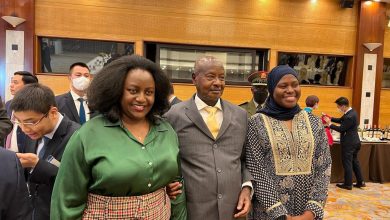
On September 5, 2026, amid mourning at Karuziika Palace, the 90-year-old princess made a rare public appearance and spoke about Oyo.
“He had just started and loved Batooro so much. He was happy and had high hopes of the things he was going to do for his people, but God has taken him,” she said.
She then delivered a poignant reflection on the tragedy of losing a young king.
“God should have protected this child who was still young and instead taken us who are old,” she said.
Those words perhaps best capture the extraordinary arc of Bagaya’s relationship with Oyo.
Born Into The House Of Tooro
Princess Elizabeth Bagaya was born on February 9, 1936, in Kabarole, then the heart of the Tooro Kingdom.
She was a daughter of Omukama Sir George David Matthew Kamurasi Rukidi III and Queen Kezia Byanjeru Abwooli.
She grew up in a large royal family and was one of more than 20 children. Her younger brother, Patrick David Matthew Kaboyo Olimi III, would eventually become Omukama of Tooro.
Her childhood was therefore spent within the traditions and expectations of the Babiito royal household.
But Bagaya’s destiny would take her considerably beyond the royal palace.
Her father believed strongly in education. After her early schooling at Kyebambe Girls School and later Gayaza High School, she was sent to England to study at Sherborne School for Girls.
She was reportedly the only Black student at Sherborne at the time.
From there she proceeded to Girton College, University of Cambridge, where she studied law.
In 1962, she graduated from Cambridge with a law degree, becoming one of the earliest African women to achieve such a distinction at the institution.
Three years later, in 1965, she qualified as a barrister at Gray’s Inn and became the first woman from East Africa to be admitted to the English Bar.
It was a remarkable achievement at a time when the legal profession in both Britain and Africa remained overwhelmingly male.
The Princess Who Became A Global Fashion Icon
But the story of Elizabeth Bagaya cannot be confined to law and royalty.
Following the political upheaval surrounding the abolition of Uganda’s kingdoms in the 1960s, Bagaya entered a completely different world.
She became an international fashion model.
Her striking appearance, royal background, intelligence and confidence made her an unusual figure on the international fashion scene.
She worked in London and later New York, appearing in major publications including British Vogue, American Vogue, Queen, Look, LIFE and Ebony.
In 1968, she became the first Black model to receive a major fashion spread in Vogue, and she became the first Black woman to appear on the cover of Harper’s Bazaar, according to accounts of her career published by New Vision and the Institute for African Women in Law.
The royal princess from Tooro had, almost improbably, become an international fashion celebrity.
She subsequently ventured into acting, appearing in Bullfrog in the Sun, based on Chinua Achebe’s works, and later in Sheena: Queen of the Jungle.
Her extraordinary journey would later become the subject of her own books, including African Princess: The Story of Princess Elizabeth of Toro, published in 1983, and Elizabeth of Tooro: The Odyssey of an African Princess.
From The Catwalk Back To Diplomacy
Bagaya eventually returned to Uganda and entered public service.
Under President Idi Amin, she became a roving ambassador, using her international connections and profile in diplomatic assignments.
She later served in several diplomatic capacities, including representing Uganda abroad and at the United Nations.
In February 1974, Amin appointed her Minister of Foreign Affairs.
Her tenure, however, was brief and ended later that year amid a dramatic deterioration in her relationship with the Amin regime. Historical accounts record that she was dismissed in November 1974 and subsequently faced serious restrictions.
Her experience under Amin became one of the darkest chapters of an otherwise extraordinary public life.
It was also a reminder that Bagaya’s royal status, international fame and personal independence did not make her immune to Uganda’s political dangers.
Indeed, her life would repeatedly place her at the intersection of power, politics and personal survival.
A Woman Who Survived Uganda’s Turbulence
The fall of Amin did not end Bagaya’s public journey.
She later became associated with the National Resistance Movement’s external mobilisation efforts during the years preceding the 1986 change of government.
New Vision records that between 1980 and 1986, Bagaya and her husband, Prince Wilbur Nyabongo, worked with the NRM’s External Committee and provided international contacts that assisted the movement.
In 1986, following the rise of President Yoweri Museveni, she was appointed Uganda’s Ambassador to the United States.
She served in Washington from 1986 to 1988.
During her diplomatic tenure, she used her international contacts to promote Uganda’s interests and helped facilitate high-level contacts between the new Ugandan government and American leaders.
But personal tragedy struck.
Her husband, Prince Wilbur Nyabongo, died in an aircraft accident in December 1986.
The loss profoundly affected Bagaya.
She subsequently stepped away from public service and devoted herself increasingly to charitable and cultural causes.
The Return Of The Kingdom — And Of The Batebe
The next major chapter in Bagaya’s life would bring her back to the Tooro royal household.
In 1993, Uganda restored its traditional institutions following the constitutional changes that allowed cultural leaders to return.
Her brother, Patrick David Matthew Kaboyo Olimi III, returned to the Tooro throne.
Bagaya once again assumed the traditional responsibility of Batebe — the senior princess and principal female adviser to the Omukama.
The office was much more than ceremonial.
The Batebe traditionally occupies an important position in the royal household, particularly concerning princesses, royal customs, protocol, cultural matters and counsel to the king.
Bagaya had therefore returned to a role for which she had been prepared by birth, experience and education.
And then tragedy struck the royal family again.
1995: The Year Bagaya Became A Kingmaker’s Guardian
On August 26, 1995, Omukama Patrick Kaboyo Olimi III died.
His death created one of the most extraordinary succession moments in modern Ugandan royal history.
His heir, Oyo Nyimba Kabamba Iguru Rukidi IV, was only three years old.
The child became Omukama on September 12, 1995.
The young king was too young to understand the full weight of the crown he had inherited.
The responsibility for guiding him therefore fell upon a group of principal regents and guardians.
Among them was his paternal aunt, Princess Elizabeth Bagaya.
Others included Queen Mother Best Kemigisa, President Yoweri Museveni and Prince James Desmond Mugenyi.
This was perhaps the most consequential assignment of Bagaya’s life.
She was no longer simply the internationally renowned princess, lawyer or diplomat.
She was now one of the women and elders responsible for helping raise a child who was simultaneously a son, nephew, heir and king.
Raising A King Who Was Still A Child
The challenge was immense.
Oyo had been born on April 16, 1992, at Nsambya Hospital.
His father was away serving Uganda as ambassador in Cuba around the period of his birth, while his mother, Best Kemigisa, was expecting him. According to Charles Kamurasi, the head of the Babiito royal clan, the young family was cared for under arrangements made by Kaboyo.
Barely three years later, Oyo inherited the throne.
His childhood therefore unfolded under extraordinary circumstances.
While other children were learning how to read, play and navigate ordinary childhood, Oyo had palace officials, royal advisers, guardians and a kingdom watching him.
Princess Bagaya was part of that protective circle.
Her own experience was invaluable.
She understood royal protocol.
She understood politics.
She understood diplomacy.
She understood the pressures of public life.
And, perhaps most importantly, she understood what it meant to grow up inside the Tooro royal family.
The Aunt Who Stayed Close To The King
The relationship between Bagaya and Oyo was not merely constitutional.
It was familial.
She was his paternal aunt — the elder sister of his father.
Her influence continued long after Oyo reached adulthood.
In 2012, when the king suspended the Tooro Kingdom constitution and established a committee to review it, Bagaya was selected to chair the nine-member review committee.
At another point, when Oyo appointed a new Omuhikirwa, Bagaya publicly called for the premier to be respected and allowed to work, warning that repeated conflicts within the kingdom were damaging the institution of the monarchy.
These episodes demonstrate that her role was not merely symbolic.
She continued to provide counsel as the young monarch matured into an adult.
2010: The Boy King Becomes An Adult
In 2010, Oyo reached the age of majority.
The formal regency period came to an end.
But Bagaya’s influence did not disappear.
The boy she had helped guide was now an adult king.
In April 2010, she was photographed dancing alongside Queen Mother Best Kemigisa during royal ceremonies marking Oyo’s coming of age.
It was an unusually powerful image: the aunt and mother celebrating the young king they had spent years protecting and guiding.
The transformation was complete.
The three-year-old monarch had become a young man.
A Life Beyond The Palace
Even as she remained connected to Tooro, Bagaya continued to occupy a place in Uganda’s public life.
Her career had already included law, modelling, acting, diplomacy and politics.

She later served Uganda in other diplomatic assignments, including ambassadorial responsibilities in Germany and representation connected to the Holy See, as well as High Commissioner to Nigeria, according to historical profiles of her career.
Her public life has therefore crossed virtually every major arena of influence available to an African woman of her generation.
She has been:
A princess.
A lawyer.
A barrister.
A model.
An actress.
A diplomat.
A Foreign Minister.
An ambassador.
An author.
A cultural leader.
And, perhaps most importantly for Tooro, a guardian of a king.
The Final Chapter With King Oyo
King Oyo’s death on August 27, 2026, brought Bagaya back into the national spotlight.
The Tooro Kingdom announced that the king died at approximately 10 p.m. in the United States.
President Museveni subsequently disclosed that the king had been receiving treatment in Germany and later the United States after being diagnosed with an aggressive cancer.
The government has since taken charge of major aspects of the official burial arrangements, with the king’s remains returned to Uganda on September 4.
His burial is scheduled for September 12 at the Karambi Royal Tombs — exactly 31 years after the three-year-old Oyo was enthroned.
For Bagaya, the symbolism is profound.
The child whose enthronement she witnessed and helped navigate is returning to the ancestral soil as a 34-year-old king.
A 90-Year-Old Princess Faces Another Royal Transition
Today, Princess Elizabeth Bagaya stands at another extraordinary crossroads.
At 90, she is among the few surviving senior figures who personally witnessed the old Tooro monarchy, its abolition, its restoration and the entire reign of King Oyo.
Her life spans generations of the Tooro royal family.
She knew Omukama Rukidi III.
She served alongside her brother, Kaboyo.
She helped guide his son, Oyo.
And she now stands with the royal family as Tooro prepares for another succession.
The Kingdom has officially stated that Oyo left behind a prince as heir, although the identity and succession process are to be handled according to Tooro traditions.
That development makes Bagaya’s experience particularly significant.
Few people alive today possess her combination of royal lineage, institutional memory, legal training, diplomatic experience and personal knowledge of the late king’s upbringing.
The Princess Who Outlived Four Eras
There is a temptation to remember Elizabeth Bagaya primarily as the glamorous Tooro princess who once conquered the international fashion world.
That would be to tell only a fraction of her story.
The photographs of the young princess in Vogue and Harper’s Bazaar captured her beauty.
Her Cambridge degree captured her intellect.
Her legal career captured her determination.
Her diplomatic career captured her international stature.
Her confrontation with the Amin regime captured her courage.
Her return to Tooro captured her loyalty to her people.
And her guardianship of a three-year-old king captured perhaps the deepest dimension of her life — service to the institution and people into which she was born.
King Oyo’s death has consequently revived an old question:
Who was really behind the boy who became king?
The answer cannot be reduced to one person. Queen Mother Best Kemigisa, President Museveni, Prince James Mugenyi and other royal figures all played roles in the young monarch’s upbringing.
But Princess Elizabeth Bagaya occupies a distinctive place in that story.
She was the father’s elder sister.
She was Batebe.
She was a principal guardian.
She was a counsellor.
And she was one of the few people who could speak to Oyo not only as a king, but as family.
The Lasting Legacy Of Princess Bagaya
As Tooro mourns King Oyo and looks toward a new chapter, Princess Elizabeth Bagaya’s life offers another story worth telling.
It is the story of a Ugandan woman who refused to be confined to one identity.
She crossed the boundaries of royalty, law, fashion, film, diplomacy and politics.
She survived the turbulence of post-independence Uganda.
She returned to serve the royal house from which she came.
And when a three-year-old boy inherited the crown in 1995, she helped stand behind him until he could stand before his people himself.
Now, at 90, she watches another generation confront the same ancient question of succession that has shaped Tooro for centuries.
Her nephew’s reign has ended.
Her own extraordinary journey, however, has become part of the historical record of the Kingdom she served.
Princess Elizabeth Bagaya is no longer simply a character in Tooro’s history.
She is one of its living archives.
And perhaps that is why, in the days following King Oyo’s death, her quiet words carried such weight:
The road ahead is difficult.
For a princess who has already travelled through nine decades of Uganda’s history, those words sound less like fear than the wisdom of someone who has seen royal fortunes rise, kingdoms fall, crowns return and generations pass.
And she is still standing.
At 90, Princess Elizabeth Bagaya remains one of the most extraordinary figures in Uganda’s royal and political history. From Cambridge-trained lawyer and international fashion icon to diplomat, Foreign Minister, Batebe and principal guardian of the three-year-old King Oyo, her life has been intertwined with the fortunes of Tooro for nearly a century.