
UgandaToday: Uganda Joined 57 Nations To Challenge Apartheid — Then Britain Announced An Arms Embargo

On 17 November 1964, British Prime Minister Harold Wilson announced restrictions on arms exports to apartheid South Africa. The decision followed years of international pressure, including a diplomatic initiative in which Uganda was directly involved. But a controversial aircraft deal approved just eight days later exposed the limits of Britain’s commitment.
Today In History: The Uganda Today Historical Perspective
17 November 1964 — London, United Kingdom
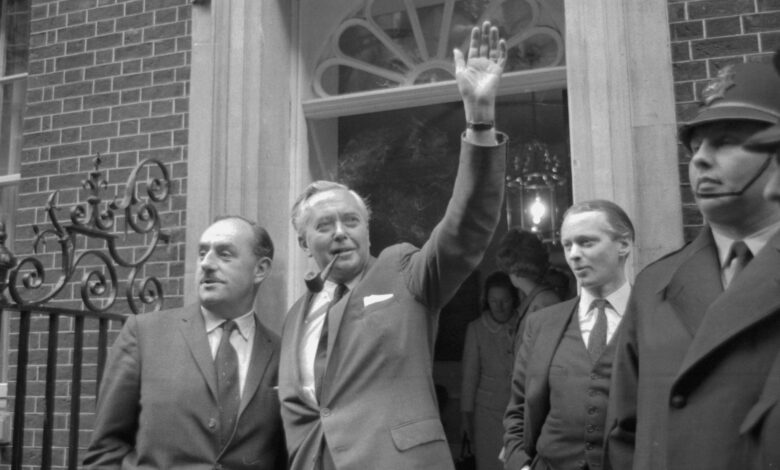
When British Prime Minister Harold Wilson rose in the House of Commons on 17 November 1964, he made an announcement that would mark an important chapter in the international campaign against apartheid.
His government had decided to impose an embargo on arms exports to South Africa, where the white-minority government was enforcing a system of racial segregation, political exclusion and repression against the Black majority.
The announcement was significant, but its history had begun much earlier — in diplomatic meetings, United Nations negotiations and the emerging collective voice of newly independent African countries.
One of those countries was Uganda.
Just two years after independence, Uganda had joined 57 other states in formally asking the United Nations Security Council to reconsider the worsening situation in South Africa. The episode offers a little-remembered example of Uganda’s early participation in international diplomacy and Africa’s collective struggle against racial oppression.
Uganda’s Name Was On The Diplomatic Record
On 27 April 1964, representatives of 58 United Nations member states sent a joint letter to the President of the Security Council requesting an urgent meeting to reconsider the situation in South Africa.
The signatories expressed particular concern about the harsh measures being taken against African political leaders, including the imposition of death sentences. They warned that the deteriorating situation could have serious consequences for Africa and the wider world.
Uganda was among the signatories.
The original United Nations document, reference S/5674, explicitly lists Uganda and identifies its representative as A. Kironde.
This is an important historical detail. Uganda was not merely expressing sympathy from a distance; its government was participating in a formal multilateral initiative intended to put pressure on the apartheid administration.
At the time, Uganda was a young independent country and a founding member of the Organisation of African Unity (OAU), which had been established on 25 May 1963.
The United Nations Was Already Calling For An Arms Embargo
The African diplomatic initiative formed part of a wider international campaign.
On 7 August 1963, the Security Council adopted Resolution 181, calling upon all states to stop selling and shipping arms, ammunition and military vehicles to South Africa.
The resolution followed a submission by 32 African member states concerned that the South African government’s military build-up could be used to strengthen its racial policies.
On 18 June 1964, the Security Council adopted Resolution 191, again condemning apartheid and reaffirming its call for states to stop supplying arms and related military equipment to South Africa.
The resolution also called for the release of people imprisoned or restricted for opposing apartheid.
It was adopted by eight votes to none, with three abstentions. The United Kingdom voted in favour.
The OAU Wanted More Than Words

African governments were not satisfied with condemnation alone.
At its first ordinary Assembly of Heads of State and Government in Cairo, held from 17 to 21 July 1964, the OAU adopted Resolution AHG/Res.5(I), specifically addressing apartheid in South Africa.
The organisation reaffirmed that the situation represented a threat to international peace and security. It urged countries to apply economic, diplomatic, political and military sanctions and called on South Africa’s major commercial partners to reconsider investments and business relations with Pretoria.
A related resolution, AHG/Res.6(I), called for the release of Nelson Mandela, Walter Sisulu and other imprisoned nationalists.
It also appealed to oil-producing countries to stop supplying petroleum to South Africa, urged African states to boycott South African goods and halt the supply of minerals and other raw materials, and called for a coordinated sanctions mechanism within the OAU Secretariat.
The Assembly further supported measures to deny South African aircraft and ships access to the airspace, ports and facilities of member states.
Uganda, as an OAU member, belonged to the continental organisation adopting this collective position. The surviving resolutions establish the organisation’s collective decision, although they do not by themselves establish what individual instructions Uganda’s delegation received.
Why Britain Finally Announced The Embargo

By November 1964, Britain was facing pressure on several fronts.
The Labour government under Wilson had taken office in October. It was expected to demonstrate a different approach to apartheid and international obligations.
In Parliament, Wilson said the decision would bring Britain’s policy into line with United Nations resolutions. He also acknowledged that failing to act would have serious consequences for Britain’s relations with the United Nations and with Commonwealth countries in Africa and elsewhere.
That reference is especially revealing.
It shows that African countries were not simply watching European governments debate South Africa. Their diplomatic positions had become part of the political considerations facing Britain.
Academic research by Rodrigo Fracalossi de Moraes, published in Foreign Policy Analysis in 2021, provides further context. His study finds that Britain’s 1964 arms embargo was shaped by the interaction of domestic political pressures and transnational anti-apartheid activism, including the work of the British Anti-Apartheid Movement.
African diplomacy was therefore an important part of a wider pressure campaign, rather than the sole explanation for Britain’s decision.
The Simonstown Agreement Complicated Britain’s Position
Britain’s decision was not made without strategic complications.
The two countries had a longstanding defence relationship involving the Simonstown naval base near Cape Town. The arrangement provided Britain with valuable naval facilities and communications access along a strategically important maritime route.
During the parliamentary debate, opposition politicians questioned whether the arms embargo would undermine that arrangement.
Wilson insisted that the embargo did not amount to a breach of the Simonstown Agreement. However, the debate revealed the tension between Britain’s international commitments, its strategic interests and its commercial relationships with South Africa.
The British government was attempting to restrict military support for apartheid without immediately dismantling every aspect of its relationship with Pretoria.
The Sixteen Buccaneers That Exposed The Limits
The most revealing qualification emerged just eight days after Wilson’s announcement.
On 25 November 1964, the Prime Minister returned to Parliament and announced that Britain would honour an existing contract to supply South Africa with 16 Buccaneer military aircraft.
The government would also allow spare parts for those aircraft to be supplied when required.
Wilson maintained that no further South African arms contracts would be accepted, but the decision to honour the existing aircraft agreement exposed the limits of the embargo.
The government was therefore not imposing a complete trade boycott. In a further parliamentary clarification, Wilson stated that the arms decision did not itself affect Britain’s general trade with South Africa.
The distinction is important: Britain had restricted new arms business, but it had not immediately terminated every military commitment or commercial relationship already in place.
A Voluntary International Embargo Became Mandatory In 1977

The 1964 developments should also be understood within the history of international sanctions.
The early United Nations arms embargo resolutions were not mandatory under Chapter VII of the UN Charter. They called upon states to stop arms supplies, but did not impose the comprehensive binding obligation that came later.
On 4 November 1977, the Security Council adopted Resolution 418, imposing a mandatory arms embargo on South Africa.
That resolution required all states to stop supplying arms, ammunition, military vehicles and related equipment to the apartheid government.
The distinction between the voluntary measures of the 1960s and the mandatory embargo of 1977 is essential when assessing the evolution of international pressure against apartheid.
Why Uganda Should Remember This Chapter
Uganda’s involvement in the 1964 diplomatic initiative deserves greater attention in the country’s foreign-policy history.
The joint letter of 27 April 1964 provides documentary evidence that Uganda participated in a collective international effort to challenge apartheid. It also demonstrates that Uganda’s early diplomacy extended beyond immediate regional concerns.
The country’s representative joined a group of states pressing the Security Council to confront a system of racial oppression that threatened both human dignity and international stability.
The wider lesson remains relevant today. International pressure is often most effective when countries coordinate their positions, agree on specific measures and sustain diplomatic engagement beyond declarations of concern.
The eventual defeat of apartheid was not achieved by one embargo, one resolution or one government. It followed decades of resistance by South Africans, solidarity from African countries, international activism and sustained political and economic pressure.
On 17 November 1964, Britain took an important step by restricting arms exports. Yet the exception for the 16 Buccaneers reminds us that international policy is often shaped by competing interests.
For Uganda, the historical record offers something worth remembering: even as a young independent country, it was already participating in the collective diplomatic effort to confront apartheid.
#UgandaToday #PhoenixNewsFeeds #OperaNewsFeeds #TodayInHistory #AntiApartheidHistory #AfricanDiplomacy