Today In History: The Amazigh Victory That Shook French Rule In Morocco
+256 702 23 93 37: The Commander Who Marched Against The Warning Signs In the early hours of 13 November 1914, Laverdure led a column out of Khénifra towards the Zaian encampment at El Herri.

UgandaToday: Today In History: The Amazigh Victory That Shook French Rule In Morocco

On 13 November 1914, fighters led by Mouha ou Hammou Zayani routed a French colonial column near Khénifra. The Battle of El Herri did not end French rule, but it exposed the limits of imperial power and revealed a more complicated African story of colonial soldiers, local resistance and the struggle for sovereignty.
Today In History: The Uganda Today Historical Perspective
13 November 1914 — El Herri, Middle Atlas, Morocco
One hundred and twelve years ago today, a military expedition that was expected to strengthen French control over Morocco ended in one of the most humiliating defeats suffered by French forces during their campaigns in the country.
The encounter took place near El Herri, a settlement in Morocco’s Middle Atlas region, about 15 kilometres from Khénifra. On one side were fighters of the Zaian confederation and allied communities, led by the influential Amazigh leader Mouha ou Hammou Zayani. On the other was a French colonial military column commanded by Lieutenant-Colonel René Laverdure.
The battle became a landmark in the Zaian War, fought between French forces and communities resisting the expansion of colonial control into Morocco’s interior. Yet its importance reaches beyond the military outcome: it offers a reminder that African resistance to colonial rule was not confined to the better-known liberation movements of later decades.
Morocco Was Already Under Colonial Pressure

The battle unfolded during a turbulent period in Moroccan history. Under the Treaty of Fez, signed on 30 March 1912, Morocco entered a French protectorate, although the Sultan remained formally on the throne.
French authorities sought to extend their control beyond the principal towns and into the strategically important interior. The Middle Atlas, with its difficult terrain and strong local political networks, proved particularly challenging.
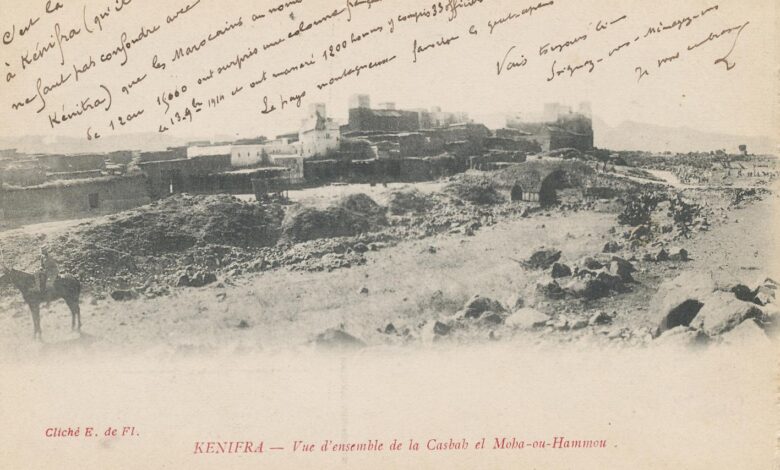
Khénifra was a key centre of Zaian influence. French forces occupied the town in June 1914, pushing Mouha ou Hammou and his followers towards the surrounding countryside.
The Zaian leader continued to resist. His forces were familiar with the mountains, valleys and routes around Khénifra, while the French garrison depended on military columns and supply routes to maintain its position.
The Commander Who Marched Against The Warning Signs
In the early hours of 13 November 1914, Laverdure led a column out of Khénifra towards the Zaian encampment at El Herri.
Historian Michael Peyron, in The Berbers of Morocco: A History of Resistance, describes the force as comprising approximately 1,200 men and 42 officers, with most of the troops drawn from colonial formations that included Senegalese soldiers. They were equipped with repeating rifles, machine guns and artillery.
The operation initially appeared successful. The French reached the camp shortly before daybreak, catching its occupants by surprise. The encampment was occupied and looted as the fighters scattered.
But the apparent success concealed a serious tactical danger.
According to Peyron’s account, the Zaian fighters regrouped after the initial shock. They occupied surrounding ridges and ravines, taking advantage of the terrain as the French column attempted to return to Khénifra.
The retreat became a deadly encounter. The French found themselves under attack from several directions, and their weapons could not adequately overcome the advantage enjoyed by fighters who knew the landscape.
There was also a political dimension to Laverdure’s decision. Accounts of the campaign indicate that Resident-General Hubert Lyautey had been reluctant to authorise an offensive against the Zaian leader. Mouha ou Hammou, meanwhile, had believed that a period of relative calm amounted to a tacit truce.
The attack therefore shattered more than a military camp. It undermined the fragile understanding that had developed between the opposing sides.
A Colonial Column Nearly Annihilated

By the end of the fighting, the French column had suffered a catastrophic defeat. Laverdure was among those killed.
The exact casualty figures differ between historical accounts. A retrospective published by Morocco’s Le Matin in 2002 records 33 officers and 580 other soldiers killed, with 179 wounded. Peyron also describes the column as having come close to annihilation, with only a small portion of its original strength making its way back to Khénifra.
The often-repeated figure of more than 600 dead should therefore be understood as an estimate drawn from published accounts rather than an uncontested final tally.
The Zaian victory was not without a terrible cost. Peyron records substantial losses among the Amazigh fighters too, describing El Herri as a day of mourning for the communities who had fought there.
This was not a bloodless triumph. It was a costly demonstration that a colonial force equipped with artillery and machine guns could still be defeated by fighters who understood their terrain and could mobilise local support.
The Victory Did Not End French Rule
The significance of El Herri should not be exaggerated into a claim that the battle immediately liberated Morocco.
French forces retained Khénifra, and reinforcements helped stabilise the position after the defeat. The Zaian resistance continued, but the French eventually re-established their military position.
Nevertheless, the consequences were considerable. Peyron argues that the defeats suffered by French forces in the Middle Atlas helped create what became known as the prestige of the hills — a recognition that mountain communities could impose heavy costs on an occupying army.
He notes that it took another seven years to bring the Zaian resistance under French control. The battle therefore became an important setback in a much longer struggle, rather than a single event that settled the future of Morocco.
The African Soldiers Inside The Colonial Army
One of the most revealing aspects of El Herri is the composition of the French column.
It is tempting to describe the battle simply as French soldiers fighting Moroccan resistance fighters. But the colonial military system was more complicated.
The French force included African soldiers serving in colonial formations, notably the Senegalese Tirailleurs. Despite the name, the corps was not made up exclusively of men from present-day Senegal. It began with recruitment in Senegal in the nineteenth century, but recruitment later extended across French-controlled territories in sub-Saharan Africa. During the First World War, recruitment could also involve coercion.
This means that African soldiers served within the machinery of an empire that was simultaneously fighting African communities resisting its expansion.
The distinction matters. The African soldiers in the French column were not the same as the Amazigh fighters defending their communities, and their individual circumstances and motivations should not be assumed. But their presence exposes the way colonial powers relied on African manpower to sustain imperial campaigns.
What The Battle Has To Do With Uganda
Although El Herri was fought thousands of kilometres from Uganda, the same year offers a useful East African comparison.
At the outbreak of the First World War, the 4th Battalion of the King’s African Rifles was composed of Ugandan troops and based in the Uganda Protectorate. The wider regiment had been formed from locally recruited African soldiers serving under British officers.
The Ugandan troops were not participants in the Battle of El Herri. They belonged to a different imperial military system and operated in the East African theatre. But their existence illustrates a shared continental reality: European powers depended heavily on African soldiers to defend and extend their colonial interests.
Historian Charles G. Thomas, writing for the International Encyclopedia of the First World War, records that the 4th King’s African Rifles was made up of Ugandan troops at the beginning of the conflict.
encyclopedia.1914-1918-online.net+1
For Uganda, this is an important historical connection. The First World War was not merely a European conflict whose consequences reached Africa. African soldiers, porters and civilians were deeply involved in its campaigns, often bearing enormous costs while decisions about the war were made by imperial authorities.
Why El Herri Deserves A Place In African History
The Battle of El Herri challenges the idea that African resistance to colonialism began with the political movements that emerged after the Second World War.
Long before many modern independence parties were formed, communities across the continent were organising military and political resistance to foreign occupation. Their struggles were sometimes regional, sometimes divided by local rivalries, and often poorly represented in the official records produced by colonial administrations.
Research by historian Mathieu Marly on French military archives in Morocco also shows how colonial officers classified Berber-speaking communities and developed administrative ideas intended to make the Middle Atlas easier to control. Such records are valuable, but they must be read critically because they were produced within the structures of colonial power.
El Herri was not the final victory of Moroccan independence. It was, however, a powerful episode in the history of African resistance — one in which local knowledge, military organisation and determination disrupted the ambitions of a much larger empire.
Its story deserves to be remembered not simply as a French defeat, but as an example of the many African struggles that helped shape the continent’s long journey towards self-determination.
Sources And Editorial Notes
1. Michael Peyron, The Berbers of Morocco: A History of Resistance (I.B. Tauris, 2021), especially the account of the Battle of El Herri and the longer Zaian resistance.
amyaz.fr+2
2. Le Matin, “Bataille d’El Herri: Moha Ou Hammou Zayani, symbole de la résistance nationale”, published 13 November 2002. Useful for the Moroccan account of the battle’s sequence and casualty estimates.
Le Matin.ma+1
3. Soufiane Aissi, University of Toulouse II Jean Jaurès, Le Maréchal Lyautey et l’Islam dans le Protectorat français du Maroc (1912–1925). The thesis discusses the battle and points to the French official military history’s account, “L’affaire de Khénifra le 13 novembre 1914”.
dante.univ-tlse2.fr
4. Mathieu Marly, “L’ethnographie militaire aux origines de la ‘politique berbère’ du protectorat français au Maroc (1912–1915)”, L’Année du Maghreb, 2021.
DOAJ
5. Charles G. Thomas, “King’s African Rifles”, International Encyclopedia of the First World War, 2015. Supports the Uganda connection and the composition of the 4th KAR.
encyclopedia.1914-1918-online.net
6. Musée de la Grande Guerre, “Les tirailleurs sénégalais dans la Première Guerre mondiale”, 9 March 2024. Explains the origins and wider recruitment of the Senegalese Tirailleurs.
museedelagrandeguerre.com
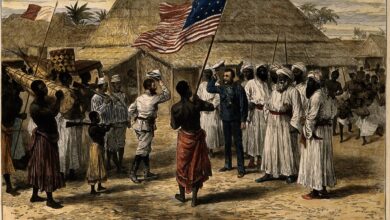
Editorial caution: Published casualty estimates differ. The article therefore identifies the commonly cited figure of more than 600 deaths as an estimate, not a definitive count. The archival images should not be captioned as photographs of the actual battle unless their provenance establishes that fact.
#UgandaToday #PhoenixNewsFeeds #OperaNewsFeeds #TodayInHistory #AfricanHistory #AmazighResistance