Today In History: The Night The Sea Rose: The 1970 Cyclone That Turned A Failed Warning Into A National Reckoning
+256 702 23 93 37: For Uganda, the story carries an important lesson: a warning is only useful when it reaches the people whose lives depend on it.

UgandaToday: Today In History: The Night The Sea Rose: The 1970 Cyclone That Turned A Failed Warning Into A National Reckoning
UGANDA TODAY | THE UGANDA TODAY HISTORICAL PERSPECTIVE | THURSDAY, 12 NOVEMBER 2026
Fifty-six years ago today, one of the deadliest natural disasters in recorded history struck the coast of what was then East Pakistan, killing hundreds of thousands of people. But the Great Bhola Cyclone was not merely a story of nature’s destructive power. It exposed the devastating consequences of inadequate disaster preparedness, failed communication and government inaction. Its aftermath helped change the political history of South Asia and contributed to the development of international disaster-warning systems. For Uganda, the story carries an important lesson: a warning is only useful when it reaches the people whose lives depend on it.
1970 Büyük Bhola Kasırgası – Bilgin Var mı ?

A Night That Erased Entire Communities
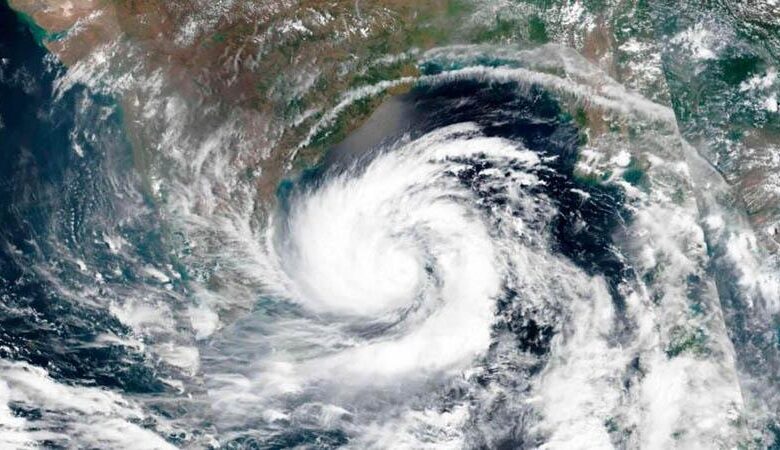
On the night of 12 November 1970, a powerful tropical cyclone swept into the coastal districts of East Pakistan, now Bangladesh.
The storm, subsequently known as the Great Bhola Cyclone, brought destructive winds, torrential rain and a massive storm surge that overwhelmed low-lying islands, villages and coastal settlements.
The disaster intensified around high tide, allowing enormous quantities of seawater to sweep inland.
The consequences were catastrophic.
The World Meteorological Organization (WMO) places the estimated death toll between 300,000 and 500,000, making Bhola the deadliest known tropical cyclone in recorded history.
Many victims drowned when the storm surge inundated coastal communities and tidal flats. Homes were destroyed, agricultural land flooded, fishing boats wrecked and livestock killed.
Entire families disappeared, while survivors were left searching for relatives, food, clean drinking water and shelter.
The tragedy affected both East Pakistan and parts of neighbouring India, although the greatest devastation occurred in the densely populated Ganges-Brahmaputra delta.
The exact number of fatalities remains uncertain because of the scale of destruction and the difficulties of establishing reliable records after the disaster.
But even the lowest widely accepted estimates reveal the extraordinary human cost.
The Most Disturbing Part: The Warning Did Not Reach Many People
Perhaps the most important historical lesson from the Bhola Cyclone is that the disaster was not simply a case of nature catching everyone completely unprepared.
Weather monitoring existed. Warning arrangements had been developed, and meteorological information about the approaching storm was available.
Yet the system failed to protect many of the people most exposed to danger.
Historical research published in Modern Asian Studies by Sravani Biswas and Patrick Daly reveals that a weather radar station at Patenga, near Chittagong, had been damaged during an earlier storm and remained unrepaired when Bhola approached.
The study also documents failures in the communication of danger signals to coastal communities.
Although the Pakistan Meteorological Department maintained that warnings had been issued accurately, contemporary newspaper accounts and survivor interviews indicated that many residents did not receive sufficiently clear warnings or instructions to seek shelter.
Some communities had traditionally depended on radio announcements and local warning methods, including the beating of drums, to communicate impending danger.
Those arrangements did not function effectively in many affected areas.
In remote settlements, people were left without adequate information about the scale of the approaching danger.
This distinction is important.
A meteorological department may detect a dangerous storm. A satellite may capture its movement. Officials may even issue a warning.
But if that information does not reach the fisherman, farmer, pregnant woman, elderly resident or family living on an isolated island, the warning has failed in its most important purpose.
The Bhola disaster exposed the difference between knowing that danger exists and ensuring that people can act before it arrives.
The Truth About The Deadly 1970 Bhola Cyclone

The Forgotten Dimension: Women, Children And The Elderly Paid A Higher Price
The disaster also exposed the unequal vulnerability of different sections of the population.
A historical epidemiological assessment, discussed in the Cambridge University Press study, found that children below the age of ten experienced the highest mortality rates.
Women and elderly people also recorded higher mortality than men aged between 15 and 49.
This finding is particularly significant because disaster preparedness cannot be measured simply by whether a warning has been broadcast.
It must also consider who can respond to that warning.
Can elderly people reach safe locations without assistance?
Are evacuation arrangements accessible to people with disabilities?
Can women and children leave their homes safely and quickly?
Are shelters accessible to families living in isolated settlements?
These questions are as relevant to disaster planning today as they were in 1970.
The Bhola experience demonstrates that emergency arrangements must take account of the people who may face the greatest difficulties escaping danger.
When A Natural Disaster Became A Political Turning Point
The Bhola Cyclone struck at an extraordinarily sensitive moment in Pakistan’s political history.
The country was preparing for its first general elections, scheduled for December 1970.
East Pakistan had long complained about political marginalisation, economic inequalities and the concentration of power in the western wing of the country.
The cyclone intensified these grievances.
The military administration under President General Yahya Khan faced widespread criticism over the speed and organisation of its relief response.
Local political leaders, journalists, students and humanitarian workers questioned why assistance was not reaching affected communities quickly enough.
The disaster became a major issue in the political campaign of Sheikh Mujibur Rahman and his Awami League.
The Awami League subsequently won a decisive electoral victory in East Pakistan in December 1970.
However, the military establishment’s failure to transfer power to the elected leadership became one of the factors leading to the Bangladesh Liberation War in 1971.
Bangladesh emerged as an independent country in December 1971.
It would be historically inaccurate to claim that the cyclone alone created Bangladesh. Bengali nationalism, political exclusion, economic grievances and the struggle for autonomy had existed for years.
Nevertheless, the disaster became a powerful symbol of the perceived failure of the central government to protect and respond to the needs of East Pakistan’s population.
It accelerated an already developing political crisis.
A natural disaster had become a national political reckoning.

How One Disaster Helped Transform Global Weather Preparedness
One of the most important consequences of the Bhola Cyclone was the international response that followed.
The United Nations General Assembly adopted Resolution 2733 (XXV), calling for greater efforts to mitigate the destructive effects of tropical cyclones.
In 1971, the World Meteorological Organization initiated its Tropical Cyclone Project in response to the catastrophe.
The initiative eventually developed into the WMO Tropical Cyclone Programme in 1980.
The programme strengthened international cooperation in cyclone forecasting, warning systems, meteorological monitoring and disaster preparedness.
Countries facing tropical cyclone threats increasingly recognised that information-sharing, technical cooperation and effective communication could save lives.
The disaster had exposed the limitations of isolated national responses to weather emergencies.
Its legacy helped encourage a more coordinated international approach.
The WMO has since reported substantial improvements in forecasting accuracy and warning capabilities, developments that have saved thousands of lives.
The importance of the Bhola disaster therefore extends beyond the communities that suffered its immediate consequences.
It helped change the international institutional approach to tropical cyclone preparedness.
Bangladesh Turned Tragedy Into A Community-Based Warning System
Perhaps the most remarkable part of the story is what Bangladesh did after the catastrophe.
In 1972, the Bangladesh Red Cross Society, now the Bangladesh Red Crescent Society, established the Cyclone Preparedness Programme with assistance from the international Red Cross movement.
The programme became a joint government and Red Crescent initiative, with the government assuming responsibility for its continuation from July 1973.
Its original operations involved thousands of volunteers working in vulnerable coastal communities.
Today, according to the Bangladesh Red Crescent Society, the programme has approximately 76,020 volunteers distributed across 3,801 local units.
Its responsibilities include:
-
Disseminating official weather warnings to vulnerable communities.
-
Helping residents understand the seriousness of approaching storms.
-
Supporting evacuation to safer locations and cyclone shelters.
-
Assisting elderly people, children and people with disabilities.
-
Providing first aid and supporting search-and-rescue activities.
-
Helping communities during relief and rehabilitation operations.
The important innovation was not simply the introduction of better weather technology.
It was the decision to place organised community participation at the centre of disaster preparedness.
The programme recognised that national warning systems need people on the ground who can translate information into practical action.
Bangladesh’s experience is now widely regarded as an important example of community-based disaster preparedness.
It demonstrates that the difference between a warning being issued and a community being saved may depend on the people who carry that warning to the doorstep.

Why Uganda Should Pay Attention To This History
Uganda is geographically different from Bangladesh.
As a landlocked country, it does not face the same direct Bay of Bengal tropical cyclone threat.
However, Uganda experiences other serious natural hazards, including floods, landslides, drought and earthquakes.
The historical lesson of Bhola is therefore not about importing a cyclone response system into Uganda.
It is about understanding the importance of early warning, effective communication, community preparedness and coordinated emergency response.
Uganda has already taken steps in this direction.
The Office of the Prime Minister established the National Emergency Coordination and Operations Centre (NECOC) in October 2014, with support from the United Nations Development Programme.
NECOC operates around the clock and is mandated to disseminate early-warning information and coordinate emergency response and recovery efforts.
Its responsibilities include strengthening coordination between government institutions, local authorities and other organisations involved in disaster preparedness.
The existence of such an institution is important.
However, the real test of any national emergency system is whether information reaches people in vulnerable communities in time for them to take protective action.
A flood warning issued in Kampala must reach communities living along vulnerable riverbanks.
A landslide alert must reach households living in threatened hillside settlements.
A drought warning must reach farmers and communities whose livelihoods depend on rainfall.
And the information must be understandable, credible and accompanied by practical guidance.
The 1970 Bhola experience is a reminder that preparedness cannot be measured by the number of reports produced or warnings announced.
It must be measured by the lives protected.
The Difference Between Predicting Disaster And Preventing Death
The world has made enormous advances in satellite monitoring, meteorological science, mobile communication and emergency coordination since 1970.
Yet the central challenge remains.
Technology can detect danger, but it cannot automatically guarantee that vulnerable people will receive assistance.
A sophisticated weather forecast is of limited value if a village has no communication network.
An emergency message is insufficient if residents do not understand what action they should take.
A designated evacuation centre is ineffective if people cannot reach it safely.
The story of Bhola is therefore about more than a devastating storm.
It is about institutional responsibility, public trust and the obligation to protect human life.
It also reminds governments that the consequences of a disaster are shaped not only by the power of nature but by the quality of preparedness before the event and the speed of response afterwards.
The Lesson Of 12 November 1970
Fifty-six years after the Great Bhola Cyclone, its victims remain a reminder of one of humanity’s greatest humanitarian disasters.
But its legacy is also visible in the warning systems, international cooperation and community-based preparedness arrangements that developed in its aftermath.
For Uganda, the anniversary presents an opportunity to reflect on how effectively early-warning information is communicated and acted upon across the country.
A country does not become disaster-resilient merely because it owns sophisticated equipment or has emergency institutions.
It becomes resilient when communities understand the dangers around them, know what to do and can obtain assistance before a crisis becomes a tragedy.
The Bhola Cyclone was powerful enough to devastate entire communities.
But the greater historical lesson is that thousands of lives may depend on decisions made long before the first wave arrives.
On this day in 1970, the sea rose over East Pakistan. The world saw the consequences of a warning system that failed too many people. The challenge for every government today is to ensure that when the next warning comes, nobody is left behind.
Editorial Sources And Further Reading
The article is grounded in historical and institutional sources, including:
1. World Meteorological Organization (WMO): World’s Deadliest Tropical Cyclone Was 50 Years Ago, published 12 November 2020. Historical death toll and development of the international Tropical Cyclone Programme.
2. Cambridge University Press: Cyclone Not Above Politics: East Pakistan, Disaster Politics, And The 1970 Bhola Cyclone, by Sravani Biswas and Patrick Daly, Modern Asian Studies, 2021. An important scholarly investigation into the disaster’s political and social consequences.
3. Bangladesh Red Crescent Society: Cyclone Preparedness Programme. Official background on the programme’s establishment, community volunteers and present operations.
4. Uganda Office Of The Prime Minister: National Emergency Coordination And Operations Centre. Official information on Uganda’s national emergency coordination and early-warning institution.
5. United Nations Development Programme Uganda: The National Policy For Disaster Preparedness And Management, published 24 April 2014. Uganda’s national disaster-risk policy framework.
6. Yale Economic Growth Center: Climate Shocks And State Formation: The 1970 Bhola Cyclone And The Birth Of Bangladesh, by Sultan Mehmood and Ahmed Mushfiq Mobarak, October 2025. Research using satellite data and archival evidence to examine the political consequences of the cyclone.
Uganda Today Editorial Perspective
The distinguishing feature of this edition is the examination of the relationship between meteorological information, public communication, political accountability and community preparedness.
Rather than presenting the Bhola Cyclone as another disaster anniversary, this feature examines how one catastrophe influenced the creation of institutions that continue protecting lives more than half a century later.
It also places the historical experience alongside Uganda’s own disaster-management responsibilities.
#TodayInHistory #UgandaToday #BholaCyclone #DisasterPreparedness #AfricanHistory #PhoenixNewsFeeds