
The Praying Mantis’ Deadly Mating Ritual
+256 702 23 93 37: Does The Female Benefit From Eating The Male? Scientists have investigated whether consuming a male provides nutritional benefits that can contribute to egg production. Research published in 2016 on the Chinese praying mantis, Tenodera sinensis, found that females that cannibalised males transferred more male-derived nutrients into their reproductive tissues and eggs. The study also found an increase in the number of eggs produced after cannibalism in the experimental conditions.

UgandaToday: The Praying Mantis’ Deadly Mating Ritual
By Uganda Today Science And Nature Desk
What appears to be an ordinary encounter between two insects can reveal one of nature’s most intriguing reproductive dramas. In the world of praying mantises, mating can involve cautious courtship, a delicate transfer of sperm and, in some encounters, a deadly twist: the female eating the male.
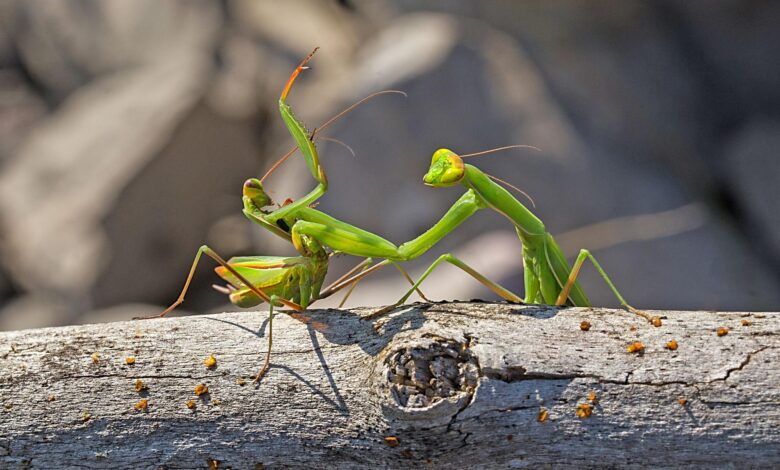
A video circulating online captures two praying mantises engaged in mating behaviour, offering a fascinating glimpse into the survival strategies of these remarkable insects.
Although some may dismiss such observations as “utterly useless information,” the natural world is full of surprising lessons about reproduction, adaptation and survival.
The Video: A Close Encounter In Nature
Two praying mantises engage in mating behaviour. The footage illustrates the insects’ distinctive body positioning and the male’s need to maintain his grip during reproduction.
A Risky Approach To Reproduction
The male praying mantis faces a potentially dangerous encounter when approaching a female, which is generally larger and equipped with powerful, spiny front legs used to capture prey.
Depending on the species and circumstances, the male may approach slowly, sometimes from behind, before climbing onto the female’s back. He then positions himself to connect his reproductive organs with hers and transfer sperm.
Researchers have documented several courtship patterns in praying mantises, including approaches from behind and approaches in which the female can see the male. This means there is no single approach followed by every species or every mating pair. <Link url=”https://www.sciencedirect.com/science/article/pii/S0003347287800246” title=”Research on praying mantis courtship and mating behaviour”/>.
Sexual Cannibalism: When Mating Turns Deadly
One of the best-known features of praying mantis reproduction is sexual cannibalism, a phenomenon in which a female eats a male before, during or after mating.
However, the popular image of every male praying mantis being devoured by his mate is misleading. Cannibalism does not occur in every encounter, and its frequency varies with species and circumstances.
A field study of the European praying mantis, Mantis religiosa, reported sexual cannibalism in 31 per cent of the matings observed in that particular wild population. Other research has found that factors such as female hunger and body condition can influence the likelihood of an attack. <Link url=”https://doi.org/10.1016/0003-3472%2892%2990080-S” title=”Field study of sexual cannibalism in praying mantises”/>.
The male’s challenge is therefore not simply to find a mate, but to reproduce while avoiding becoming her next meal.
Does The Female Benefit From Eating The Male?
Scientists have investigated whether consuming a male provides nutritional benefits that can contribute to egg production.
Research published in 2016 on the Chinese praying mantis, Tenodera sinensis, found that females that cannibalised males transferred more male-derived nutrients into their reproductive tissues and eggs. The study also found an increase in the number of eggs produced after cannibalism in the experimental conditions.
These findings suggest that the male may sometimes contribute to the female’s reproductive investment even after death. However, the results should not be interpreted to mean that every female needs to eat a mate to produce healthy eggs. <Link url=”https://pmc.ncbi.nlm.nih.gov/articles/PMC4936037/” title=”Scientific study on cannibalism and reproductive investment”/>.
Nature Is More Complicated Than Internet Myths
Praying mantises are predators that rely on patience, camouflage and specialised forelegs to capture prey. Their reproductive behaviour is another example of the complex trade-offs that shape life in the natural world.
For the male, mating offers an opportunity to pass on his genes, but an encounter with a hungry female can carry serious risks. For the female, feeding and reproduction may intersect, although cannibalism is not an inevitable part of the mating process.
The lesson is simple: what may initially look like useless information can become a fascinating window into animal behaviour, evolution and the struggle to reproduce.
#UgandaToday #Nature #Wildlife #PrayingMantis #Science #AnimalBehaviour