
From Dick Walusimbi To Gen. Kazini And Moses Matovu: What Three Kampala Deaths Reveal About Night-Time Violence
+256 702 23 93 37: Two earlier cases stand out in particular: the 2002 killing of Ebonies actor Paul Katende, popularly known as Dr Dick Walusimbi, and the 2009 death of former army commander Maj. Gen. James Kazini. There is also an earlier case involving rally driver Gerald Kiddu, killed in Bunga in 1997, which makes the historical comparison even more striking.

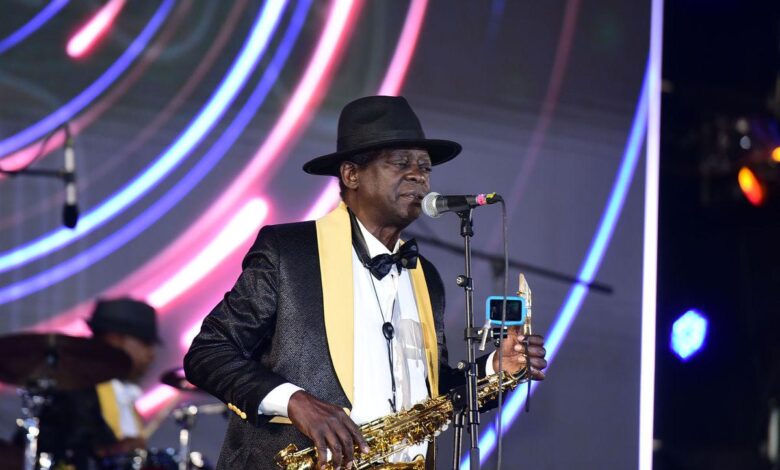
UgandaToday: From Dick Walusimbi To Gen. Kazini And Moses Matovu: What Three Kampala Deaths Reveal About Night-Time Violence
By Uganda Today Editorial Desk
The death of veteran musician and Afrigo Band icon Moses Matovu in the early hours of September 24, 2026, has revived memories of other prominent Ugandans whose lives ended violently after late-night or early-morning encounters around the homes of women they had visited.
Matovu’s death is not merely another crime story. It has reopened a difficult conversation about the vulnerability of people moving through Kampala at night, the dangers that can arise from intimate relationships and disputes, and the importance of allowing investigators and courts to establish facts before public speculation hardens into accepted truth.
Two earlier cases stand out in particular: the 2002 killing of Ebonies actor Paul Katende, popularly known as Dr Dick Walusimbi, and the 2009 death of former army commander Maj. Gen. James Kazini.
There is also an earlier case involving rally driver Gerald Kiddu, killed in Bunga in 1997, which makes the historical comparison even more striking.
Yet the similarities should be treated as a starting point for analysis—not as evidence that the deaths were connected or that every case had the same motive.
Moses Matovu: A Musical Legend’s Final Journey
Moses Matovu, one of the founding figures and longtime leader of Afrigo Band, died at Kibuli Hospital on September 24, 2026, after sustaining serious injuries during an early-morning confrontation in Kibuli Market Zone B, Makindye Division, Kampala.
Police initially described the attackers as unidentified assailants and opened a suspected murder investigation. Subsequent preliminary findings placed Matovu at the residence of a woman identified as Rose Tumusiime at about 5:30am. Police said Matovu and the woman encountered a man who had previously been in a relationship with her.
The investigation subsequently led to the arrest of 41-year-old Vincent Nsamba, a private security guard, in Nansana, Wakiso District. Detectives later searched his home and reportedly recovered clothing believed to have been worn during the incident.
According to police-linked accounts reported by Ugandan media, the confrontation escalated after the man allegedly confronted Tumusiime and Matovu intervened. Matovu fell and suffered a serious head injury. He was rushed to Kibuli Hospital, where he died. The precise circumstances and individual responsibility remain matters for the criminal justice process.
That distinction is important.
Being arrested or identified as a suspect is not the same as being convicted.
The Legend Behind The Name Afrigo
Matovu’s death carries particular weight because he was not simply another entertainer.
He was one of the central architects of Uganda’s live-band tradition and a founding figure of Afrigo Band, established in the 1970s. His musical career stretched across nearly six decades, taking him from the early years of professional music through enormous changes in Uganda’s cultural and entertainment industry.
He joined the music industry in the 1960s, worked with bands including Thunderbirds, Police Band and Cranes Band, and later became the defining face of Afrigo. The group survived political upheaval, changing musical tastes, technological transformation and generations of musicians.
For many Ugandans, Matovu’s saxophone and voice represented continuity.
His death therefore created two stories at once: the loss of a national musical institution and the disturbing circumstances in which that institution’s leading figure died.
Paul Katende: The Dr Dick Walusimbi Killing
Seven years before the death of Gen. Kazini, Uganda experienced another shocking killing involving a prominent entertainer.
Paul Katende, popularly known as Dr Dick Walusimbi, was an Ebonies star and one of the better-known faces of Uganda’s theatre and television entertainment scene.
Archival reports place his murder in March 2002, with New Vision reporting that Katende was shot at close range after driving a colleague, actress Harriet Nalubwama, commonly known as Nakawunde, home after rehearsal. Other archival accounts place the scene in the Mutundwe/Kweba Zone area of Lubaga.
Katende was reportedly attacked after dropping her off, while his attackers took personal belongings but left his vehicle. Police subsequently investigated the case, and court records from the period identified suspects.
The case became part of a wider catalogue of unresolved or controversial high-profile killings that police revisited years later.
Gen. James Kazini: A Different Circumstance, But A Similar Setting
On November 10, 2009, Uganda woke to the shocking death of Maj. Gen. James Bunanukye Kazini, a former commander of the Uganda People’s Defence Forces.

Kazini died after sustaining severe head injuries at the home of Lydia Atim Draru in Wabigalo, Namuwongo, Kampala.
The circumstances differed significantly from those surrounding Katende and Matovu.
Kazini’s death followed a domestic confrontation, according to the prosecution and subsequent court proceedings. Draru was eventually convicted of manslaughter, not murder, and sentenced by the High Court in Kampala to 14 years in prison in 2011. Justice Monica Mugyenyi accepted the defence position that Draru had acted in self-defence after an argument, while finding that the prosecution had failed to prove murder. (Uganda Radionetwork)
That judicial outcome is especially important when comparing the three cases.
Kazini’s death demonstrates why circumstances that initially appear obvious can change substantially when tested through evidence and a court process.
It also means that descriptions such as “murder” or “killing” need to be used carefully when discussing historical cases whose legal outcomes are established.
The Forgotten Precedent: Gerald Kiddu
There is another case that predates all three.
On May 16, 1997, prominent rally driver Gerald Kiddu was gunned down in Bunga, Kampala, while in the company of a female friend, according to later police and media accounts.
The case remained unresolved for years and was among the high-profile killings that police said they wanted to revisit. Uganda Radio Network reported in 2008 that the murder had generated several investigations and controversies but remained unsolved. (Uganda Radionetwork)
The Gerald Kiddu case is significant because it shows that the apparent pattern did not begin with Dick Walusimbi, nor does it necessarily end with Moses Matovu.
What Is The Common Thread?
At first glance, the cases appear to share several features:
- Late-night or early-morning movement
- Kampala’s residential neighbourhoods
- A prominent male victim
- The presence or involvement of a woman known to the victim
- A confrontation or attack occurring around a residence
- The rapid transformation of an ordinary night into a fatal incident
But those similarities should not be exaggerated.
Gerald Kiddu was reportedly shot.
Paul Katende was shot.
James Kazini died after a violent domestic confrontation involving an iron bar.
Moses Matovu died after sustaining a serious head injury during an early-morning confrontation.
The weapons, circumstances, motives and legal outcomes were different.
Consequently, it would be irresponsible to describe the cases as manifestations of one organised pattern without evidence.
The Dangerous Hours Between Night And Morning
What the cases do raise, however, is a broader question about personal security during Kampala’s most vulnerable hours.
Between approximately midnight and dawn, many residential neighbourhoods become quieter. Public transport options reduce, fewer people are on the streets, businesses close and witnesses may be scarce.
That environment can complicate everything from preventing an assault to identifying suspects and reconstructing what happened.
In the Matovu case, the incident reportedly occurred at about 5:30am, close to the transition between night and morning. The musician had just completed a social engagement and was moving between locations when the fatal confrontation occurred.
The lesson is not that people should never visit friends or acquaintances at night.
Rather, it is that the risk environment changes significantly after dark, particularly when an individual enters a private dispute, unfamiliar neighbourhood or potentially volatile domestic situation.
When Relationships Become A Security Issue
Another issue raised by these cases is the intersection between intimate relationships and violence.
The police account surrounding Matovu’s death points to a confrontation involving a woman and a man who had previously been in a relationship with her. In the Kazini case, the fatal incident occurred during a domestic confrontation.
That does not mean relationships themselves are the cause of violence.
The deeper issue is what happens when jealousy, anger, perceived betrayal, alcohol, unresolved domestic disputes or threats interact with an individual’s willingness to use violence.
Uganda’s response to such incidents therefore cannot be limited to arresting suspects after somebody has died. Prevention, timely intervention, community awareness and accessible mechanisms for reporting threats are equally important.
Kampala’s High-Profile Deaths And The Problem Of Memory
There is another dimension to this story: collective memory.
When a famous person dies violently, the circumstances become part of public folklore.
Years later, details can become distorted.
Locations can be confused. Names can be altered. A suspect can become a convicted criminal in public memory even when the courts reached a different conclusion. Rumours can become “facts” simply because they have been repeated often enough.
The historical record concerning Paul Katende demonstrates this problem.
The same caution applies to Moses Matovu.
The first reports described an attack by unknown assailants. Later police findings pointed towards a confrontation involving a woman and another man. A suspect was subsequently arrested. The investigation is therefore evolving, and a responsible publication should distinguish confirmed facts, police allegations, eyewitness accounts and conclusions established by a court.
The Bigger Question: Why Do These Stories Keep Returning?
Perhaps the most important question is not whether the deaths of Katende, Kazini and Matovu were connected.
There is currently no evidence establishing such a connection.
The more useful question is why Uganda repeatedly finds itself discussing preventable violence after prominent people have already lost their lives.
Every case represents a different chain of circumstances.
But each also raises familiar questions:
Could a confrontation have been avoided?
Were threats known beforehand?
Were there opportunities for intervention?
Were neighbours or friends aware of escalating disputes?
Did the victims appreciate the risks surrounding their movements?
Did the perpetrators understand the consequences of violence?
And, perhaps most importantly, are Uganda’s communities doing enough to intervene before domestic or interpersonal conflicts become lethal?
These are questions that investigators, courts, security agencies, families, communities and policymakers must answer case by case.
Justice, Not Rumour, Must Determine The Matovu Story
The death of Moses Matovu should not become another Kampala crime story in which speculation eventually replaces evidence.

Police have arrested a prime suspect and continue investigating. That is precisely the stage at which the public should allow investigators to gather forensic evidence, interview witnesses and establish the sequence of events.
The Katende and Kazini cases provide an important historical warning.
In Katende’s case, investigations continued for years.
In Kazini’s case, the eventual court finding differed materially from the original murder allegation.
And in Matovu’s case, the final legal account has yet to be established.
The public deserves answers—but answers supported by evidence.
From A Saxophone To Silence
Moses Matovu spent more than five decades making music.
He helped build Afrigo Band into one of Uganda’s most enduring cultural institutions. He entertained generations, mentored musicians and became inseparable from the history of Ugandan live music.
His final journey through Kampala’s early-morning streets has now placed his name alongside other prominent Ugandans whose lives ended violently in circumstances involving private residences and interpersonal confrontations.
The comparison should not be used to manufacture a conspiracy.
It should instead provoke a sober national conversation about night-time safety, interpersonal violence, domestic conflict, responsible reporting, policing and the value of human life.
For Matovu’s family, colleagues and millions of people who grew up with Afrigo Band, the most painful fact remains the simplest:
A man who spent a lifetime giving Uganda music lost his life in circumstances that should now demand the country’s fullest search for truth and justice.


“The similarities are striking, but the differences are equally important: the cases should provoke questions, not conclusions.”
#UgandaToday #MosesMatovu #AfrigoBand #Kampala #DickWalusimbi #JamesKazini
Editorial note: The article deliberately avoids presenting the three deaths as a connected series. The available evidence establishes similarities in setting and circumstances, but not a common conspiracy or organised pattern. The account of Moses Matovu’s death remains subject to the ongoing police investigation and subsequent judicial process.