
Uganda’s Shilling Under Pressure As Expensive Credit Threatens Business Growth
+256 702 23 93 37: When A Weak Shilling Meets Expensive Money Currency depreciation can raise the domestic cost of imported goods and production inputs. For manufacturers and traders, the effect can eventually filter through to wholesale and retail prices.

UgandaToday: Uganda’s Shilling Under Pressure As Expensive Credit Threatens Business Growth
Businesses Face A Double Squeeze As Dollar Demand Rises And Borrowing Costs Remain High
Uganda’s economy is facing a fresh financial challenge as pressure on the shilling coincides with concerns over the cost and availability of credit to businesses.
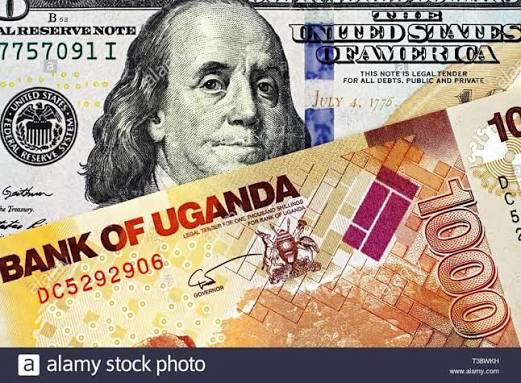
The Uganda shilling has weakened against the United States dollar in recent weeks, with market pressure driven partly by strong demand for foreign currency from manufacturers and energy-sector companies, while wider geopolitical uncertainty has also increased demand for dollars.
Reuters reported on September 17 that commercial banks were quoting the shilling at about Shs3,925–3,935 to the dollar, compared with around Shs3,860–3,870 a week earlier. Traders warned that the currency could approach the Shs4,000-per-dollar level. (Reuters)
The development comes at a sensitive time for businesses that depend heavily on imported machinery, raw materials, fuel, technology and other inputs priced in dollars.
When A Weak Shilling Meets Expensive Money
Currency depreciation can raise the domestic cost of imported goods and production inputs. For manufacturers and traders, the effect can eventually filter through to wholesale and retail prices.
At the same time, the Bank of Uganda has been tightening liquidity in response to inflationary pressures and currency weakness.
The Monitor reported on September 18 that the central bank was draining money from the banking system as inflationary pressures and the weakening shilling created new concerns. Economists cited by the newspaper warned that tighter liquidity could further constrain private-sector credit and increase borrowing costs. (Monitor)
For a small manufacturer seeking financing to purchase equipment, a trader importing stock or an agricultural enterprise looking for working capital, the combination can be particularly difficult.
Government Wants Cheaper Credit To Drive Investment
The pressure on banks comes as government seeks to expand Uganda’s economy dramatically over the coming years.
Finance Minister Henry Musasizi has called on commercial banks to reduce lending costs, arguing that affordable credit will be necessary to support investment and the government’s ambition of building a US$500 billion economy by 2040.
Government has also identified job creation, export growth and rising household incomes among the priorities of the FY2027/28 Budget. (Ministry of Finance Uganda)
The policy challenge is therefore increasingly apparent: monetary authorities must contain inflation and protect macroeconomic stability while businesses are calling for affordable financing to expand production.
The Export Opportunity
A weaker shilling is not necessarily negative for every sector.
Exporters who earn foreign currency may receive more Uganda shillings for their dollar revenues. This could potentially improve the competitiveness of some locally produced goods in international markets, provided production costs do not rise faster than export earnings.
The larger question is whether Uganda can use the current currency and credit pressures to encourage greater domestic production rather than simply passing higher import costs to consumers.
SMEs Remain Particularly Exposed
Small and medium enterprises are likely to feel the effects most directly because many operate with limited working capital and have less capacity to absorb sudden increases in financing and input costs.
For such businesses, access to predictable and reasonably priced credit can determine whether an enterprise expands, maintains its workforce or reduces operations.
Uganda’s economic transformation therefore depends not only on the availability of capital but also on the conditions under which that capital reaches productive enterprises.
The Bigger Question For Uganda
The current debate is ultimately about how Uganda finances economic transformation.
Government is calling for more investment, banks are being urged to provide cheaper credit, while the central bank is attempting to manage inflation and currency pressures.
The coming months will show whether these objectives can be balanced without placing excessive pressure on businesses and consumers.