The ‘Basement’ Returns: Muhoozi’s Arrest of Rwabwogo Aide Bagonza Raises Fresh Questions Over Power, Detention and Due Process
+256 702 23 93 37:The “basement” narrative resurfaced again in June 2026 in connection with the detention of lawyer Erias Lukwago, with international human-rights advocates documenting claims that Kainerugaba publicly said he had “captured” Lukwago and taken him to the basement.


UgandaToday: The ‘Basement’ Returns: Muhoozi’s Arrest of Rwabwogo Aide Bagonza Raises Fresh Questions Over Power, Detention and Due Process
By Uganda Today Editorial Desk
KAMPALA — Uganda’s controversial “basement” saga appears to have returned to the national spotlight, this time involving Matthew Bagonza, a senior official in the Presidential Advisory Committee on Exports and Industrial Development (PACEID) and a longtime aide to presidential adviser Odrek Rwabwogo.
The reported arrest of Bagonza, followed by a series of extraordinary social-media posts by Uganda’s Chief of Defence Forces (CDF), Gen. Muhoozi Kainerugaba, has opened a new and politically sensitive chapter in the increasingly public confrontation between the CDF and his brother-in-law, Rwabwogo.
Reports emerging on August 25 and 26 indicate that security personnel picked Bagonza up from his home in Entebbe. The circumstances surrounding the arrest and the precise allegations against him have not been publicly explained in detail.
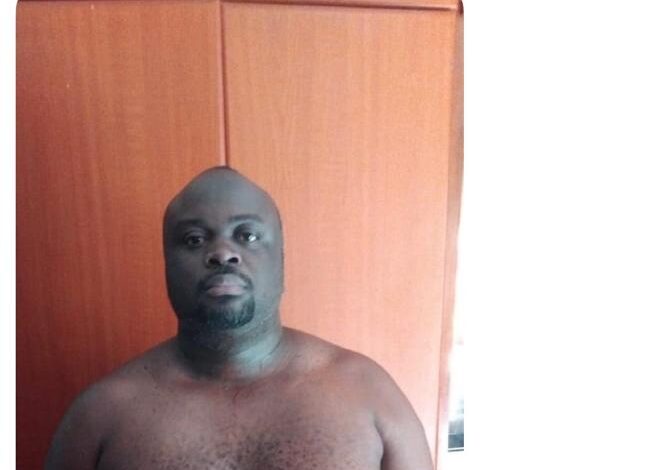
Gen. Kainerugaba subsequently confirmed that Bagonza was in custody by posting a photograph of him without a shirt and making threats of corporal punishment.
The development is particularly striking because it resurrects memories of the CDF’s earlier use of the term “my basement” when referring to the detention of government critics.
From Eddie Mutwe to Bagonza: The Return of the ‘Basement’ Language
The term “basement” entered Uganda’s political vocabulary in May 2025 when Gen. Kainerugaba publicly claimed that Eddie Mutwe, the chief bodyguard of opposition leader Robert Kyagulanyi Ssentamu, popularly known as Bobi Wine, was being held in his basement.
Reuters reported at the time that Kainerugaba claimed Mutwe was in his basement after the opposition activist disappeared. The CDF also made threats against him. Mutwe was later brought before a civilian court and remanded to prison.
The episode attracted national and international condemnation, particularly after images of Mutwe emerged showing him in a distressed and partially undressed state.
Uganda’s Justice Minister at the time described Mutwe’s treatment as an abuse of judicial processes, while human-rights organisations raised concerns about unlawful detention and alleged torture.
The “basement” narrative resurfaced again in June 2026 in connection with the detention of lawyer Erias Lukwago, with international human-rights advocates documenting claims that Kainerugaba publicly said he had “captured” Lukwago and taken him to the basement.
The Bagonza case therefore arrives against a backdrop in which the word “basement” has become synonymous, in public debate, with allegations of detention outside the conventional criminal-justice process.
Who Is Matthew Bagonza?
Bagonza is not an unknown figure within Uganda’s government and business circles.
He heads the PACEID Secretariat and has represented the presidential advisory body at local and international engagements focused on exports, industrialisation and market access.
PACEID’s own website identifies Bagonza in connection with its work promoting Uganda’s export agenda.
He has also worked closely with PACEID chairman Odrek Rwabwogo, including in the capacity of a personal assistant.
That connection has made his arrest considerably more politically sensitive than an ordinary security operation.
The arrest effectively places a senior official associated with one powerful faction of Uganda’s political establishment in the custody of the security establishment headed by another member of the same First Family orbit.
The Rwabwogo Connection
Odrek Rwabwogo is married to Patience Museveni Rwabwogo, a daughter of President Yoweri Museveni and sister of Gen. Muhoozi Kainerugaba.
That makes Rwabwogo the CDF’s brother-in-law.
The relationship makes the latest confrontation especially extraordinary: Uganda is witnessing a public dispute between two members of the President’s immediate family circle, with an aide of one now being held by security forces under the authority of the other.
The Observer has described the latest confrontation as a renewal of the feud between Muhoozi and Rwabwogo, while Africa Confidential has also reported growing tensions between the two men.
What was previously largely a family and political disagreement has now assumed a security dimension.
Muhoozi Declares PACEID ‘Illegal’
The Bagonza arrest followed Gen. Kainerugaba’s public declaration that PACEID was an “illegal organisation” and his warning that members of the organisation would face arrest.
According to reports, the CDF accused some PACEID officials of wrongdoing and announced that arrests had begun.
PACEID, however, operates within the Office of the President and was established to advise on exports and industrial development. Reports indicate that President Museveni commissioned the committee in 2022.
The sudden description of the organisation as “illegal” therefore raises an important public-interest question: on what legal basis has an institution operating within the presidential establishment been declared illegal, and by what authority?
Those questions become even more significant now that one of its senior officials has been arrested.
The Photograph That Changed the Story
The controversy escalated when Gen. Muhoozi posted a photograph of Bagonza without a shirt.
The CDF accompanied the image with threats that Bagonza would be subjected to caning.
In one post, he reportedly said Bagonza would receive 3,000 canes per week, while in another he threatened that caning would begin the following day. He went further in another post to say that Bagonza’s death during such punishment would be welcome.
Such statements are extraordinary coming from the country’s top military officer.
They have also intensified questions about whether Bagonza is being treated as a suspect in a criminal investigation or as a detainee subjected to punishment outside the courts.
As of publication, no detailed charge sheet against Bagonza has been publicly presented to explain the allegations for which he was arrested.
A Security Operation or Punishment Outside Court?
The central issue is no longer simply whether Bagonza committed an offence.
If there are allegations against him, Ugandans have a right to know what those allegations are and to see them subjected to the country’s established investigative and judicial procedures.
Arrest, investigation, charging and conviction are distinct stages of criminal justice.
A person accused of an offence is ordinarily expected to be taken through due process, with access to legal representation and the opportunity to challenge the allegations before a competent court.
The suggestion of physical punishment before a judicial determination of guilt raises fundamental questions about the rule of law.
It also creates an uncomfortable contradiction: how can a state enforce the law while simultaneously appearing to threaten punishment before a court has determined guilt?
The CDF’s Warning to Rwabwogo
The confrontation has gone beyond Bagonza.
Gen. Kainerugaba has reportedly warned Rwabwogo that he too could be arrested if he contacts security officers without the CDF’s approval.
That warning has transformed the dispute into something much larger than a disagreement over PACEID.
It puts a senior presidential adviser in the extraordinary position of being publicly warned by the country’s military chief — who also happens to be his brother-in-law — over his interaction with security agencies.
For many Ugandans, the question is obvious: what happens when family rivalry, state security and executive power begin to overlap?
A Dangerous Precedent?
The Bagonza episode has revived a broader debate about the growing visibility of military power in matters involving civilians.
The CDF is constitutionally a senior military office. The country’s criminal justice system, meanwhile, assigns investigation, prosecution and adjudication to designated civilian and judicial institutions.
When the head of the military publicly announces the detention of a civilian and simultaneously threatens corporal punishment, the distinction between military authority and judicial authority becomes blurred.
That is precisely why the language surrounding the “basement” has generated such concern before.
The earlier Mutwe case became an international human-rights story after Gen. Kainerugaba publicly acknowledged his detention and made threats against him. Reuters documented the episode and its subsequent legal consequences.
The emergence of another detainee in similar public messaging inevitably raises questions about whether the “basement” is becoming a recurring feature of Uganda’s political-security landscape.
The First Family Dimension
The Bagonza case is also unfolding at an unusually sensitive moment for Uganda’s ruling establishment.
Rwabwogo is not simply a private businessman or political outsider. He is a presidential adviser, the chairman of PACEID and a member of the President’s extended family through his marriage to Patience Museveni.
Gen. Muhoozi, meanwhile, is President Museveni’s son and Uganda’s serving CDF.
The two men therefore occupy positions of considerable influence.
Their increasingly public disagreement has consequently attracted attention far beyond the fate of one PACEID official.
It has raised the bigger question of whether Uganda’s political succession and internal power struggles are increasingly being played out through state institutions.
What Ugandans Need to Know
The Bagonza case now demands answers.
Where exactly is Matthew Bagonza being held?
Which security agency arrested him?
What offence is he accused of committing?
Has he been formally charged?
Has he been given access to a lawyer and family members?
When will he be produced before a competent court?
And perhaps most importantly:
Who authorised the threatened physical punishment?
These are not questions of partisan politics. They are questions about the rule of law and the limits of state power.
The ‘Basement’ as a Symbol of Uganda’s Accountability Debate
For Uganda Today, the Bagonza story should not be reduced to the personal feud between Muhoozi and Rwabwogo.
At its heart is a much larger national question.
If a citizen is accused of a crime, the state has institutions designed to investigate that crime, prosecute the suspect and, where guilt is established, impose punishment.
The concern arises when punishment appears to precede adjudication.
The “basement” has consequently evolved from an expression used on social media into a symbol in Uganda’s wider debate about arbitrary detention, military power and accountability.
Bagonza’s case will test whether Uganda’s institutions can provide clear answers about his arrest, the allegations against him and the circumstances of his detention.
Until those answers emerge, the image of a senior presidential advisory official appearing shirtless in a photograph published by the country’s military chief — accompanied by threats of corporal punishment — will remain one of the most troubling episodes in Uganda’s current political-security discourse.
Uganda Today’s Take
The State has a legitimate duty to investigate crime and protect national security.
But security must operate within the law, not above it.
If Matthew Bagonza has committed an offence, he should be charged and tried in accordance with the law. If he has not, he should be released.
And if there is a lawful basis for his detention, the authorities should disclose it.
Uganda’s institutions must ultimately be stronger than the personalities occupying them.
That is the real test posed by the return of the “basement” controversy.
#UgandaToday #MuhooziKainerugaba #MatthewBagonza #OdrekRwabwogo #PACEID #Basement #RuleOfLaw #HumanRights #DueProcess #UgandaPolitics #UgandaNews #UgandaSecurity #UPDF #CDF #FirstFamily #Accountability #Justice #Democracy #PressFreedom #HumanRightsUganda #PhoenixNewsfeeds #OperaNewsfeeds #UgandaNewsUpdates #BreakingNewsUganda #bit.ly/3REw5gR #UgandaTodayNews