Olara Otunnu’s UN Bid: Can Uganda Produce the World’s Next Secretary-General?
+256 702 239 337: Crucially, the UN has not released any official voting percentages. Secretary-General selections are determined through confidential Security Council straw polls and ultimately require approval by the Security Council before appointment by the General Assembly.

UgandaToday: Olara Otunnu’s UN Bid: Can Uganda Produce the World’s Next Secretary-General?
By Uganda Today Investigations Desk
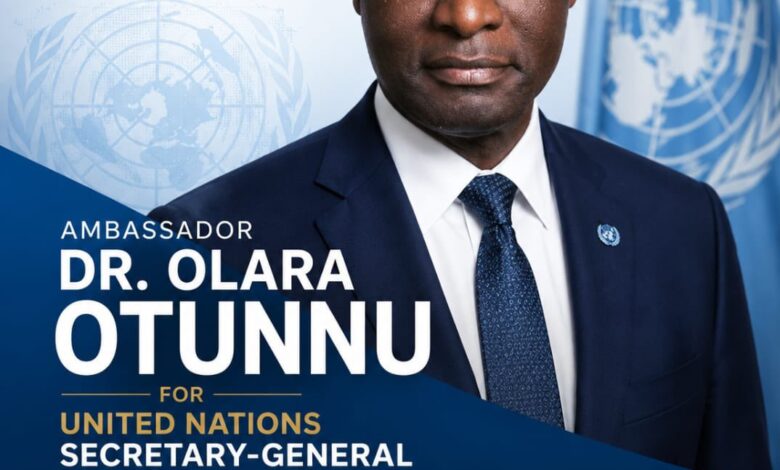
Uganda has unexpectedly found itself at the centre of global diplomacy following the official nomination of veteran diplomat Dr. Olara Otunnu for the position of the next Secretary-General of the United Nations (UN), the world’s highest-ranking diplomatic office.
An infographic circulating widely on social media claims that Otunnu currently commands 40% support, significantly ahead of other contenders in the race. However, an investigation by UgandaToday.co.ug has established that while Otunnu is indeed an official candidate, the 40% support figure shown in the graphic cannot be independently verified through official United Nations processes and should therefore be treated as an unofficial estimate rather than an authoritative tally.
What the Diagram Claims
The chart dated 26 July 2026 ranks the candidates as follows:
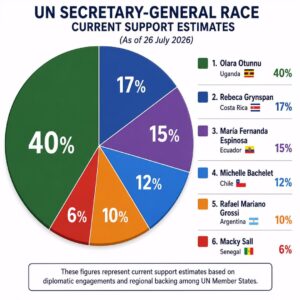
- Olara Otunnu (Uganda) – 40%
- Rebeca Grynspan (Costa Rica) – 17%
- María Fernanda Espinosa (Ecuador) – 15%
- Michelle Bachelet (Chile) – 12%
- Rafael Mariano Grossi (Argentina) – 10%
- Macky Sall (Senegal) – 6%
The graphic states that these figures are merely “current support estimates based on diplomatic engagements and regional backing among UN member states.”
Crucially, the UN has not released any official voting percentages. Secretary-General selections are determined through confidential Security Council straw polls and ultimately require approval by the Security Council before appointment by the General Assembly.

Uganda’s Surprise Entry into the Race
Uganda formally nominated Dr. Olara Otunnu only days ago, making him one of the newest entrants into the contest to replace António Guterres when his second term expires at the end of 2026.
Otunnu brings decades of international experience to the race, having served as:
- Uganda’s Permanent Representative to the United Nations.
- Uganda’s Minister of Foreign Affairs.
- President of the International Peace Academy.
- UN Under-Secretary-General.
- Special Representative of the Secretary-General for Children and Armed Conflict.
The Diplomat Who Changed UN Elections
One of the lesser-known chapters in Otunnu’s diplomatic career is his contribution to the UN’s own selection procedures.
While serving as President of the UN Security Council in 1981, Otunnu introduced the informal straw-ballot system used to gauge support for Secretary-General candidates—a procedure that has since become an enduring feature of the selection process.
If elected in 2026, it would be a remarkable historical twist: the architect of the straw-poll process would become one of its successful beneficiaries.
Why the Race Is More Complex Than the Numbers Suggest
Despite the optimistic graphic, diplomats caution against interpreting any percentage as a predictor of victory.
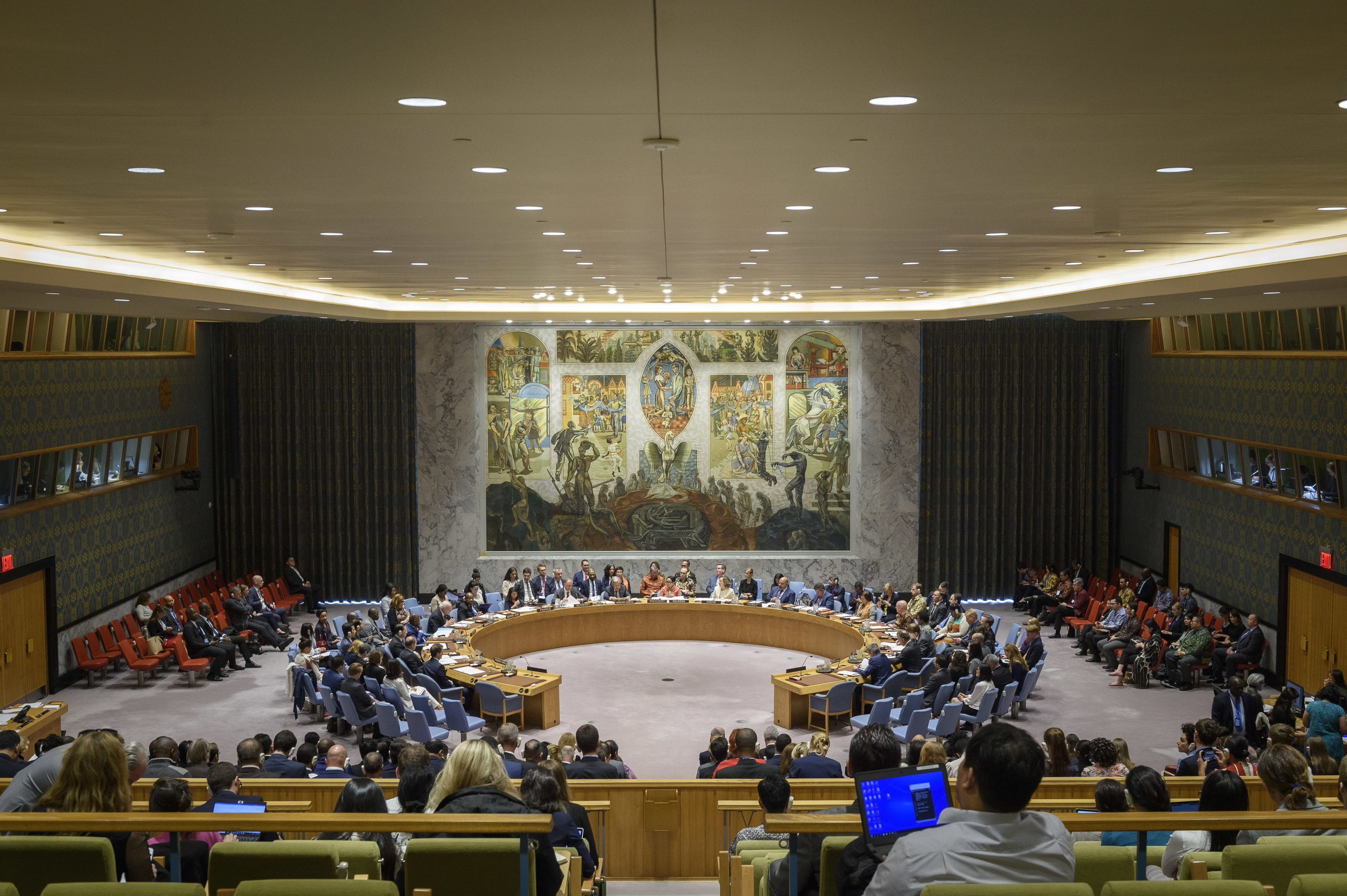
Unlike national elections, the UN Secretary-General is not elected by popular vote. Instead, the decisive battleground is the 15-member UN Security Council, where any of the five permanent members—the United States, China, Russia, the United Kingdom, or France—can effectively block a candidate through a veto.
This means that a candidate perceived to enjoy broad diplomatic goodwill may still fail if they cannot secure consensus among the permanent members.
Regional Politics Could Shape the Outcome
The race is also influenced by longstanding debates over regional rotation.
Many diplomats have argued that Latin America and the Caribbean deserve to produce the next Secretary-General, while others have advocated for the first woman to lead the United Nations.
Several of Otunnu’s strongest rivals—including Rebeca Grynspan, Michelle Bachelet and María Fernanda Espinosa—fit one or both of those expectations.
That dynamic means Otunnu’s campaign will need to persuade member states that experience and diplomatic credibility outweigh regional and gender considerations.
Why Uganda Believes Otunnu Is Different
Supporters argue that Otunnu’s career spans nearly every major pillar of international diplomacy:
- Conflict resolution.
- Child protection.
- Human rights.
- Peacebuilding.
- International law.
- UN institutional reform.
His published vision for the office reportedly prioritizes:
- Reforming UN institutions.
- Accelerating peace efforts in global conflicts.
- Establishing international oversight of artificial intelligence.
- Addressing climate change while supporting economic development.
An Opportunity for Uganda’s Global Profile
Regardless of the final outcome, Uganda’s nomination has already elevated the country’s diplomatic visibility.
The campaign places Uganda alongside major global powers in one of the most consequential leadership contests in international affairs. It also shines a spotlight on one of the country’s most experienced diplomats, whose career has spanned government, international organizations and global advocacy.
Whether the support reflected in the circulating infographic translates into votes inside the Security Council remains uncertain. What is clear is that the contest is still unfolding, additional candidates may emerge, and confidential straw polls—not public estimates—will determine who ultimately advances.