UgandaToday: 1994: The Sacrifice of RP Erisa Karakire and the Debt Uganda Still Owes His Family
+256 702 239 337: ACP Karakire was killed alongside his driver while executing official duties aimed at safeguarding the security of citizens and maintaining order along one of Uganda's busiest transport corridors. Their killers were reportedly members of the National Democratic Alliance (NDA), a rebel outfit led by Maj. Herbert Itongwa, which had launched a series of attacks against government targets that same month.


UgandaToday: 1994: The Sacrifice of RP Erisa Karakire and the Debt Uganda Still Owes His Family

By Barbara Nabuzaale
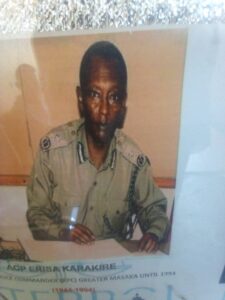
More than three decades have passed since Assistant Commissioner of Police (ACP) Erisa Karakire, then Regional Police Commander for Southern Uganda, was gunned down in an ambush along the Kampala–Masaka Highway. Yet for his family, the pain, uncertainty, and unfulfilled promises associated with his death remain as fresh today as they were in March 1994.
ACP Karakire was killed alongside his driver while executing official duties aimed at safeguarding the security of citizens and maintaining order along one of Uganda’s busiest transport corridors. Their killers were reportedly members of the National Democratic Alliance (NDA), a rebel outfit led by Maj. Herbert Itongwa, which had launched a series of attacks against government targets that same month.
The rebel group had earlier attacked Buseruka Police Station and abducted then Health Minister Dr. James Makumbi. Karakire’s murder formed part of a broader campaign directed at state institutions and public officials.
Thirty-two years later, however, an equally troubling question lingers: What became of the family he left behind?

Beyond the Uniform: The Human Cost of Police Service
Police work is often viewed through the lens of salaries, ranks, promotions, and deployments. Yet beneath every uniform is a human being—a father, husband, son, brother, or friend—who accepts extraordinary risks in service to the nation.
ACP Karakire did not leave his home on that fateful day expecting it to be his last. Like thousands of police officers before and after him, he reported for duty determined to protect lives and property. He paid the ultimate price.
His name joins a long list of Ugandan police officers who have died while serving their country. Their sacrifices are remembered during funeral ceremonies, memorial speeches, and official tributes. But once the wreaths are laid and the mourners depart, many families are left to confront a difficult reality alone.
For widows, children, and elderly parents, the loss does not end with burial. It becomes a lifelong burden marked by emotional trauma, financial hardship, and unanswered questions.
Promises Made, Promises Forgotten?
One of the most recurring concerns raised by families of fallen security personnel is the gap between promises made during funerals and support actually delivered afterwards.
Government officials, police leaders, and local authorities often pledge assistance ranging from educational support for children to housing, compensation, and welfare benefits. Such commitments are welcomed by grieving families as a sign that the nation values the sacrifice of its fallen heroes.
Yet many families report that these promises rarely materialize in full, if at all.
The case of ACP Erisa Karakire’s family is frequently cited as an example. More than three decades after his death, relatives say they have never received the meaningful support that was expected following the loss of a senior officer who died while defending the country.
If this is indeed the case, it raises uncomfortable but necessary questions:
- What mechanisms exist to ensure benefits pledged to bereaved families are actually delivered?
- Who monitors the welfare of families after the funeral ceremonies conclude?
- Is there a system for auditing support promised to families of officers killed in the line of duty?
- How many other families may be facing similar circumstances?
These are questions that deserve answers from both the Uganda Police Force and relevant government institutions.
The Forgotten Families of Fallen Heroes
When a police officer dies in service, the nation loses more than an employee. It loses experience, leadership, institutional memory, and a citizen who chose duty over personal safety.
The family, meanwhile, loses much more.
Children lose parental guidance. Spouses lose companionship and financial support. Parents lose sons and daughters they hoped would care for them in old age.
A country that asks men and women to risk their lives in defense of public safety carries a moral obligation to ensure their loved ones are not abandoned after their sacrifice.
Support for bereaved families should not be viewed as charity. It is part of the social contract between the state and those who serve it.
Time for Action, Not Ceremonies
As Uganda continues to honour security personnel who have died in service, there is a need to move beyond symbolic recognition and establish practical systems that guarantee long-term support.
Several measures could help address this challenge:
Establish a Welfare Tracking System
Government and police authorities should create a transparent mechanism that follows up on all benefits promised to bereaved families, from burial arrangements to long-term welfare support.
Conduct an Audit of Outstanding Obligations
A comprehensive review should be undertaken to establish whether families of officers killed in the line of duty received all benefits due to them and to identify gaps requiring urgent intervention.
Preserve the Legacy of Fallen Officers
Police training institutions and stations should document and teach the stories of officers such as ACP Erisa Karakire. Their sacrifices should form part of the institutional history that inspires future generations of officers.
Recognize Families as Part of the Service Community
The responsibility of the police force should not end with the officer’s death. Caring for surviving family members should be integrated into the broader mission of honouring service and sacrifice.
A Call to the President and Police Leadership
The story of ACP Erisa Karakire is not merely about an officer who died in 1994. It is about the enduring responsibility that remains long after a hero has been laid to rest.
As the nation remembers those who gave their lives in service, there is an opportunity for the Government of Uganda, the Inspector General of Police, and the Police Authority to revisit the circumstances of families such as the Karakires and assess whether the promises made were ever fulfilled.
True gratitude is demonstrated not only through speeches and memorials but through sustained support for those left behind.
Today, as we honour the memory of ACP Erisa Karakire, we also remember the countless police officers who have fallen in the line of duty across Uganda.
Their sacrifice secured the peace many citizens enjoy today.
May their memories continue to inspire service above self, courage in the face of danger, and an unwavering commitment to the nation.
Gone, but never forgotten.
#UgandaToday #PoliceHeroesUG #ErisaKarakire #FallenOfficers #JusticeForFamilies
#NeverForgottenUG