Release Political Prisoners: After the Swearing-In: A Call for Mercy, Justice and National Reconciliation in Uganda
+256 702 239 337: A Call for Balance, Mercy and Reconciliation In conclusion, Nabuzaale Barbara calls for what she describes as a “balanced approach” — one that safeguards the law while also embracing mercy, fairness and national reconciliation.
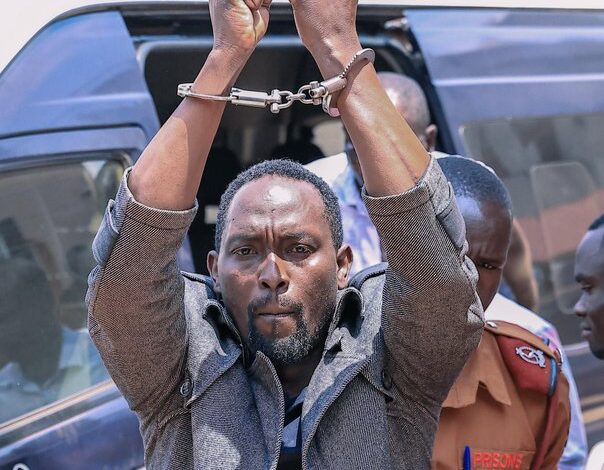
Waiswa Mufumbiro defiantly raising his handcuffed arms, was remanded to the country's Luzira maximum prison till September 29th 2025 when he will be brought to court again.
Waiswa Mufumbiro defiantly raising his handcuffed arms, was remanded to the country’s Luzira maximum prison till September 29th 2025 when he will be brought to court again.
UgandaToday: After the Swearing-In: A Call for Mercy, Justice and National Reconciliation in Uganda
Nabuzaale Barbara
By Nabuzaale Barbara
Disclaimer:The views expressed in this article are solely those of the author, Nabuzaale Barbara, and do not necessarily reflect the editorial position of Uganda Today. The publication upholds freedom of expression and provides space for diverse opinions in the national interest.
The conclusion of a national election process is often marked by the swearing-in of elected leaders — a constitutional moment symbolising continuity, authority and the transition from political contestation to governance. Yet beyond the ceremonies, celebrations and political victories lies a deeper national responsibility: healing divisions, restoring trust and reaffirming the shared humanity of all citizens.
For many Ugandans, the swearing-in signals the end of a difficult and emotionally charged election season. However, according to author Nabuzaale Barbara, the country must now shift focus from political competition to justice, compassion and reconciliation.
Elections May Be Over, But the Human Cost Remains
Barbara notes that during the election period, a number of Ugandans were arrested in relation to political activities and election-related tensions. While acknowledging the importance of the rule of law, she argues that the post-election period presents an opportunity for the country to embrace fairness and national healing.
“There are fellow citizens who were arrested in relation to political issues during the election season,” she writes, appealing for consideration to be given to those detained over minor, civil and non-violent political offences.
She further calls for authorities to ensure that cases are handled fairly and without unnecessary delays, particularly for individuals who may not yet have been formally charged or tried.
Families Carrying the Burden of Political Conflict
Beyond legal and political considerations, Barbara draws attention to the social and emotional suffering experienced by families of detained individuals.
Many households, she argues, have been pushed into hardship after losing breadwinners to prolonged detention. Children, spouses and dependents continue to struggle financially and psychologically while awaiting the resolution of political cases.
“In some cases, families have even lost loved ones,” she observes, adding that while justice must prevail, compassion and fairness should guide decisions made in politically sensitive situations.
The article highlights the often-overlooked human consequences of political conflict — consequences that extend far beyond courtrooms and detention centres.
Preserving Public Trust in Democracy
Barbara also warns that unresolved political grievances risk weakening citizens’ confidence in democratic processes.
Although the elections may have concluded, Uganda’s democratic journey continues. Citizens will once again be called upon to participate in future elections, and according to the author, maintaining public trust is essential for sustaining meaningful participation.
“A discouraged or distressed population may lose trust and interest in the democratic process,” she cautions.
Her argument reflects a broader concern shared across many democracies: that political exclusion, fear or unresolved injustices can gradually erode civic engagement and public confidence in national institutions.
Leadership Must Go Beyond Electoral Victory
The article further challenges leaders to remember that political office ultimately exists to serve citizens — including those with differing political opinions.
Barbara argues that national progress cannot be achieved solely through electoral triumphs or political dominance, but rather through unity, inclusion and restoring hope among ordinary people.
“A nation moves forward not only through leadership, but through unity, inclusion and the restoration of hope among its people,” she writes.
Her appeal comes at a time when many Ugandans continue to debate issues surrounding political freedoms, reconciliation and the future of democratic governance in the country.
A Call for Balance, Mercy and Reconciliation
In conclusion, Nabuzaale Barbara calls for what she describes as a “balanced approach” — one that safeguards the law while also embracing mercy, fairness and national reconciliation.
According to her, lasting stability is built not merely on electoral victories, but on the dignity, trust and well-being of all citizens regardless of political affiliation.
Her reflections serve as both a political commentary and a moral appeal for a nation seeking cohesion after a contentious electoral season.
UgandaToday is published by CMK Media Solutions. UgandaToday is your trusted source for news and analysis.
Partner with Uganda Today where your story matters in shaping the social and economic dynamics of the country.
Let’s help you grow your brand and keep your audience informed.
Website:https://www.ugandatoday.co.ugWhatsApp: +256 702 239 337
X (formerly Twitter):@uganda43443 |
Email:ugandatodayedition@gmail.com
P.O.BOX 184351 Kampala.
Uganda