Museveni Then, Sovereignty Now: How an Early Promise Against Oppression Returned to Haunt the NRM
The Uganda Law Society questioned both the necessity and constitutional soundness of the legislation, while religious leaders and civil society organisations cautioned that vague enforcement language could easily become a political instrument rather than a narrowly tailored sovereignty safeguard.

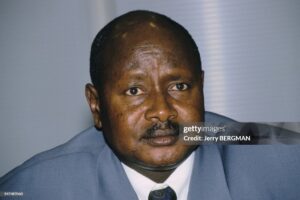
UgandaToday: Museveni Then, Sovereignty Now: How an Early Promise Against Oppression Returned to Haunt the NRM
By Uganda Today Political Desk
A resurfacing archival video from President Yoweri Museveni’s early years in power has reopened a defining national question: has the ruling National Resistance Movement remained faithful to its founding pledge never to enact laws that strengthen state oppression? The debate has intensified after the passage of the Protection of Sovereignty Bill, 2026, despite warnings from the Bank of Uganda, universities, lawyers, religious leaders, civil society and international development partners. Recent developments involving public pressure on the central bank governor and the reported theft of central bank computers have deepened the political intrigue.
President Museveni in the early years of NRM rule, declaring that his government would never enact laws meant to intensify oppression against citizens.
The words that have returned from history
A striking archival video of President Yoweri Museveni from the formative years of NRM rule has once again entered Uganda’s political conversation.
In that early address, Museveni articulated one of the central moral claims of the liberation era: that the new government would not reproduce the legal machinery of repression that had characterised previous regimes.
Parliament passes the sovereignty bill despite national alarm
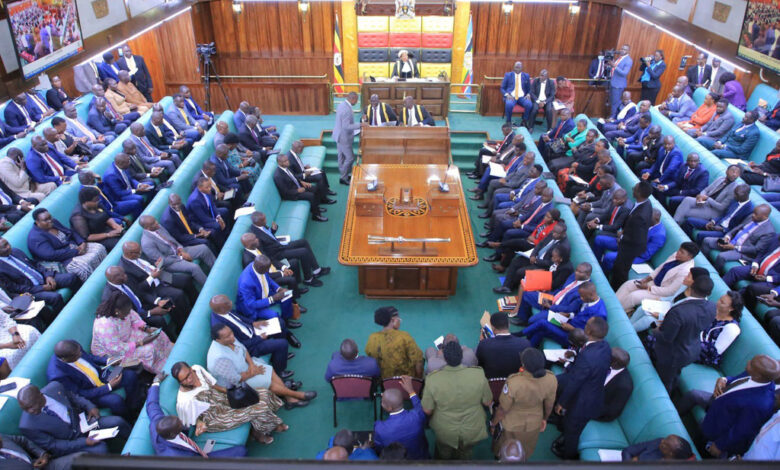
Uganda’s Parliament this week passed the Protection of Sovereignty Bill, 2026, after amendments softened some earlier provisions but preserved the law’s central thrust — regulating foreign-linked political activity and criminalising conduct deemed to advance foreign interests against Uganda’s national interests. The legislation now awaits presidential assent.
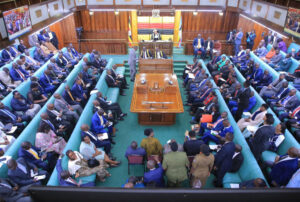
The bill generated unusually broad institutional resistance.
The Bank of Uganda, the Uganda Law Society, Makerere University, Mbarara University of Science and Technology, civil society actors, religious leaders and the World Bank all raised concerns over the bill’s constitutional, economic and civic implications.
The central concern among critics was not whether sovereignty matters — it does — but whether the law creates broad discretionary state power that could be turned against dissent, advocacy, academic debate, journalism and civic organisation.
Bank of Uganda’s warning: “economic disaster”
Among the most consequential interventions came from Michael Atingi-Ego.
The governor warned lawmakers that, in its earlier form, the bill risked discouraging remittances, foreign exchange inflows and development financing — flows that are critical to Uganda’s macroeconomic stability.
He warned Parliament that tampering with those inflows could run down reserves and create what he described as “economic disaster for our country.”
That warning altered the debate.
Parliament eventually amended the legislation so that registration and disclosure requirements apply more narrowly to foreign funding used for political purposes. Yet many legal and civic observers maintain that the amended law still retains vague language capable of expansive interpretation.
Muhoozi’s warning and the politics of pressure
The political temperature rose further when Gen. Muhoozi Kainerugaba — son of President Museveni — publicly weighed in.
Reports from Ugandan media and public commentary indicated that Muhoozi sharply criticised the central bank governor’s intervention, warning against what he suggested was institutional overreach into political and legislative matters. That episode was politically significant.
It underscored the increasingly contested boundary between technocratic institutions and political power in Uganda’s governance architecture.
For critics, the symbolism was unmistakable: when a central banker raises macroeconomic caution and comes under visible political pressure, the debate is no longer merely about legislation — it becomes a question of institutional autonomy.
The bizarre theft of central bank computers
Then came a development that injected further intrigue.
Days after public controversy over the governor’s cautionary guidance, reports emerged of a theft involving computers at the Bank of Uganda. Public reporting indicated that several laptops were reportedly stolen from the central bank. Authorities have not publicly linked the incident to the sovereignty bill debate, and no evidence presently establishes such a connection.
Still, the timing has inevitably intensified public speculation.
From a political standpoint, the theft has become part of a wider atmosphere of unease surrounding institutions that voiced caution at a sensitive legislative moment.
That makes the story significant not because of proven causation, but because of public perception.
Museveni’s congratulatory message — and a deeper contradiction
Following passage of the bill, President Yoweri Museveni congratulated NRM Members of Parliament for standing firm in defence of Uganda’s sovereignty despite what he characterised as noise and alarm from critics.
That presidential message now sits in direct political tension with the archival pledge from the liberation years.