
Okello’s Fate: Museveni Holds the Final Card
+256 702 239 337: What now unfolds is a layered process where law, constitutional authority, and presidential discretion intersect in decisive ways.

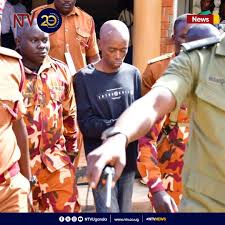
UgandaToday: Okello’s Fate: Museveni Holds the Final Card
In the aftermath of the conviction and sentencing of Ggaba children murderer Christopher Okello Onyum, the legal narrative may appear closed—but in reality, it has only entered a more complex and uncertain phase. While the trial court has pronounced the ultimate penalty, the journey from sentencing to execution in Uganda is neither immediate nor automatic.
What now unfolds is a layered process where law, constitutional authority, and presidential discretion intersect in decisive ways.
The 14-Day Window: Appeal as the First Lifeline
Following his sentencing on April 30, 2026, Okello retains a statutory right to appeal within 14 days. This is not a mere procedural formality—it is a substantive opportunity to challenge both conviction and sentence before higher courts.
Appeals in capital cases often scrutinize:
- the sufficiency of evidence
- procedural fairness during trial
- proportionality of the sentence
Should Okello pursue this route, the case could move through the Court of Appeal and potentially the Supreme Court, significantly delaying any final outcome. In practice, this phase alone can stretch over years.
Beyond the Courts: The Constitutional Power of Mercy
Even if all appeals fail, Okello’s fate does not automatically culminate in execution. Under Article 121 of the Constitution of Uganda, the ultimate authority over a death sentence lies with the President through the Prerogative of Mercy.
This places President Yoweri Museveni at the center of the final decision-making process. Acting on the advice of the Advisory Committee on the Prerogative of Mercy, the President may:
- grant a full pardon
- commute the death sentence to life imprisonment
- or decline to authorize execution altogether
This constitutional safeguard transforms the death penalty from a purely judicial outcome into a political and moral decision at the highest level of the state.
The Rwakasisi Precedent: Death Row Is Not the End
Uganda’s recent history offers a powerful example of how this process can unfold.
In 1988, Chris Rwakasisi was sentenced to death and spent over two decades on death row. Yet in 2009, President Museveni intervened—refusing to authorize his execution and instead granting him a pardon, leading to his release from Luzira Maximum Security Prison. This case underscores a critical reality: A death sentence in Uganda does not guarantee execution.
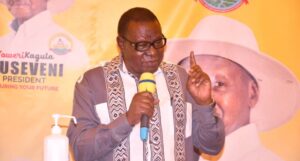
Rwakasisi himself later framed the decision as an act of reconciliation rather than retribution, reinforcing the discretionary and often political nature of capital punishment enforcement.
The Reality of Death Row in Uganda
Uganda has experienced prolonged periods without carrying out executions, leaving many inmates in a state of indefinite suspension—legally condemned, yet physically alive.
This phenomenon creates a third pathway for Okello:
- prolonged detention on death row without execution
In such cases, the absence of a signed execution warrant effectively becomes a silent commutation, even if not formally declared.
Three Possible Paths Ahead for Okello
Given the legal and constitutional landscape, Okello’s fate now branches into three realistic scenarios:
1. Judicial Reversal or Reduction
Through the appeals process, higher courts could overturn the conviction or reduce the sentence.
2. Presidential Intervention
Even after failed appeals, President Museveni may exercise mercy—commuting or nullifying the death sentence.
3. Indefinite Death Row Detention
Without presidential authorization for execution, Okello could remain on death row for years, or even decades.
From Courtroom to State House
The sentencing of Christopher Okello Onyum marks not an end, but a transition. The locus of decision-making has shifted—from the judiciary to the executive.
In effect:
- the courts have spoken
- but the final word has not yet been said
That authority now rests with one office—and one individual.
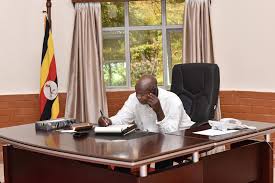
Okello may have been sentenced to death, but his ultimate fate is no longer confined to legal doctrine. It sits, quite literally, on the desk of President Museveni.
#UgandaToday #PhoenixNewsFeeds #OperaNewsFeeds #JusticeInUganda #DeathPenaltyUG #MuseveniDecision