
Collaboration and Partnership Is the Only Cure for Carbon Market Friction
+256 702 239 337: Partnerships Key to Unlocking Africa’s Conservation Economy

UgandaToday: Partnerships Key to Unlocking Africa’s Conservation Economy
Collaboration and Partnership Is the Only Cure for Carbon Market Friction
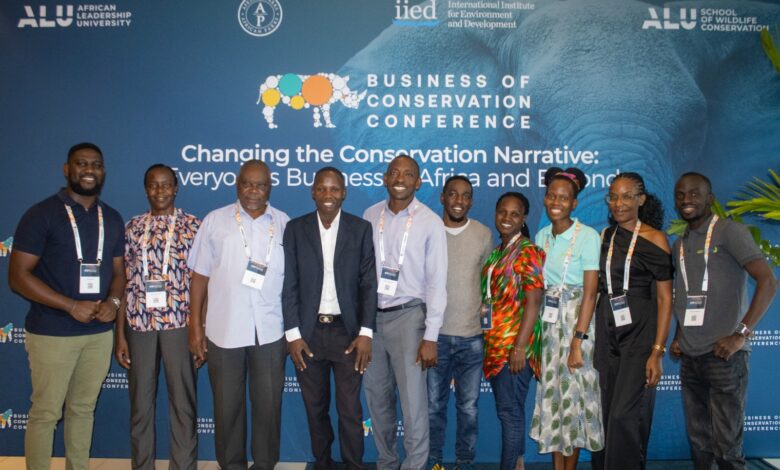
As discussions at the Business of Conservation Conference 2026 in Nairobi, Kenya came to an end, participants were urged to embrace partnerships at all levels to secure a brighter future for conservation efforts.
The conference, which was held from March 4–7 at the Radisson Blu Hotel Nairobi Upper Hill, was organised by the African Leadership University School of Wildlife Conservation. It brought together policymakers, conservation organisations, investors, private sector leaders and community representatives to explore how conservation could become a sustainable business that benefits both people and nature.
Conservation at a Critical Moment
The conversation came at a crucial time as biodiversity resources were disappearing at an alarming rate. Under the theme “Changing the Economics of Conservation,” the conference focused on how Africa could build sustainable systems where conservation was not only about protecting nature but also about creating economic opportunities for communities.
The goal was to influence current leaders in politics, business, government, technology, philanthropy and the media to prioritise conservation issues that threaten the quality of life for current and future generations.
ECOTRUST’s Role in Uganda’s Conservation Economy
Among the organisations that participated was Environmental Conservation Trust of Uganda (ECOTRUST), a Ugandan conservation organisation that has spent nearly three decades helping smallholder farmers turn conservation into a sustainable and viable investment option.
Founded in 1999 as the Environmental Conservation Trust of Uganda, the organisation works in key biodiversity areas of Uganda, including the Albertine Rift and Mount Elgon landscapes, supporting farmers to restore forests, protect biodiversity and improve livelihoods.
Call for Partnerships and Capacity Building
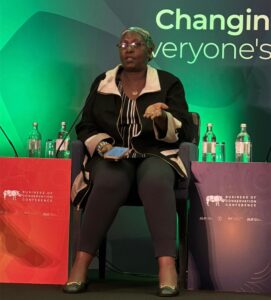
Speaking during a panel discussion on biocredits, with examples from Africa and elsewhere at the conference, Pauline Nantongo, Executive Director at ECOTRUST, shared how innovative financing tools such as biodiversity credits could support both conservation and community development.
“Since we had different groups of people here, I would have liked to see people commit to partnering with us. Partnerships should tackle the challenges faced in the biocredits market to make the future of conservation meaningful. I would also have liked to see young professionals signing up to the African Leadership University, which offers an MBA in biocredits. I would also have liked to see journalists in the room committed to pursuing careers informed by biocredits,” she said.
Biodiversity Credits Supporting Communities
Nantongo explained that ECOTRUST had been working to change the narrative by ensuring communities remained owners and active participants in conservation projects.
Using biodiversity credits, a new and innovative Payment for Ecosystem Services (PES) mechanism, ECOTRUST has been supporting communities to conserve and protect their forests and other natural resources while also earning income from sustainable businesses such as beekeeping, tree nurseries and other green enterprises.
These activities are linked to conservation efforts that improve forest health and wildlife movement corridors.
Addressing Human–Wildlife Conflict
The approach has also been helping address human–wildlife conflict in areas within the Albertine Rift, where animals such as chimpanzees move between fragmented forest corridors.
Through community partnerships, ECOTRUST has been mapping wildlife movement routes and restoring forest corridor linkages that allow animals to move safely while reducing conflicts with farmers.
The organisation’s flagship Trees for Global Benefits (TGB) programme has already restored more than 30,000 hectares of land through forestry and agroforestry interventions on private land, linking farmers to benefits from carbon markets.
Communities at the Centre of Conservation
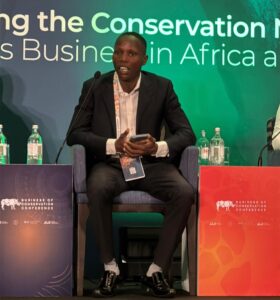
According to Geoffrey Ozeera from Tengele Community Land Association in Masindi District, a community representative working with ECOTRUST Uganda, community voices are essential in shaping the future of conservation in Uganda.
“Communities are leading the implementation of biocredits by helping in monitoring and data collection processes. Individuals from the community are recruited to monitor biodiversity resources, for example the Bungako Forest, using different methods such as electronic tools to collect data. Community groups also visit the forests monthly to observe biodiversity,” Ozeera said.
A Clear Message for the Future
ECOTRUST’s message remains clear: conservation can only succeed if the people who live closest to nature benefit from protecting it.
The Business of Conservation Conference continued to highlight similar solutions from across Africa, focusing on new partnerships, conservation finance and community-led conservation models.
#UgandaToday #PhoenixNewsFeeds #OperaNewsFeeds #ClimateAction #ConservationAfrica
#CarbonMarkets