
Beyond Rituals: Dr. Umar Johnson Sparks Debate on ‘Religion vs. God’ in Viral Teachings
In his thought-provoking discourse, Dr. Umar challenges believers to separate divine truth from what he describes as historically constructed systems of control.

UgandaToday: Beyond Rituals: Dr. Umar Johnson Sparks Debate on ‘Religion vs. God’ in Viral Teachings
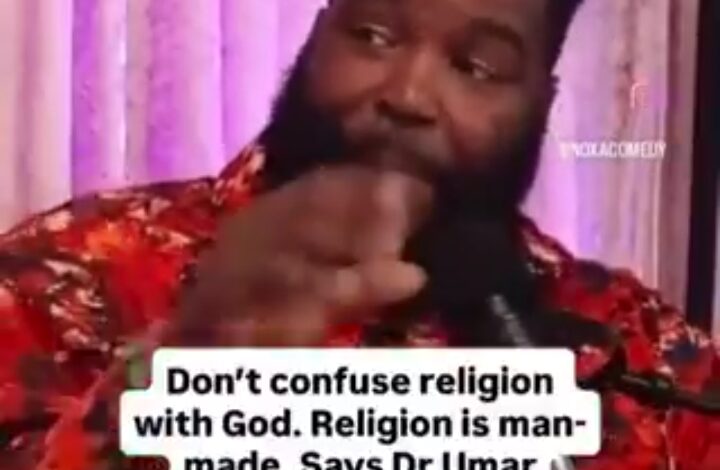
KAMPALA, Uganda — A resurfacing lecture by Umar Johnson is starting a fresh debate across social media and intellectual circles, as the outspoken Pan-Africanist draws a sharp distinction between religion and God, urging audiences to rethink long-held spiritual assumptions.
In his thought-provoking discourse, Dr. Umar challenges believers to separate divine truth from what he describes as historically constructed systems of control.
Religion as Structure, God as Essence
At the core of Dr. Umar’s argument is a clear dichotomy: religion, he says, is a man-made institution, while God represents a universal, unchanging spiritual reality.
According to him, religions emerged within specific historical and cultural contexts, often shaped by political power, colonization, and social control. These systems, he argues, introduced doctrines, hierarchies, and rituals that may not necessarily reflect the pure essence of the divine.
“God is not confined to a book, a building, or a denomination,” he asserts in the lecture. “God is a universal force, while religion is an interpretation.”
A Critique Rooted in African Consciousness
Dr. Umar situates his critique within a broader Pan-African framework, arguing that many Africans inherited foreign religious systems during colonial rule. He contends that these imposed belief structures often displaced indigenous African spirituality, which he describes as more aligned with nature, ancestry, and communal identity.
In this context, he calls for a “spiritual awakening” among African people—one that reconnects them with their roots rather than binding them to external doctrines.
Faith vs. Institution: A Growing Global Debate
The distinction between spirituality and organized religion is not new, but Dr. Umar’s framing adds urgency to an ongoing global conversation. Increasingly, young people around the world identify as “spiritual but not religious,” seeking personal connections with the divine outside traditional institutions.
Critics, however, argue that organized religion provides moral frameworks, community cohesion, and a sense of identity that cannot be easily replaced. They caution that dismissing religion entirely risks eroding shared values and social stability.
Mixed Reactions Across Audiences
Online reactions to Dr. Umar’s message have been sharply divided. Supporters praise his boldness in questioning orthodox beliefs and encouraging independent thought. Others accuse him of oversimplifying complex theological traditions and undermining faith systems that millions hold sacred.
Religious leaders, particularly within Christianity and Islam, have also weighed in, emphasizing that while institutions may be imperfect, they serve as vital conduits for spiritual growth and moral guidance.
A Conversation That Resonates Locally
In Uganda, where religion plays a central role in daily life, Dr. Umar’s ideas are striking a chord—especially among urban youth and intellectual communities. The debate touches on broader questions about identity, colonial legacy, and the evolving nature of belief in a rapidly modernizing society.
As discussions unfold, one thing remains clear: the question of whether God can—or should—be separated from religion continues to provoke deep reflection.
Conclusion: Rethinking the Sacred
Dr. Umar Johnson’s message ultimately challenges individuals to look beyond inherited doctrines and ask fundamental questions about the nature of faith, truth, and divine connection.
Whether one agrees or disagrees, his argument underscores a timeless tension: the search for God beyond the boundaries of human interpretation.
#UgandaToday #PhoenixNewsFeeds #OperaNewsFeeds #ReligionVsSpirituality #AfricanConsciousness #FaithDebate