Today In History: They Flew Above Paris With A Fire Basket And No Steering Wheel: The 25-Minute Journey That Opened The Skies
+256 702 23 93 37: Their invention relied on a simple but powerful scientific principle: heating air causes it to expand and become less dense than the surrounding cooler air. The difference in density creates buoyancy, allowing the balloon to rise.

UgandaToday: Today In History: The Uganda Today Historical Perspective
21 November 2026
On November 21, 1783, two Frenchmen risked their lives in a balloon powered by fire, drifting above Paris in an experiment that transformed humanity’s relationship with the sky. They could rise, descend and keep the balloon aloft, but they could not command the wind. Their journey marked a turning point in aviation history.

Before modern aircraft, before airports, before pilots navigated using instruments and radio communication, two men climbed into a balloon carrying an open fire and attempted something humanity had never successfully accomplished before.
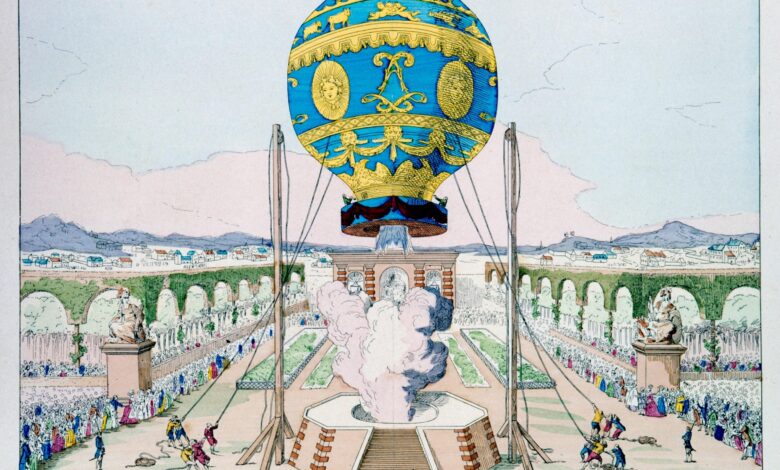
On November 21, 1783, Jean-François Pilâtre de Rozier and François Laurent, the Marquis d’Arlandes, became the first people to make a confirmed untethered human flight in a hot-air balloon.
Their balloon, developed by French brothers Joseph-Michel and Jacques-Étienne Montgolfier, lifted off from the grounds of Château de la Muette in Paris and carried the two men over the French capital.
The flight lasted approximately 23 to 25 minutes, with historical accounts differing slightly on its duration and the distance covered. The men travelled several kilometres before landing outside the city.
It was a remarkable achievement, but the journey was far from a comfortable sightseeing excursion. Their aircraft was a fragile envelope filled with heated air, and its lifting mechanism involved a fire that threatened the balloon itself.
The event was more than an experiment in science. It was the moment humans demonstrated that they could deliberately leave the ground, travel through the air and return safely without being tethered to the earth.
The Balloon Was A Flying Fire Experiment

The Montgolfier brothers were not building an aircraft in the modern sense.
Their invention relied on a simple but powerful scientific principle: heating air causes it to expand and become less dense than the surrounding cooler air. The difference in density creates buoyancy, allowing the balloon to rise.
The balloon’s envelope was made from fabric and paper-based materials, while the passengers operated a fire source beneath its opening to heat the air inside.
The fire was both the engine and the danger.
The men had to feed fuel into the fire to maintain lift, while carefully monitoring the balloon’s fabric and dealing with burning embers that threatened to damage the envelope.
The experience demonstrated that flight was possible, but it also exposed the enormous risks involved in early aviation.
The technology had solved one problem — getting humans into the sky — while creating another: how to remain safe once airborne.
They Could Fly, But They Could Not Command The Wind

Perhaps the most important limitation of the first balloon flight was that it had no steering mechanism capable of controlling its horizontal direction.
The balloon rose and descended through changes in the temperature of the air inside its envelope, but it drifted according to wind currents.
The pilots could influence their altitude to encounter different air currents, but they could not propel the balloon forward in a chosen direction like a powered aircraft.
The journey therefore depended heavily on the weather and the movement of the atmosphere.
This distinction would become central to the development of aviation. Rising into the air was one achievement; controlling movement, navigating accurately and safely reaching a destination were entirely different challenges.
The first balloon flight proved that human beings could travel through the air, but it also made clear that a truly dependable aviation system would require much more than a balloon capable of lifting passengers.
It would require control, propulsion, navigation, engineering, weather understanding and safety systems.
A Failed Attempt The Previous Day Did Not Stop Them
The November 21 flight was not accomplished without difficulty.
The first attempt, on November 20, was disrupted after strong winds damaged the balloon while it was being prepared. The envelope was reportedly repaired before the successful launch the following afternoon.
The setback could have ended the experiment.
Instead, the team repaired the balloon and proceeded with the flight, which took place at approximately 1:54pm on November 21.
The successful launch attracted enormous public attention. The sight of a human-made object carrying people above the city was extraordinary for an age in which the sky remained beyond the reach of ordinary human movement.
The balloon crossed the Seine and drifted over parts of Paris before continuing towards the outskirts of the city.
The passengers eventually landed in the Butte-aux-Cailles area, where the balloon was brought down after the journey.
The flight’s success was celebrated as a triumph of science and human ingenuity, although the fragile balloon and the fire beneath it demonstrated that the age of aviation had begun with considerable danger.
The Montgolfiers Had Already Tested The Sky With Animals
The first human flight did not happen suddenly.
Earlier experiments by the Montgolfier brothers included unmanned balloons and flights carrying animals.
On September 19, 1783, a balloon launched at Versailles carried a sheep, a duck and a rooster. The experiment was designed to investigate whether living creatures could survive the conditions of balloon flight.
The animals returned safely, helping build confidence in the possibility of carrying human passengers.
Tethered human ascents followed, allowing experimenters to gain experience before attempting a completely free flight.
By November, the pioneers had progressed from small demonstrations to an attempt that would permanently change the history of transport.
The November 21 flight was therefore the culmination of a sequence of experiments, failures, observations and refinements — an early example of how technological breakthroughs are rarely achieved in a single moment.
Science Museum Group Collection+1
From A Fire-Filled Balloon To Modern Aviation
The balloon did not immediately produce the modern aeroplane.
Hot-air balloons and gas balloons continued to develop, providing opportunities for scientific observation, recreation, military reconnaissance and experimentation.
The limitations of balloons, especially their dependence on wind, eventually encouraged the pursuit of powered and steerable aircraft.
Over time, advances in aerodynamics, engines, materials, navigation and aviation safety transformed flying from an extraordinary spectacle into a practical means of transport.
The November 1783 balloon flight remains an important milestone because it demonstrated that human flight was possible before engineers had solved the more complex problems of powered, controlled and sustained air travel.
The journey was short, but its implications were enormous.
It helped open a new field of scientific and technological exploration that would eventually allow people to cross continents, deliver cargo, connect distant cities and travel internationally within hours.
What The 1783 Flight Means To Uganda Today
Uganda’s aviation story is a much later chapter of the same human ambition to overcome distance.
The country’s early air transport history involved flying boats landing at Port Bell on the shores of Lake Victoria to deliver mail. Air services later developed, and Entebbe became Uganda’s principal international aviation gateway.
Today, aviation is central to Uganda’s international connectivity, tourism, cargo transport, business, diplomacy and movement of people.
The contrast between the first balloonists and modern aviation is extraordinary.
In 1783, two men depended on heated air, a fire basket and unpredictable wind currents to cross a small portion of Paris.
Today, aircraft arriving at Entebbe rely on sophisticated engines, navigation systems, air traffic control, weather monitoring, trained aviation personnel and strict operational procedures.
The Civil Aviation Authority’s history of Entebbe and Uganda’s early air transport development illustrates how the country moved from rudimentary flying-boat mail operations to an international airport and a regulated aviation system.
The achievement of the Montgolfier brothers and the two men who first flew freely in their balloon is therefore not merely an old European scientific story.
It is part of the history of the technology that eventually made modern aviation possible — a technology that now connects Uganda to the rest of the world.
The Sky Was No Longer Beyond Human Reach
The first balloon flight did not conquer the sky. It did not provide dependable transport, directional control or protection from the dangers of flying.
But it achieved something fundamental.
For centuries, humans had observed birds, imagined flying machines, constructed myths around the ability to fly and attempted to understand the forces that kept objects in the air.
On November 21, 1783, two men finally demonstrated that human beings could deliberately rise into the atmosphere, travel freely and return to the ground.
They did so with a fragile balloon, an open fire, limited control and extraordinary courage.
The journey lasted less than half an hour.
But that brief flight changed the boundaries of what humanity believed was possible — and began a journey that would eventually bring the world within reach of the skies.
Today In History: The Uganda Today Historical Perspective — One Date, One Story, A Fresh Historical Lens.