
Uganda’s Tourism And Coffee Sectors Eye UK Opportunities As Bantu Africa Travel Courts British Investors
+256 702 23 93 37: Bantu Africa Travel Limited is among the Ugandan tourism businesses whose work can contribute to this ambition. The company promotes tailor-made safaris and travel experiences across Uganda and other East African destinations, offering international visitors opportunities to discover wildlife, cultural heritage and the region’s landscapes.

UgandaToday: Uganda’s Tourism And Coffee Sectors Eye UK Opportunities As Bantu Africa Travel Courts British Investors

Uganda’s Tourism And Coffee Sectors Eye UK Opportunities As Bantu Africa Travel Courts British Investors
Business | Tourism | Investment | Uganda–United Kingdom Relations
Uganda’s tourism and coffee sectors present opportunities for stronger commercial ties with the United Kingdom, as local tourism operators seek to connect the country’s natural attractions, agricultural potential and investment opportunities with international markets.
Bantu Africa Travel Limited is among the Ugandan tourism businesses whose work can contribute to this ambition. The company promotes tailor-made safaris and travel experiences across Uganda and other East African destinations, offering international visitors opportunities to discover wildlife, cultural heritage and the region’s landscapes.
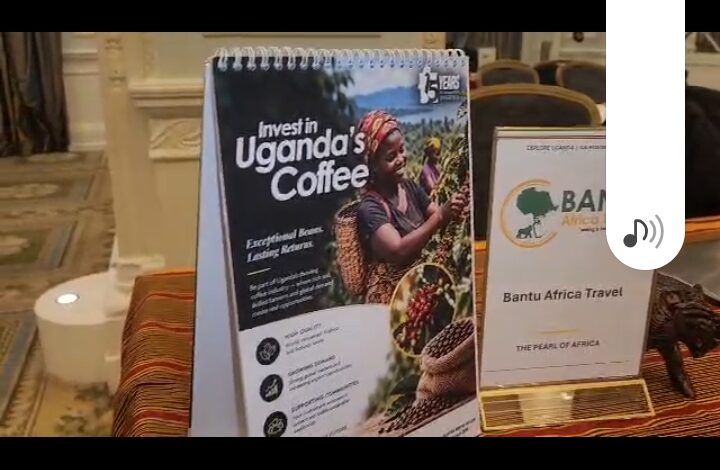
Paul Sekiziyivu CEO Bantu Africa Travel engaging potential British business entrepreneurs and tourists .
Its wider business opportunity lies in linking tourism promotion with trade, agricultural value addition and investment partnerships, particularly by encouraging British visitors and business people to look beyond traditional sightseeing and explore Uganda’s commercial potential.
British Market Offers Opportunities For Ugandan Tourism
The United Kingdom remains an important market for Uganda’s tourism promotion efforts. In October 2026, Uganda intensified its engagement with British travel professionals through a roadshow organised by the Uganda Tourism Board in collaboration with the Uganda High Commission in London.
The campaign began in Glasgow, Scotland, bringing together travel trade representatives and Ugandan tour operators for destination presentations and business-to-business meetings. Further engagements were scheduled for Manchester and Birmingham.

These engagements demonstrate the importance of connecting Ugandan tourism businesses with foreign travel agents who can package, market and sell holidays to prospective visitors.
For Bantu Africa Travel Limited, such initiatives offer a potential platform to strengthen international relationships, develop tailor-made itineraries and attract visitors interested in Uganda’s wildlife, gorilla trekking, birdwatching, cultural experiences and adventure tourism.
The company’s official website highlights customised safari experiences in Uganda, Kenya, Tanzania, Rwanda and Zanzibar, giving it a regional offering that can appeal to British travellers seeking multi-destination holidays.
Paul Ssekiziyivu’s Coffee Investment Ambitions
Beyond conventional tourism, the promotion of Ugandan coffee to British consumers and investors represents another opportunity for economic cooperation.
Mr Paul Ssekiziyivu, the chief executive officer of Bantu Africa Travel Limited, is taking a personal interest in mobilising British support for Uganda’s coffee industry.
The ambition is to encourage Britons to explore investment opportunities in coffee production, processing, branding, marketing and export, while promoting Uganda as a source of quality coffee with a distinctive agricultural and cultural heritage.
Uganda’s coffee industry offers a natural connection between tourism and commerce. Visitors can experience coffee-growing communities, learn about harvesting and processing, participate in tastings and discover the landscapes in which the crop is cultivated.
A coffee-focused tourism product could therefore complement wildlife safaris and cultural excursions, creating additional income opportunities for farmers, guides, accommodation providers, transport operators and local businesses.
The EastAfrican reported in August 2026 that Uganda was seeking to develop coffee tourism by connecting farms, processing facilities and tasting experiences to established visitor circuits.

For Ugandan coffee to secure a stronger position in Britain, however, promotion must be matched by reliable supply, consistent quality, effective branding, competitive pricing and partnerships with importers and distributors.
Investment in local processing and finished consumer products could also help Ugandan businesses capture more value instead of relying exclusively on exports of unprocessed beans.
Uganda–UK Relations Create A Wider Business Opening
The tourism and coffee initiatives come amid renewed official engagement between Uganda and the United Kingdom.
On October 27, 2026, Uganda’s Minister of Foreign Affairs, Adonia Ayebare, met the UK’s Minister for Africa, Kirsty McNeill, in London. Their discussions covered trade, investment, tourism, development financing and regional cooperation. The two governments also explored joint marketing and investment opportunities intended to attract more British visitors to Uganda.

Separately, the British Government reported in April 2026 that a delegation of 25 companies associated with the Westminster Africa Business Association and the South Asian Chamber of Commerce and Industry had visited Uganda to explore partnerships across sectors including tourism, agro-industrialisation, manufacturing and technology.

These developments provide a broader commercial context for Ugandan businesses seeking British partners. They also underline the importance of turning diplomatic engagement into practical opportunities for private companies, exporters, farmers and tourism operators.
For Bantu Africa Travel Limited, the opportunity is to position Uganda not merely as a holiday destination but also as a place where international visitors can discover viable business partnerships.
Canada–Africa Business Conference Set For February 2027
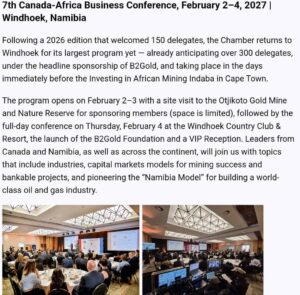
Windhoek, Namibia, will host the seventh Canada–Africa Business Conference in February 2027. Image subject to licensing and credit verification.
Another forthcoming event with potential relevance to African business development is the 7th Canada–Africa Business Conference, scheduled for February 2–4, 2027, in Windhoek, Namibia, with a site visit to the Otjikoto Mine and Nature Reserve forming part of the programme.
Organised by the Canada–Africa Chamber of Business, the conference is intended to connect businesses and investors interested in commercial partnerships across Canada and Africa.
According to the published programme, February 2–3 will include the site visit to Otjikoto, while the main conference programme is scheduled for February 4. Discussions are expected to address mining, investment, trade, market access and the development of commercially viable partnerships.
Although the conference is not specifically a tourism or coffee event, it could offer a useful networking opportunity for businesses seeking international contacts, provided their participation aligns with the event’s programme and objectives.
For Ugandan enterprises, the broader lesson is that international business forums can open doors to investors, buyers, distributors and strategic partners beyond a company’s immediate market.
Bantu Africa Travel Limited could explore whether participation, networking or partnerships linked to such platforms would support its tourism promotion and coffee-related ambitions. No confirmed participation by the company or Mr Sijzevu was established in the sources reviewed.
Turning Promotion Into Measurable Economic Benefits
The success of international promotion depends on what follows the meetings, presentations and networking events.
For tourism operators, results can be measured through confirmed bookings, partnerships with overseas travel agents, increased visitor arrivals and greater spending within local communities.
For the coffee sector, progress would be reflected in commercial supply agreements, new buyers, investment in processing, growth in branded exports and better returns for farmers.
A coordinated approach could help connect these two sectors. British visitors who experience Uganda’s coffee-growing regions may become repeat customers, advocates for Ugandan products or potential commercial partners. Equally, coffee buyers and investors visiting Uganda could be encouraged to explore the country’s tourism attractions.
Bantu Africa Travel Limited’s stated interest in promoting Uganda internationally fits within this wider opportunity. Its challenge, like that of other Ugandan businesses, is to convert international visibility into lasting commercial relationships that benefit the country’s economy.
Conclusion: Building Uganda’s International Business Profile
Uganda has an opportunity to strengthen its position in the British tourism market while presenting coffee as both an export commodity and a cultural experience.
Through international travel promotion, business networking and engagement with prospective investors, companies such as Bantu Africa Travel Limited can contribute to connecting Uganda’s tourism attractions and agricultural products with overseas markets.
As the February 2027 Canada–Africa Business Conference approaches, the priority should be to identify credible partners, prepare commercially sound proposals and pursue opportunities that deliver measurable benefits to Ugandan enterprises and communities.
The long-term prize is not simply greater international attention for the Pearl of Africa, but stronger tourism revenues, expanded coffee markets, more investment and sustainable employment.
#UgandaToday #BantuAfricaTravel #UgandaTourism #UgandanCoffee #UKUgandaTrade #AfricaBusiness