Uganda’s Kings In One Frame: A Photograph That Now Tells The Story Of A Generation
+256 702 23 93 37: Look more closely, however, and the photograph tells the story of a generation of cultural leaders, a young king who grew up under the watchful eyes of elders, and the enduring bonds among Uganda’s restored traditional institutions.

UgandaToday: Uganda’s Kings In One Frame: A Photograph That Now Tells The Story Of A Generation
By UgandaToday Editorial Team
There are photographs that capture a moment — and there are photographs that, with the passage of time, become history.
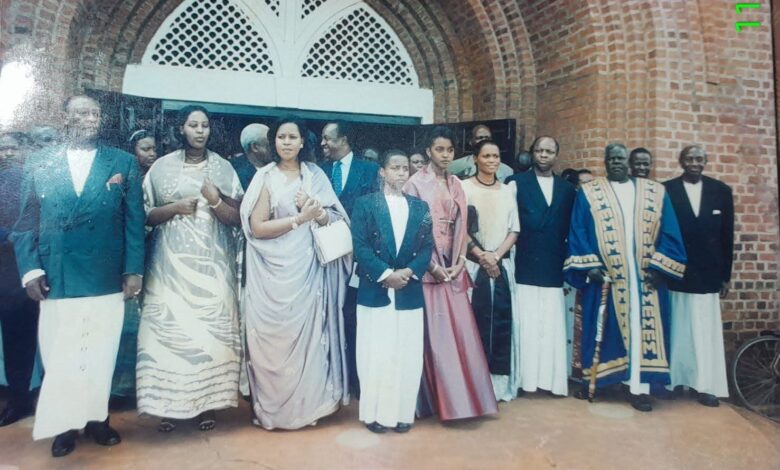
A remarkable photograph showing the young Omukama Oyo Nyimba Kabamba Iguru Rukidi IV surrounded by some of Uganda’s most prominent traditional leaders has acquired a deeper meaning following the death of the Tooro monarch at the age of 34.
At first glance, it is simply a gathering of kings, queens and members of Uganda’s traditional institutions.
Look more closely, however, and the photograph tells the story of a generation of cultural leaders, a young king who grew up under the watchful eyes of elders, and the enduring bonds among Uganda’s restored traditional institutions.
King Oyo died on August 27, 2026, bringing to an end a reign that had begun when he was only three years old. He was buried at the Karambi Royal Tombs in Fort Portal on September 12. (toorokingdom.org)
Today, the photograph is therefore not merely a royal portrait.
It is a piece of Uganda’s cultural memory.
A Young King At The Centre
At the centre of the photograph is the young Oyo, then still far from the 18-year-old monarch who would eventually assume full authority over the Tooro Kingdom.
Beside him is his sister, Princess Ruth Nsemere Komuntale, while their mother, Queen Mother Best Kemigisa, stands nearby.
Oyo’s extraordinary story began in September 1995 when, following the death of his father, Omukama Patrick Matthew Kaboyo Olimi III, the three-year-old prince was installed as the Omukama of Tooro.
His childhood therefore unfolded under the protection and guidance of a regency.
Among the people associated with that formative period was the Kabaka of Buganda, Ronald Muwenda Mutebi II.
Accounts from Buganda’s royal establishment recall that Kabaka Mutebi was among those appointed to help guide and nurture the young Oyo. The relationship was subsequently described by the Kabaka as being similar to looking after a younger brother. (Uganda Radionetwork)
That history gives the presence of Kabaka Mutebi in the photograph particular significance.
The Kabaka And The Young Omukama
For decades, the relationship between Buganda and Tooro has extended beyond formal cultural protocol.
It has included family connections, royal visits, consultations and personal relationships between members of the two royal households.
Kabaka Mutebi later visited Oyo as the young monarch approached adulthood. In April 2010, as Oyo prepared to assume full operational authority over the Tooro Kingdom at 18, the two monarchs were photographed together with Queen Mother Best Kemigisa.
That meeting represented a symbolic transition.
The little boy whom the older generation had helped nurture was becoming a king in his own right.
The photograph now circulating among Ugandans provides an earlier glimpse of that journey.
The Kings Around Him
The photograph also brings together several figures associated with Uganda’s traditional institutions during an important period in their modern history.
On one side is Omukama Agutamba Dr Solomon Gafabusa Iguru, the Omukama of Bunyoro Kitara.
Solomon Iguru is among Uganda’s recognised traditional leaders and identify him as Omukama of Bunyoro Kitara. (Ministry of Gender & Social Development)
The photograph also includes former Kyabazinga Henry Wako Muloki, the former Isebantu Kyabazinga of Busoga, and Emorimor Papa Augustine Osuban Lemukol of Teso.
These personalities belong to a generation of traditional leaders who occupy an important place in Uganda’s cultural landscape following the restoration of traditional institutions.
The official historical record confirms the presence of figures such as Mutebi II, Solomon Iguru and Augustine Osuban among Uganda’s traditional leadership during that period. (National Curriculum Development Centre)
A Photograph Of A Different Uganda
The significance of the picture becomes even greater when viewed against the changes that have occurred since it was taken.
Some of the people in the photograph are no longer alive. Others have aged, while the young prince at the centre of the picture grew into one of Uganda’s most recognisable traditional leaders.
Oyo himself became internationally known because of the extraordinary circumstances of his childhood.
He ascended the throne at three and remained Omukama for more than three decades. Reuters reported that he later became a prominent advocate on issues including youth, health and HIV/AIDS. (Reuters)
The Uganda Media Centre, in its account of his final farewell, described him as a monarch who combined the traditions of kingship with youth advocacy and public service. (Uganda Media Centre)
From Boy King To National Figure
The boy in the photograph did not remain the ceremonial child monarch forever.
In 2010, at the age of 18, Oyo assumed full authority over the Tooro Kingdom and began exercising the responsibilities of an adult monarch. (Uganda Radionetwork)
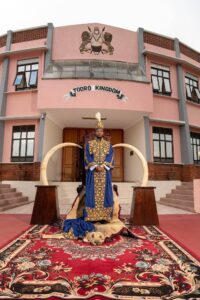
His reign subsequently developed beyond the novelty surrounding the world’s youngest king.
He became an advocate for causes affecting young people and the wider community, while continuing to occupy a symbolic position at the heart of Tooro’s cultural identity.
His death therefore represents not simply the passing of an individual.
For many Batoro, it marks the end of an era in which their king had been present for virtually the whole of their lives.
The Photograph Has Acquired A New Meaning
The poignancy of the picture lies partly in what the people standing around the young Oyo could not have known at the time.
Nobody could have known that the child in the centre would die at only 34.
Nobody could have known that decades later, questions surrounding the succession to his throne would become a major national story.
And nobody could have known that the photograph would eventually become a record of a generation of Uganda’s traditional leadership.
Following Oyo’s death, the question of succession has become contested.
The Tooro Kingdom’s official announcement said that the late king left a prince as heir whose identity would be revealed according to Tooro traditions. (toorokingdom.org)
Subsequent reports have documented disagreement over the succession, with the royal clan selecting Prince Edward Rukidi Kijanangoma while members of Oyo’s immediate family have disputed aspects of that process and maintained that the late king left an heir. (AP News)
Those developments remain a matter of dispute and should not be read into the historical photograph itself.
Beyond Succession: The Legacy Of A Child King
Whatever ultimately happens in the succession debate, the photograph preserves something that political and legal arguments cannot easily capture.
It shows Oyo before the controversies of adulthood.
Before the responsibilities of kingship.
Before international recognition.
Before the succession question.
He is simply a young prince sitting among elders.
And around him are leaders who represented different communities but shared a common institution: the traditional leadership of Uganda.
That is perhaps why the photograph resonates so strongly today.
It reminds Ugandans that history is not always preserved in official documents.
Sometimes it survives in a single frame.
A Generation Passing Into History
The photograph can also be read as a visual timeline.
The young Oyo represented the future.
The older kings around him represented an established generation.
Today, the photograph belongs to the past.
King Oyo has joined the ancestors, while Uganda’s traditional institutions have entered another chapter.
His funeral on September 12 brought thousands to Fort Portal, with delegations from sister kingdoms including Buganda, Bunyoro and Busoga joining the mourning. (Uganda Media Centre)
The image therefore carries a message beyond Tooro.
It is about continuity.
It is about succession.
It is about memory.
And above all, it is about how quickly the present becomes history.
When A Photograph Becomes An Archive
The photograph should perhaps now be preserved as part of Uganda’s cultural and royal photographic heritage.
The identities of those captured in it should be properly documented, the circumstances surrounding the meeting established if possible, and the original photograph’s date, photographer and location recorded.
For future generations, such documentation could prove invaluable.
Because one day, people may look at the picture and ask:
Who were these kings?
Who was the little boy in the middle?
And the answer will tell them not only about King Oyo, but about an entire generation of Uganda’s traditional leadership.
“Sometimes a photograph captures more than a moment; it captures a generation.”
#UgandaToday #PhoenixNewsFeeds #OperaNewsFeeds #KingOyo #TooroKingdom #UgandaRoyalHistory