Africa As The Climate Solution: How Technology Could Power The Continent’s Green Transformation
+256 702 23 93 37: Africa has abundant solar, wind, hydropower and geothermal resources, some of the world's most important ecosystems and deposits of minerals essential to clean-energy technologies. At the same time, its rapidly expanding digital economy and youthful population could provide a powerful foundation for climate innovation.

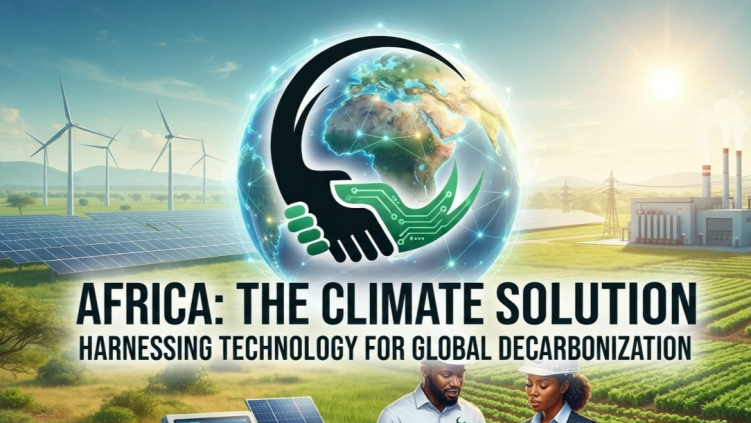


UgandaToday: Africa As The Climate Solution: How Technology Could Power The Continent’s Green Transformation
From Climate Victim To Global Climate Solutions Partner
For decades, Africa has largely been portrayed as one of the regions most vulnerable to climate change. Rising temperatures, prolonged droughts, destructive floods, food insecurity, land degradation and biodiversity loss are already placing enormous pressure on communities and economies across the continent.
But there is another side to Africa’s climate story.
The continent is not merely a victim of climate change. It possesses many of the natural resources, human capabilities and technological opportunities needed to become a major contributor to the global transition towards a low-carbon economy.
Africa has abundant solar, wind, hydropower and geothermal resources, some of the world’s most important ecosystems and deposits of minerals essential to clean-energy technologies. At the same time, its rapidly expanding digital economy and youthful population could provide a powerful foundation for climate innovation.
The question is whether Africa can transform these advantages into locally owned industries, technologies and businesses rather than continuing to export raw materials while importing finished solutions.
The Climate Opportunity Africa Cannot Afford To Miss
Climate change is no longer simply an environmental concern. It is increasingly an economic, technological, developmental and geopolitical issue.
The global movement towards net-zero emissions is creating opportunities in renewable energy, electric mobility, green manufacturing, sustainable agriculture, climate finance, carbon markets and resilient infrastructure.
For Africa, this presents a strategic choice.
The continent can remain predominantly a consumer of technologies developed elsewhere, or it can become a producer, innovator and exporter of climate solutions.
Technology will be central to determining which path Africa takes.
Africa’s Renewable Energy Advantage
Africa possesses enormous renewable-energy potential.
Large areas of the continent receive strong solar radiation throughout much of the year, while various regions have significant wind, hydropower and geothermal resources.
This creates opportunities for both large-scale renewable-energy projects and decentralised systems designed for communities that remain beyond the reach of reliable electricity networks.
Solar mini-grids, battery storage, smart-grid technologies and digital payment systems are already changing the way electricity can be generated and delivered.
For countries seeking to expand electricity access while reducing dependence on fossil fuels, such technologies could provide an opportunity to leapfrog some of the infrastructure challenges experienced by industrialised economies.
Africa’s Forests And Other Natural Carbon Sinks
Africa’s environmental importance extends beyond renewable energy.
The Congo Basin rainforest, one of the world’s most important tropical forest regions, together with Africa’s mangroves, wetlands, peatlands and grasslands, plays a significant role in storing carbon and supporting biodiversity.
Protecting these ecosystems is therefore both an environmental and economic priority.
Technology can strengthen conservation efforts through satellite imagery, remote sensing, drones, geographic information systems and artificial intelligence capable of analysing enormous quantities of environmental data.
Such tools can help identify deforestation, monitor land-use changes, assess wildfire risks and improve the measurement of restoration efforts.
But technology cannot replace good governance. Protecting Africa’s natural carbon sinks will also require effective environmental laws, enforcement, community participation and responsible land management.
Critical Minerals And The Green Economy
The global transition to clean energy is increasing demand for minerals used in batteries, electrical equipment, renewable-energy systems and other technologies.
African countries possess significant deposits of several minerals that are important to these industries, including cobalt, copper, graphite, lithium and rare-earth elements.
This presents both an opportunity and a warning.
If Africa simply exports these minerals in raw form, much of the economic value will continue to be created elsewhere.
The greater opportunity lies in developing local and regional value chains — from responsible mining and mineral processing to battery components, electric-vehicle manufacturing, renewable-energy equipment and related services.
Such a transformation could create skilled employment, strengthen industrial capacity and generate greater economic value from Africa’s natural resources.
Artificial Intelligence As A Climate Tool
Artificial intelligence is emerging as an important tool in the climate sector.
Across Africa, AI-enabled systems could support weather forecasting, agricultural planning, disaster preparedness, energy management and environmental monitoring.
Farmers, for example, could use increasingly sophisticated digital systems to receive information about weather conditions, soil moisture, pests and appropriate planting periods.
Energy providers could use data to forecast renewable-energy production and manage electricity demand.
Environmental agencies could combine satellite imagery and AI to identify changes in forests and other ecosystems.
However, AI is not a solution by itself. Its effectiveness depends on reliable data, digital infrastructure, affordable connectivity, technical skills and responsible governance.
Satellite Technology And Environmental Accountability
Satellite technology is giving African governments, researchers and conservation organisations an increasingly powerful view of changes taking place on the ground.
Earth-observation systems can assist in monitoring forests, agricultural land, water resources, urban expansion, land degradation and wildfire risks.
The significance extends beyond environmental protection.
Reliable data can improve transparency and accountability in climate programmes by making it easier to measure whether promised environmental outcomes are actually being achieved.
The Internet Of Things And Smarter Resource Management
Connected sensors — commonly associated with the Internet of Things — are another emerging tool.
Sensors can monitor soil moisture, water quality, air pollution, electricity consumption and other environmental indicators.
In agriculture, this can support more efficient irrigation and reduce unnecessary use of water and energy.
In cities and industries, connected systems can help identify inefficiencies and reduce waste.
The principle is simple: better information can lead to better decisions.
Building More Trustworthy Carbon Markets
Carbon markets are attracting growing attention as governments, businesses and investors search for ways to finance emission reductions and ecosystem restoration.
Digital technologies can potentially improve the tracking, verification and traceability of carbon projects.
This is particularly important for African communities participating in forestry, conservation and agricultural projects.
However, carbon markets also require strong safeguards.
Digital platforms alone cannot guarantee fairness. Projects must have credible measurements, transparent governance, clear ownership arrangements and mechanisms that ensure communities understand and benefit from activities taking place on their land.
Climate-Smart Agriculture
Agriculture remains central to Africa’s economy and food security, while millions of farmers are increasingly exposed to unpredictable rainfall, droughts, floods, pests and changing growing conditions.
Climate-smart agriculture offers an opportunity to address both adaptation and productivity.
Precision agriculture, smart irrigation, improved weather information, digital extension services, drones and climate-resilient farming practices can help farmers make more informed decisions.
The objective should not simply be to introduce sophisticated technology.
Technology must be affordable, accessible and practical for ordinary farmers.
Clean Energy And The Energy-Access Challenge
Africa’s climate transition cannot be separated from the continent’s energy needs.
Millions of people still lack reliable access to electricity, while businesses and households in many areas face high energy costs and unreliable supply.
Renewable technologies offer an opportunity to address both challenges.
Solar home systems, mini-grids, battery storage and smart energy-management systems can expand access in areas where conventional grid infrastructure is difficult or expensive to establish.
Mobile-money systems can also make it easier for consumers to pay for decentralised energy services.
The combination of renewable energy and digital technology could therefore become one of Africa’s most important development opportunities.
Africa’s Youth: A Major Climate Technology Asset
Africa’s youthful population is often described as a development challenge. It can also become one of the continent’s greatest advantages.
Young Africans are already developing businesses and technologies in renewable energy, agritech, recycling, environmental data, electric mobility and the circular economy.
With appropriate investment, mentorship, research opportunities and digital skills, young entrepreneurs could build companies capable of solving local environmental problems while creating employment.
Climate policy should therefore include young people not simply as beneficiaries, but as innovators, entrepreneurs, researchers and decision-makers.
The Rise Of Green Entrepreneurship
The climate transition is creating opportunities for a new generation of African businesses.
Entrepreneurs can build enterprises around renewable energy, sustainable construction, waste management, recycling, electric mobility, water technologies, climate finance and carbon accounting.
These businesses have the potential to generate a double dividend: addressing environmental problems while creating jobs and economic value.
For this to happen at scale, however, promising startups need access to capital, markets, technical expertise and supportive regulatory environments.
Financing Africa’s Green Transformation
Technology without financing will remain largely an unrealised opportunity.
African countries require greater access to green finance, climate-focused investment, innovation grants, impact capital and well-structured public-private partnerships.
Domestic financial institutions also have an important role to play in financing businesses developing practical climate solutions.
International climate finance must equally move beyond viewing Africa primarily through the lens of aid.
Investment in African climate enterprises, research institutions and infrastructure can create economic opportunities while contributing to global emissions-reduction goals.
Policy And Digital Infrastructure Matter
Governments have a critical role in creating the conditions under which climate innovation can flourish.
This includes expanding broadband and digital infrastructure, supporting renewable energy, strengthening environmental regulation, developing credible carbon-market frameworks, protecting data and intellectual property, investing in research and encouraging entrepreneurship.
Education is equally important.
Africa will need engineers, software developers, environmental scientists, data specialists, technicians, farmers and entrepreneurs capable of working at the intersection of technology and climate action.
From Resource Exporter To Climate Innovation Hub
For generations, Africa’s economies have been heavily shaped by the export of commodities and raw materials.
The green transition provides an opportunity to change that pattern.
Instead of simply exporting minerals, Africa can seek to develop processing and manufacturing capacity.
Instead of merely selling agricultural commodities, it can develop climate-smart agricultural technologies and value-added products.
Instead of being viewed solely as a source of carbon credits, African communities can become partners in designing and managing conservation and restoration projects.
And instead of importing every climate technology, African innovators can increasingly develop solutions designed for African conditions — solutions that may eventually have markets beyond the continent.
A Global Partnership, Not A Climate Charity Model
Africa cannot solve the climate crisis alone.
Nor can the rest of the world achieve meaningful global climate goals while treating Africa as an afterthought.
African governments, universities, technology companies, entrepreneurs, communities, development institutions and international investors need stronger partnerships.
The relationship should also evolve.
Africa should not be viewed simply as a recipient of climate assistance. It should increasingly be recognised as a partner with resources, markets, talent and technologies that can contribute to the global climate transition.
The Road Ahead
Africa’s climate future will depend on choices made today.
The continent has enormous renewable-energy resources, globally important ecosystems, critical minerals and a young population increasingly connected to digital technologies.
But potential does not automatically become progress.
Africa will need investment, accountable institutions, effective policies, scientific research, skills development and strong safeguards for communities and the environment.
Technology can provide the tools. Good governance, entrepreneurship and human ingenuity must provide the direction.
The continent’s greatest opportunity may therefore be to move beyond the traditional narrative of Africa as a climate victim and embrace a new role — as a producer of clean energy, a developer of climate technologies, a guardian of globally important ecosystems and a source of innovative solutions.
Africa is not only on the front line of climate change. It can also be on the front line of the global climate solution.
Suggested UgandaToday presentation
Suggested standfirst:
Africa faces some of the world’s harshest climate pressures, but the continent also possesses enormous renewable-energy resources, critical minerals, natural carbon sinks and a young technology-savvy population. With the right investment and policies, technology could help transform Africa from a climate-vulnerable region into a global hub for climate solutions.
Suggested lead image:
Use the supplied GreenBridge Africa cover image, subject to permission/licensing for republication. A stronger UgandaToday alternative would be a high-quality image showing African solar panels, a wind farm, young African technology innovators, or satellite-based environmental monitoring.
#UgandaToday #PhoenixNewsFeeds #OperaNewsFeeds #ClimateChange #GreenTechnology #Africa