
Ssemogerere Family Estate Dispute: Widow, Judge-Son and the Battle Over a Political Legacy
+256 702 23 93 37: A marriage that spanned nearly five decades Prof. Germina Namatovu Ssemogerere was married to Paul Kawanga Ssemogerere from 1974 until his death on November 18, 2022. The couple built a remarkable family and professional partnership across nearly half a century.


UgandaToday: Ssemogerere Family Estate Dispute: Widow, Judge-Son and the Battle Over a Political Legacy
By UgandaToday Editorial Desk
The death of veteran Democratic Party (DP) leader Dr. Paul Kawanga Ssemogerere in November 2022 brought to an end the life of one of Uganda’s most enduring political figures.
But nearly four years later, attention has once again turned to the Ssemogerere family—this time over a reported disagreement concerning the management of the late politician’s estate involving his widow, Prof. Dr. Germina Namatovu Ssemogerere, and their son, Justice Karoli Lwanga Ssemogerere.
The reported dispute has generated considerable public interest after journalist Simon Kaggwa Njala posted on X alleging that Justice Karoli was fighting his mother in court over the management of his late father’s properties.
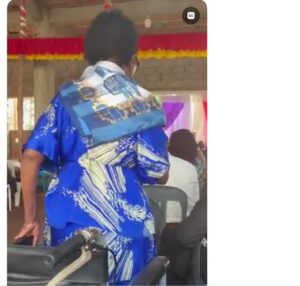
Njala further claimed that Germina used the burial of Karoli’s son as an opportunity to appeal to her son to exercise “mercy and justice.”
However, while the social-media claim has triggered public discussion, the precise court case, pleadings and orders underlying the reported dispute have not yet been independently established from a publicly accessible court record. UgandaToday therefore treats the allegations as reported claims rather than established findings of fact.
A marriage that spanned nearly five decades
Prof. Germina Namatovu Ssemogerere was married to Paul Kawanga Ssemogerere from 1974 until his death on November 18, 2022.
The couple built a remarkable family and professional partnership across nearly half a century.
Germina is an accomplished economist and academic who served as a professor of economics at Makerere University. Her academic career included postgraduate studies in the United States and professional engagements involving international development institutions.
Paul, meanwhile, became one of Uganda’s most prominent opposition politicians, serving as president of the Democratic Party for approximately 25 years and holding several senior government positions.
The couple had five children, although their eldest daughter, Grace Nabatanzi Sendaula, died in 2011. Their children included Karoli Lwanga Ssemogerere, Anna Namakula, Immaculate Kibuuka and Paul Ssemakula.
The political giant behind the family name
Born on February 11, 1932, in Bumangi in the Ssese Islands, Paul Kawanga Ssemogerere rose from an academic background to become one of Uganda’s most influential politicians.
He led the Democratic Party for a quarter of a century and served as Leader of the Opposition between 1980 and 1985.
He subsequently occupied several senior ministerial positions, including Minister of Internal Affairs and Minister of Foreign and Regional Affairs.
Ssemogerere also contested for the presidency, most notably in the 1996 presidential election, when he challenged President Yoweri Museveni.
His political career was closely associated with the struggle for multiparty politics, constitutionalism and democratic governance.
He died at the age of 90 at his home in Rubaga on November 18, 2022.
The woman who stood beside him
Following her husband’s death, Germina emerged as an important custodian of his personal wishes and legacy.
During preparations for his burial, she reportedly opposed a proposed gun salute, explaining that her late husband had not wanted to be associated with guns.
The family’s decision to respect his wishes reflected the relatively private and restrained character that surrounded his final days.
Germina’s own credentials, however, extend far beyond her identity as the widow of a former DP president.
She is a respected economist and academic whose career at Makerere University placed her among Uganda’s accomplished scholars.
Her long marriage to Paul therefore brought together two significant Ugandan intellectual and public-service traditions: academic economics and political leadership.
Enter Karoli Lwanga Ssemogerere
The son at the centre of the reported dispute is Justice Karoli Lwanga Ssemogerere, a lawyer who has gone on to become a High Court judge.
Before joining the Bench, Karoli built an international legal career, practising law in Uganda and the United States.
An earlier profile by New Vision described him as a New York-based attorney who also practised in Kampala. He had worked as a law clerk at the Supreme Court of Uganda and as an assistant lecturer at Makerere University’s Faculty of Law.
His career subsequently took an even more consequential turn.
In March 2025, Karoli was among judges sworn in to the High Court at State House, Entebbe. The Judiciary continues to identify him as Justice Karoli Lwanga Ssemogerere, and in April 2026 he officially flagged off a High Court criminal session at Kajjansi.
He has also served as Resident Judge and Head of Circuit in Kabale.
The transformation from an American-trained lawyer and public commentator to a High Court judge has made Karoli one of the more prominent members of the Ssemogerere family.
A family dispute over an influential man’s legacy?
It is against this background that the reported estate disagreement has attracted attention.
According to the social-media account circulating publicly, the dispute concerns the management of properties belonging to the late Paul Ssemogerere.
The allegation suggests that Germina and her son have ended up on opposing sides of a legal battle concerning the deceased’s property.
Such a dispute would not be unusual in itself. Estates involving land, family homes, businesses and other assets can become complicated, particularly where several beneficiaries and competing interests are involved.
But this case is attracting unusual attention because of who the parties are.
On one side is the widow of one of Uganda’s most respected opposition politicians.
On the other is her son—a lawyer and serving High Court judge.
The emotional appeal at a burial
The social-media post by Simon Kaggwa Njala adds an emotional dimension to the story.
Njala alleged that Germina seized an opportunity during the burial of Karoli’s son to appeal to her son to show her mercy and justice.
If accurately reported, the scene would represent a striking reversal of the formal legal battle allegedly taking place outside the family setting.
A mother pleading with her son at a family burial carries a significance that goes beyond the technical language of succession law.
It raises questions about grief, family relationships, inheritance, responsibility and reconciliation.
However, the exact circumstances of the burial, the identity of the deceased being buried, what Germina said and the precise legal issues between the parties should be established from primary sources before being presented as fact.
What remains unclear
Several crucial questions remain unanswered.
Is there a formal court case involving Germina and Karoli?
What is the case number?
What property or properties are at issue?
Did Paul Ssemogerere leave a valid will?
Who currently holds letters of administration for his estate?
Is the dispute about ownership, administration, distribution or control of particular assets?
And, perhaps most importantly, what exactly is Germina asking the court to do, and what relief is Karoli seeking?
These questions matter because a disagreement among beneficiaries is not necessarily the same thing as a lawsuit by a son against his mother.
Until the court pleadings or an authoritative statement from the parties are available, it would be premature to conclude that Karoli is attempting to dispossess his mother or that Germina is challenging her son’s authority.
A judge caught in a deeply personal family question
The reported dispute is particularly intriguing because Karoli is now a judicial officer.
As a High Court judge, he belongs to an institution whose fundamental responsibility is to resolve disputes according to law.
The Judiciary’s own account of his 2026 activities identifies him as Resident Judge and shows him actively performing judicial duties.
But being a judge does not remove a person from ordinary family relationships.
Judges have parents, siblings, children, estates and personal obligations like everyone else.
The crucial question in this particular matter, therefore, is not simply that Karoli is a judge, but whether the reported family dispute has any implications for his judicial responsibilities or whether it is simply a private succession matter involving him in his capacity as a family member.
That distinction should be maintained carefully.
The Ssemogerere legacy
Paul Kawanga Ssemogerere left behind more than property.
He left a political legacy that spans Uganda’s post-independence political history, the Democratic Party and the country’s long struggle over political pluralism.
His family, meanwhile, represents a remarkable blend of politics, academia, law and public service.
Germina is an accomplished economist and academic.
Karoli is a lawyer and High Court judge.
The late Paul Ssemogerere was a national political figure whose name remains associated with Uganda’s democratic opposition.
That is why any disagreement over his estate inevitably attracts interest beyond the immediate family.
From political succession to family succession
There is an intriguing irony in the Ssemogerere story.
For decades, Paul Ssemogerere participated in Uganda’s political battles over leadership, succession and institutional accountability.
Today, after his death, a different form of succession appears to have brought his family into the public spotlight.
The issue is no longer political power.
It is reportedly the administration of the legacy and property he left behind.
And at the heart of that controversy is the woman who shared his life for nearly five decades and the son who has risen to one of the most respected offices in Uganda’s justice system.
For now, however, the most important unanswered question is what the court record actually says.
Until those records are placed in the public domain, the Ssemogerere estate story remains a developing family and legal controversy—not a concluded judgment about who is right or wrong.