Obote’s Alleged Prophecy 40 Years Later: A Political Ghost That Continues to Haunt Uganda’s Leadership Debate
+256 702 239 337: However, while the quote has circulated widely online, its original source and exact circumstances remain difficult to independently verify. What is certain is that Obote and Museveni’s political journeys are deeply intertwined in Uganda’s turbulent history.

UgandaToday: Obote’s Alleged Prophecy 40 Years Later: A Political Ghost That Continues to Haunt Uganda’s Leadership Debate
By UgandaToday Editorial Desk
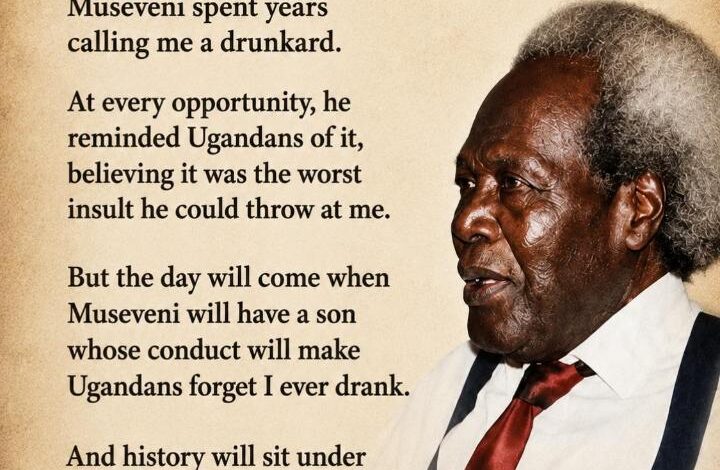
A decades-old statement attributed to former Ugandan President Apollo Milton Obote has resurfaced, sparking renewed debate about political legacy, succession, leadership conduct and the judgment of history.
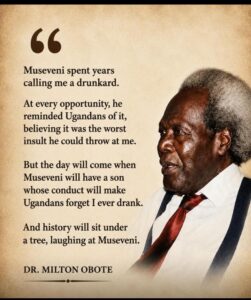
The statement, presented in the attached image, claims that Obote reflected on years of criticism from President Yoweri Kaguta Museveni and suggested that the future would eventually judge the actions of leaders beyond political insults and personal attacks.
However, while the quote has circulated widely online, its original source and exact circumstances remain difficult to independently verify. What is certain is that Obote and Museveni’s political journeys are deeply intertwined in Uganda’s turbulent history.
A Rivalry Born From Uganda’s Revolutionary History
Apollo Milton Obote remains one of Uganda’s most influential and controversial political figures. He served as the country’s first Prime Minister at independence and later became President during two separate periods — 1966–1971 and 1980–1985.
His second presidency ended after growing political instability and military intervention, creating the conditions that eventually saw Yoweri Museveni’s National Resistance Movement take power in 1986.
Museveni’s rise to power was partly built around criticism of previous governments, including Obote’s administration, which the NRM accused of failing to protect citizens and uphold democratic governance.
From Political Accusations to the Court of History
The alleged Obote statement has gained attention because it touches on a recurring theme in African politics — the idea that leaders who criticize opponents may themselves one day face historical judgment.
The quote’s message appears to suggest that political reputations are not determined only by accusations made during a leader’s lifetime, but also by how future generations assess their decisions and the consequences of their rule.
For many Ugandans, the debate connects with wider questions about President Museveni’s nearly four decades in power, his leadership style, and the future direction of the country. Museveni came to power in 1986 and has remained Uganda’s dominant political figure for decades.
Museveni’s Long Rule and the Question of Succession
As Uganda enters another chapter of political discussion, issues of succession and continuity have increasingly shaped national conversations.
Analysts have highlighted growing public debate around the future of Uganda’s leadership, including speculation surrounding the role of First Son and military commander Muhoozi Kainerugaba.
This has revived questions about whether Uganda’s next political transition will follow traditional democratic competition or whether internal succession arrangements will influence the country’s future.
The Irony of Political Memory
History has often shown that political narratives evolve.
Obote, who was once a symbol of independence-era nationalism to some Ugandans, remains a deeply debated figure because of the controversies surrounding his governments. Supporters remember his role in independence politics, while critics point to events during his administrations that shaped Uganda’s conflicts.
Similarly, Museveni’s legacy continues to attract both praise for stability and criticism over governance concerns.
The resurfaced quote attributed to Obote therefore represents more than a personal exchange between two political rivals. It reflects Uganda’s continuing national conversation about power, accountability and the judgment of history.
Forty Years Later: Will History Have the Final Word?
Whether Obote’s alleged words were a genuine prediction, a political reflection, or simply a statement amplified by modern social media, the debate they have generated reveals one enduring truth:
Political leaders may win battles of the present, but the final assessment of leadership is often left to history.
#UgandaToday #PhoenixNewsFeeds #OperaNewsFeeds #UgandaPolitics #MiltonObote #MuseveniLegacy