
Uganda’s Sovereignty Bill: Will Parliament Ignore The Hue and Cry of Economists, Universities, Lawyers and Opposition Warning of National Fallout?
The core issue is no longer whether sovereignty matters. It is whether Uganda can defend sovereignty without legislating fear, uncertainty and institutional contraction. The debate has therefore become not merely about foreign influence, but about the constitutional character of the Ugandan state itself.

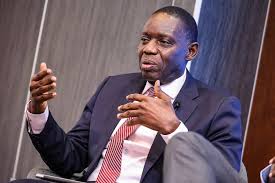

UgandaToday: Uganda’s Sovereignty Bill: Will Parliament Ignore The Hue and Cry of Economists, Universities, Lawyers and Opposition Warning of National Fallout?
Uganda’s proposed Protection of Sovereignty Bill, 2026 has rapidly emerged as one of the most contested pieces of legislation before Parliament, drawing unusually broad opposition from economists, universities, legal bodies, civil society organisations and political actors.
Presented by government as a law intended to shield Uganda from undue foreign influence, the bill has instead triggered concerns that its current wording could criminalise ordinary civic participation, weaken economic confidence, disrupt academic research partnerships and shrink constitutional freedoms. Recent parliamentary hearings have shown that resistance is no longer confined to political opposition alone. It now cuts across finance, academia, legal institutions and development actors.
What the Bill Seeks to Do
The bill proposes a legal framework regulating individuals, institutions and organisations deemed to be acting in the interests of “foreigners” or receiving foreign support in ways considered contrary to Uganda’s national interest.
Critics say the central problem lies in the breadth and vagueness of that language.
Several legal analysts have argued that the definitions are expansive enough to potentially cover civil society groups, advocacy organisations, journalists, universities, researchers, political actors, consultants, international development partners and even ordinary citizens engaged in public discourse.
That breadth, opponents argue, creates room for selective interpretation and politically motivated enforcement.
Bank of Uganda Raises Economic Alarm
One of the most consequential interventions came from Bank of Uganda.
Governor Michael Atingi-Ego reportedly cautioned parliamentary committees that restrictions on foreign financial inflows could unintentionally undermine the economic stability upon which national sovereignty itself depends.
The central bank’s concerns centred on the possible consequences for capital flows, investor confidence, macroeconomic stability and the wider functioning of Uganda’s financial system.
At a moment when Uganda continues to depend heavily on external financing, investment partnerships, development credit and remittance-supported liquidity, financial regulators appear concerned that overly restrictive legal language could create uncertainty in both domestic and international markets.
Uganda’s Banking Sector Warns of Investment Shock
Through the Uganda Bankers Association, the banking industry mounted one of the most structured objections to the bill.
In submissions to government, bankers reportedly argued that the legislation risks disrupting financial intermediation, discouraging foreign investment and slowing economic growth.
Their concern is not merely political.
Banks fear that ordinary international financing arrangements, cross-border transactions, development funding and institutional partnerships could become subject to suspicion or cumbersome regulatory exposure.
That, they argue, could increase compliance risk and reduce Uganda’s attractiveness as an investment destination.
Makerere’s Academic Community Fears Damage to Research and Intellectual Freedom
At Makerere University Academic Staff Association, academic voices have warned that the bill could affect research collaboration, grants, scholarly exchange and international partnerships that sustain higher education.

Ugandan universities have for decades relied on external partnerships to fund public health research, governance studies, agricultural innovation, scientific laboratories, postgraduate fellowships and faculty development.
Critics within academia argue that a law which places broad suspicion on externally supported intellectual collaboration could weaken universities’ ability to produce knowledge, attract global partnerships and retain academic competitiveness.
For universities, the fear is not only about funding — it is about the future of academic autonomy.
Mbarara University and Research Institutions See Risks to Health and Science
Mbarara University of Science and Technology and other research-linked institutions have also been cited among those concerned that the bill may affect health, medical and scientific collaboration.

Uganda’s public health ecosystem — especially work in HIV, tuberculosis, malaria, maternal health and epidemiology — has historically depended on international research partnerships.
Analysts warn that uncertainty surrounding the legal treatment of foreign-supported programmes could interrupt collaborative research pipelines and weaken service delivery in sectors where international support remains central.
Uganda Law Society Calls the Bill Constitutionally Dangerous
The Uganda Law Society has been among the strongest institutional critics.
Lawyers argue that the bill could conflict with constitutional protections relating to freedom of expression, association, participation in public affairs and the right to civic engagement.
Legal commentary has also focused on the danger of vague criminal liability.
Where legal standards are unclear, critics argue, citizens may self-censor not because conduct is unlawful, but because they cannot predict how authorities may interpret the law.
That uncertainty, legal observers say, can itself become a mechanism of political control.
Karuhanga and Senior Legal Voices Warn Against Overreach
Senior lawyer Justus Karuhanga and other legal commentators have argued that the bill reaches beyond legitimate national security concerns.
Their concern is that regulation of foreign influence must be precise, proportionate and constitutionally anchored.
Where the language becomes too broad, they argue, legitimate democratic activity — criticism, advocacy, public policy debate, research and civic organisation — risks being recast as subversion.
That, in the view of several legal analysts, would fundamentally alter the relationship between citizens and the state.
NUP Says the Bill Threatens Political Pluralism
The opposition National Unity Platform has framed the bill as a threat to political competition and democratic space.
Opposition figures argue that Uganda’s civic and political ecosystem already operates under considerable pressure, and that the proposed law could further narrow the space available for organising, advocacy, criticism and citizen mobilisation.
They also warn that the bill’s implications could extend to Ugandans in the diaspora, whose remittances and civic engagement remain economically and politically significant.
Why This Debate Matters Beyond Politics
The current controversy has evolved into a deeper national question.
Can Uganda protect sovereignty without weakening constitutional freedoms?
Can the state regulate foreign interference without harming investment confidence, university research, health partnerships and civic participation?
The unusual breadth of opposition — from bankers, economists, academics, lawyers, universities and political actors — suggests that many Ugandans believe the current draft has not yet convincingly answered those questions.
Parliament Faces a Defining Decision
Parliament now carries the burden of deciding whether to pass, substantially amend or halt the bill.
The core issue is no longer whether sovereignty matters.
It is whether Uganda can defend sovereignty without legislating fear, uncertainty and institutional contraction.
The debate has therefore become not merely about foreign influence, but about the constitutional character of the Ugandan state itself.
#UgandaToday #PhoenixNewsFeeds #OperaNewsFeeds #SovereigntyBill #UgandaParliament
#CivicSpace