Uganda’s Last Execution and the Shadow of Ssebirumbi
+256 702 239 337: To understand the gravity of this moment, one must revisit Uganda’s last execution in 1999—an event closely tied to the controversial case of Hajji Musa Ssebirumbi and the state’s shifting stance on capital punishment.

UgandaToday: Uganda’s Last Execution and the Shadow of Ssebirumbi
Historical Justice Meets the Ggaba Children Murder Conviction
The sentencing of Christopher Okello Onyum to death for the gruesome murder of four toddlers in Ggaba has reignited a long-dormant national debate: Will Uganda carry out another execution?

To understand the gravity of this moment, one must revisit Uganda’s last execution in 1999—an event closely tied to the controversial case of Hajji Musa Ssebirumbi and the state’s shifting stance on capital punishment.
The Last Execution: Luzira, 1999
Uganda’s most recent executions were carried out in April 1999, when 28 condemned prisoners were hanged at Luzira Maximum Security Prison.
This mass execution remains the last confirmed instance in which the Ugandan state enforced the death penalty. It was undertaken with the approval of President Yoweri Museveni, marking a decisive moment in the country’s criminal justice history.
Among those executed was Hajji Musa Ssebirumbi, whose case had become emblematic of post-conflict accountability.
The Ssebirumbi Case: Crimes Rooted in War
Ssebirumbi’s conviction stemmed from the violent political turbulence of the early 1980s, particularly during the Luweero Triangle conflict.
He was found guilty of murdering five civilians who had allegedly refused to disclose the whereabouts of National Resistance Army (NRA) fighters. At the time, suspicion and retaliation defined interactions between civilians and armed groups, often with fatal consequences.
His crimes were therefore not just criminal—they were deeply political, tied to the broader context of Uganda’s liberation struggle.
Arrest, Trial and Conviction
Following the NRA’s rise to power in 1986, efforts were made to pursue justice against individuals accused of atrocities under previous regimes.
- Ssebirumbi was arrested and brought before the courts in 1989
- He was tried and convicted of multiple counts of murder
- The court sentenced him to death by hanging, Uganda’s legal method of execution
His trial reflected the era’s justice system—one focused on retribution and state consolidation, with limited emphasis on the procedural safeguards that define modern human rights jurisprudence.
Execution and the Group Hangings
Ssebirumbi was executed in 1999, nearly a decade after his conviction, as part of a mass execution involving 28 inmates.
These executions were intended to:
- Demonstrate the state’s resolve against violent crime
- Clear the growing backlog of death row inmates
- Reinforce deterrence
However, they also drew sharp international criticism, particularly from human rights organizations that questioned both the scale and transparency of the process.
A Turning Point in Uganda’s Justice System
The backlash from the 1999 executions marked a significant shift in Uganda’s legal trajectory.
Subsequent reforms included:
- The landmark Attorney General v Susan Kigula & 417 Others ruling
- Abolition of the mandatory death penalty
- Recognition that prolonged stays on death row could justify sentence commutation
Since then, Uganda has continued sentencing convicts to death—but has not carried out executions, effectively establishing a de facto moratorium.
The Ggaba Murders: A New Test Case
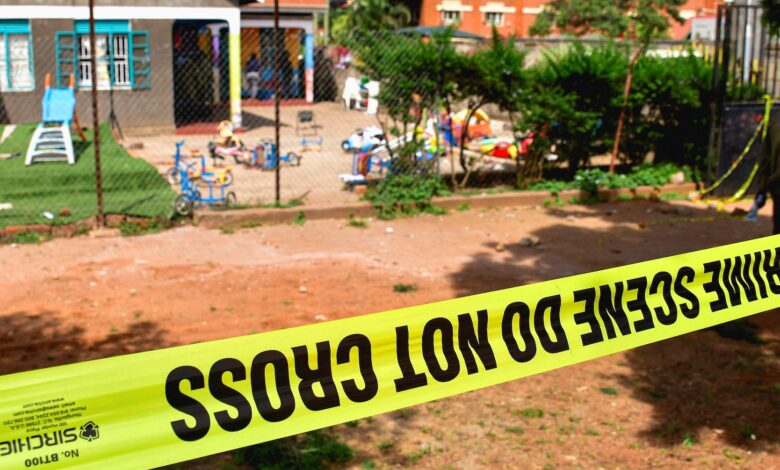
In April 2026, Christopher Okello Onyum was convicted of murdering four toddlers at a daycare centre in Ggaba, a suburb of Kampala.
Court findings revealed:
- Evidence of premeditation, including disturbing digital searches
- A rejected insanity defence
- Confirmation that the killings were deliberate and calculated
The case has shocked the nation due to:
- The extreme vulnerability of the victims (aged 2–3 years)
- The brutality and speed of the attack
- Widespread public outrage demanding the harshest punishment
Will Another Execution Be Carried Out?
This remains the defining question.
Historical Pattern
President Museveni last signed death warrants in 1999. Since then, despite continued judicial death sentences, no executions have been authorized.
Legal Framework
Uganda still retains capital punishment for:
- Murder
- Terrorism
- Aggravated robbery
However, executions require presidential approval, exercised under the prerogative of mercy.
Justice vs Restraint: The National Dilemma
Arguments for execution:
- Public demand for justice
- Severity and cruelty of the crime
- Perceived deterrent effect
Arguments against execution:
- Uganda’s long-standing non-execution practice
- International human rights obligations
- Risk of reversing decades of legal reform
Likely Outcome: A Sentence in Limbo
Based on precedent, Uganda is more likely to:
- Maintain the death sentence
- But delay or commute execution indefinitely
This reflects a legal paradox:
The death penalty exists in law, but not in practice.
Conclusion: A Defining Moment for Uganda
The execution of Ssebirumbi in 1999 symbolized the end of an era in which capital punishment was actively enforced.
The conviction of Christopher Okello Onyum may not necessarily signal a return to executions—but it has undoubtedly reopened a critical national conversation.
Uganda now faces a profound question:
Will it reaffirm restraint, or re-embrace capital punishment in its most final form?
The answer will shape not only one man’s fate, but the future of justice in Uganda.
#UgandaToday #PhoenixNewsFeeds #OperaNewsFeeds #DeathPenaltyUG #JusticeDebate #GgabaMurders