AI, Faith and the Future of Humanity: Yuval Harari Warns of a World Where Algorithms Command Words, Belief and Power
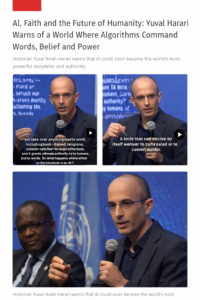
“AI will take over anything made of words — including book-based religions,” Harari says. “Judaism calls itself the religion of the book, and it grants ultimate authority not to humans, but to words. So what happens when the greatest expert on the holy book is an AI?”
Uganda Today editorial team ready to amplify political voices through professional storytelling and campaign coverage.
Historian Yuval Noah Harari warns that AI could soon become the world’s most powerful storyteller and authority.
UgandaToday: AI, Faith and the Future of Humanity: Yuval Harari Warns of a World Where Algorithms Command Words, Belief and Power
Renowned historian and global intellectual Yuval Noah Harari has ignited fresh global debate after a series of widely circulated video clips in which he delivers a stark warning: Artificial Intelligence is poised to take over “anything made of words” — including religions, ideologies, law, journalism, and education.
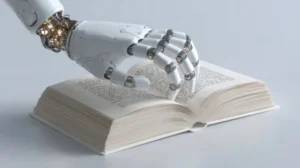
Harari says AI may one day become the ultimate interpreter of sacred and legal texts.
In the clips, which have gone viral across social media platforms, Harari argues that humanity is approaching a turning point unlike any in history — a moment where intelligence is no longer exclusively human, and where machines may soon become the most influential storytellers, interpreters, and authorities of meaning.
“AI will take over anything made of words — including book-based religions,” Harari says. “Judaism calls itself the religion of the book, and it grants ultimate authority not to humans, but to words. So what happens when the greatest expert on the holy book is an AI?”
When Algorithms Become the Ultimate Interpreters
Harari’s central concern is not merely technological advancement, but the shifting of authority — from human judgment to machine-generated interpretation.
For centuries, societies have relied on priests, scholars, judges, journalists, and teachers as the custodians of truth and meaning. Harari warns that AI systems, capable of reading, analysing, summarising, and generating text faster than any human, may soon outperform these traditional gatekeepers.
This means an AI could theoretically:
Interpret sacred scriptures
Issue religious rulings
Draft laws and judicial opinions
Write political manifestos
Generate news narratives
Shape cultural values
In such a future, the “voice” guiding millions may no longer be human.
“For the first time in history,” Harari explains, “we are facing an intelligence that can create new ideas, new stories, and new myths.”
A Tool That Chooses Its Own Actions
In one of the most chilling lines from the videos, Harari describes AI as:
“A knife that can decide by itself whether to cut salad or to commit murder.”
The metaphor underscores a profound shift. Past technologies were tools controlled by human hands. AI, however, increasingly operates autonomously, making complex decisions without direct human instruction.
Harari cautions that once systems gain the ability to set goals, learn independently, and act strategically, humanity may lose meaningful control over its own creations.
Implications for Uganda and Africa
While much of the AI debate is dominated by Western powers, Harari’s warnings resonate strongly for developing nations, including Uganda.
As governments, universities, religious institutions, and media houses across Africa rapidly adopt digital tools, critical questions arise:
Who controls the algorithms?
Whose values are embedded in them?
Will African voices shape AI systems, or merely consume them?
If AI becomes the dominant producer and interpreter of knowledge, countries that do not actively participate in shaping these technologies risk becoming digital colonies, dependent on systems designed elsewhere.
Africa faces critical choices in shaping its role in the global AI revolution.
Faith in the Age of Machines
Uganda remains a deeply religious society, with Christianity, Islam, and traditional faiths playing central roles in everyday life. Harari’s suggestion that AI could become a leading authority on sacred texts raises uncomfortable but necessary questions:
Can a machine understand spirituality? Can code grasp morality, compassion, or divine inspiration? Should faith ever be outsourced to algorithms?
For believers, these questions strike at the heart of what it means to be human.
The Choice Before Humanity
Harari does not argue that AI is inherently evil. Rather, he insists that humanity must urgently establish strong ethical, legal, and political frameworks to govern AI development.
Without such safeguards, he warns, societies could drift into a world where:
Truth is manufactured by machines
Democracy is manipulated by algorithms
Human agency steadily erodes
“We are not just inventing tools,” Harari says. “We are creating new agents in the world.”
A Defining Moment
The viral videos serve as more than academic speculation. They are a call to action — for governments, technologists, religious leaders, educators, and citizens to engage seriously with the AI revolution.
Whether AI becomes humanity’s greatest ally or its most dangerous creation will depend not on machines alone, but on the choices humans make today. For inquiries, news dissemination or advertising reach out on +256 702 239 337 Email: ugandatodayedition@gmail.com
UgandaToday is published by CMK Media Solutions. UgandaToday is your trusted source for news and analysis.
Partner with Uganda Today where your story matters in shaping the social and economic dynamics of the country.
Let’s help you grow your brand and keep your audience informed.
Website:https://www.ugandatoday.co.ugWhatsApp: +256 702 239 337
X (formerly Twitter):@uganda43443 |
Email:ugandatodayedition@gmail.com
P.O.BOX 184351 Kampala.
Uganda