From Revolutionary Protest to Permanent Power: Museveni, Elections, and the Mirror of 1980
At the time, Museveni—then leader of the Uganda Patriotic Movement (UPM)—warned Obote that subverting the will of Ugandans through rigged elections would provoke armed resistance. True to that warning, he retreated to the bush in 1981 and launched a protracted guerrilla war in the Luweero Triangle, arguing that electoral theft had extinguished peaceful avenues for political change.

(Embedded Video 1: Museveni on peaceful transfer of power as civilization)
(Embedded Video 2: Museveni on NRM as Uganda’s only governance system)
UgandaToday: From Revolutionary Protest to Permanent Power: Museveni, Elections, and the Mirror of 1980
By UgandaToday | Political Analysis & Opinion
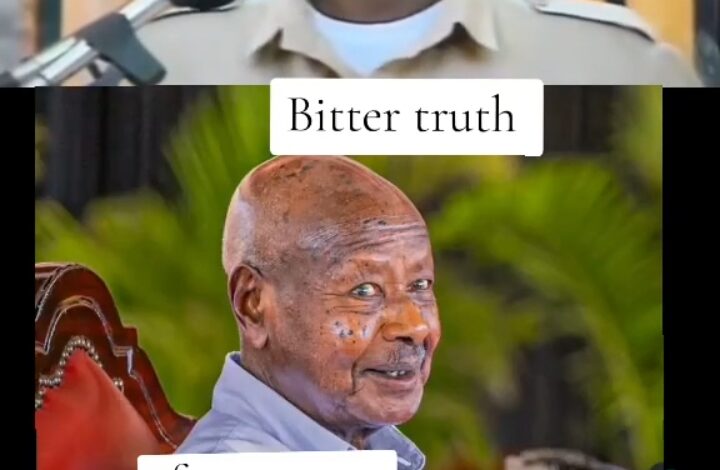
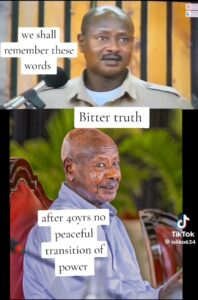
Two archival video clips of President Yoweri Kaguta Museveni, recorded in the early years of his presidency, have resurfaced with renewed relevance as Uganda approaches the January 15, 2026 general elections. In one clip, Museveni asserts that “there won’t be an alternative system of governance for Uganda for a long time other than the NRM.” In another, he declares that “peaceful transfer of power is a form of civilization.”
Taken together—and juxtaposed against Uganda’s current electoral climate—these statements invite a searching national conversation. They raise fundamental questions about power, memory, and whether today’s Uganda reflects the democratic ideals that once animated Museveni’s own rebellion.
The 1980 Election: The Genesis of Armed Protest
Museveni’s ascent to power in 1986 was not accidental nor purely military; it was ideologically anchored in his rejection of what he described as the fraudulent December 1980 general elections. Those elections, which returned Milton Obote and the Uganda People’s Congress (UPC) to power, were widely condemned by opposition actors for systematic malpractice.
At the time, Museveni—then leader of the Uganda Patriotic Movement (UPM)—warned Obote that subverting the will of Ugandans through rigged elections would provoke armed resistance. True to that warning, he retreated to the bush in 1981 and launched a protracted guerrilla war in the Luweero Triangle, arguing that electoral theft had extinguished peaceful avenues for political change.
Museveni’s 1980 Grievances: A Democratic Manifesto
Museveni did not merely protest rhetorically. He formally documented his objections in a detailed protest letter to the Electoral Commission, outlining what he described as grave electoral abuses. These included:
-
Intimidation and violence against opposition supporters
-
Bribery of candidates to withdraw in favour of UPC
-
Gerrymandering and manipulation of constituencies
-
Partisan deployment of the army in electoral processes
-
Compromised electoral officials acting under executive influence
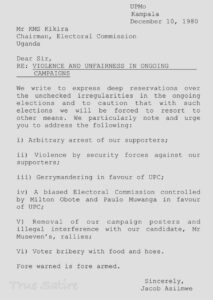
These grievances formed the moral and political foundation of the National Resistance Army (NRA) struggle. The war, Museveni argued, was not a quest for power but a fight to restore the “power of the people.”
2026 Elections: History’s Uncomfortable Echo
As Uganda heads towards the January 15, 2026 presidential and parliamentary elections, the very electoral malpractices Museveni once condemned are again at the centre of national discourse—this time under his own long rule.
Opposition parties, particularly the National Unity Platform (NUP), have documented and decried a pattern of abuses that chillingly mirror the 1980 experience:
-
Violent disruption of campaign activities by security agencies
-
Arrests, abductions, and prolonged detention of opposition supporters
-
Militarization of the campaign environment, with armed forces visibly involved
-
Administrative obstruction, including denial of venues and permits
-
Electoral intimidation at constituency and village levels
What is striking is not merely the recurrence of these vices, but their normalization within a political order that once justified armed rebellion on precisely these grounds.
Power Without Alternation: The NRM Doctrine Revisited
Museveni’s assertion that there would be “no alternative system of governance” beyond the NRM now reads less like a revolutionary prophecy and more like a governing doctrine. Yet this position sits uneasily alongside his own earlier insistence that peaceful transfer of power defines civilization.
If alternation of power is indefinitely deferred, critics argue, then elections risk becoming ritualistic rather than substantive—managed exercises designed to validate permanence rather than choice.
The Moral Paradox of Incumbency
Uganda today confronts a profound moral paradox: a state led by a man who once took up arms against electoral injustice, now accused of presiding over similar injustices—albeit with the authority of incumbency and the full apparatus of the state.
This paradox is not merely personal; it is institutional. It challenges Ugandans to ask whether the revolutionary ideals of 1986 have been fulfilled, betrayed, or transformed into instruments of exclusion.
Conclusion: When the Past Speaks to the Present
The resurfacing of Museveni’s early pronouncements is more than historical curiosity. It is a mirror held up to the present. As Ugandans approach the 2026 polls, the question is no longer what Museveni once believed, but whether the principles that justified his rise to power still hold meaning in contemporary Uganda.
History, after all, has a way of returning—not as repetition alone, but as judgment.
Hashtags
#UgandaElections2026 #MuseveniThenAndNow #DemocracyInUganda #UgandaToday
#PhoenixNewsFeeds #OperaNewsFeeds