From 1980 to 2025: The Unbroken Chain of Electoral Violence in Uganda
Forty-five years later, the complaints documented in that letter echo almost word-for-word the grievances raised in every electoral cycle under President Museveni’s own administration.

UgandaToday: From 1980 to 2025: The Unbroken Chain of Electoral Violence in Uganda
By Uganda Today Political Desk
Introduction: A Letter From 1980 That Mirrors 2025
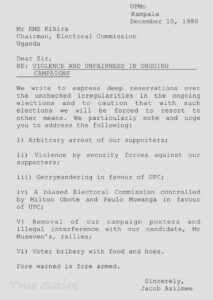
A recently resurfaced 1980 letter attributed to then–UPM leadership—written on behalf of Yoweri Kaguta Museveni—has struck the Ugandan public with a chilling sense of déjà vu.
Addressed to the then Chairman of the Electoral Commission, the letter catalogues a list of electoral irregularities: arbitrary arrests of opposition supporters, violence by security forces, biased electoral management, destruction of campaign materials, and voter bribery.
Forty-five years later, the complaints documented in that letter echo almost word-for-word the grievances raised in every electoral cycle under President Museveni’s own administration. The irony is stark. The same injustices that propelled Museveni into rebellion in 1981 now define the electoral environment supervised by his government.
The Seven Electoral Cycles Under NRM: A Pattern of Intimidation
Since 1996, Uganda has undergone seven presidential elections under NRM rule, and each has been marred by recurring allegations of:
-
Interference by security agencies
-
Intimidation of opposition candidates
-
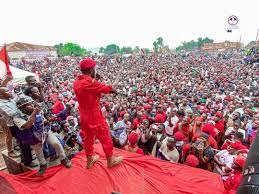
Disruptions of rallies
-
Arrests of campaign agents
-
Restrictive regulations applied selectively
-
Violence during and after campaigns
Opposition actors—from Dr Kizza Besigye to Robert Kyagulanyi Ssentamu—have repeatedly reported conditions nearly identical to those listed in the 1980 UPM letter.
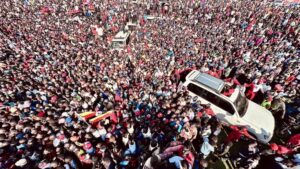
The 2025 Electoral Climate: A Country on Edge
Kiruhura and Western Uganda: Restricted Rallies and Heavy Deployments
Kiruhura—President Museveni’s home district—has once again seen tight restrictions on opposition activities. Reports from observers note:
-
Abrupt cancellation of NUP mobilisation meetings
-
Heavy security presence whenever opposition teams arrive
-
Intimidation of local organisers
This mirrors long-standing allegations that certain districts are treated as “closed zones” for alternative political voices.
Mbarara and Bwizibwera: Running Battles and Blocked Roads
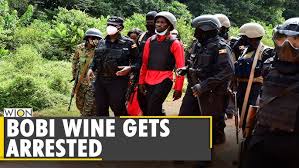
In Mbarara, several opposition activists have faced arrests and temporary detentions during mobilisation drives.
In Bwizibwera, local eyewitnesses have reported multiple incidents where security personnel dispersed gatherings or blocked routes to intended rally venues—reminiscent of the 1980 complaint about illegal interference with campaign activities.
Kawempe: Uganda’s Urban Flashpoint
Kawempe continues to be a hotspot for political tension. Recent confrontations between security forces and NUP youth groups mirror the pressure cooker atmosphere experienced in 2021. Residents regularly describe:
-
Patrols during opposition gatherings
-
Random arrests of supporters
-
Seizure of campaign materials
All these evoke the same frustrations captured in the 1980 text.
Gulu: From Historic Resistance to Present-Day Disruption
Northern Uganda historically supported Obote’s regime, and it is telling that Gulu remains a centre of heightened political surveillance. Kyagulanyi’s efforts to campaign in the region have repeatedly been hindered by roadblocks, last-minute administrative interdictions, and heavy deployments.
Fort Portal: Arrests and Confiscation of Materials
In Fort Portal, NUP coordinators have reported confiscation of campaign posters, disruptions of their town hall meetings, and surveillance of their mobilisers. These practices reflect point by point the 1980 accusations of “removal of campaign posters” and “violence by security forces”.
The 1980 Letter: A Mirror Held Up to Today
The 1980 document faults:
-
Arbitrary arrests
-
Violence against supporters
-
Gerrymandering
-
A biased Electoral Commission
-
Interference with rallies
-
Voter bribery
Except for the names of the actors, little has changed. In 1980, these practices were condemned by Museveni as intolerable infringements that justified radical political action.In 2025, they remain the dominant complaints of nearly every opposition party contesting under his administration.
What This Historical Irony Means for Uganda
The cyclical nature of Uganda’s electoral conflict raises a core question:
Why do the same problems persist under every political arrangement?
Political scientists argue that unless institutions are strengthened, electoral fairness relies heavily on those who wield power. The similarities between the 1980 crisis and the present moment underscore a national need for:
-
An independent, professional Electoral Commission
-
Security forces that enforce order without bias
-
Legal safeguards for political competition
-
Respect for citizens’ freedom of assembly and association
Uganda cannot afford to repeat the same errors across generations.
-
A 1980 complaint letter by UPM leadership highlighting electoral injustices under the Obote government.
Hashtags
#UgandaToday #PoliticalAnalysis #UgandaDecides2025 #ElectoralJustice #DemocracyWatch #CitizenVoices