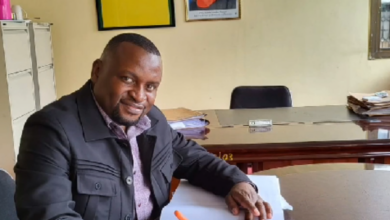

UgandaToday: Who Bears the Cost? Lady Juicy Questions Accountability for Uganda’s Election Internet Shutdown
By Uganda Today Reporter
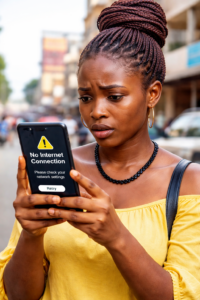
As Ugandans headed into the tense final days of the January general elections, millions invested in internet data bundles—24-hour packages, weekly subscriptions, and Wi-Fi plans—anticipating uninterrupted access for work, business, learning, communication, and civic engagement.
Instead, an abrupt, state-ordered internet shutdown left the country digitally paralyzed. Paid-for data expired unused. Online livelihoods stalled. Communication collapsed. Now, activist and commentator Nabuzaale Barbra, popularly known as Lady Juicy, is asking a question many Ugandans are still grappling with: who is responsible for compensating citizens for the losses incurred during the uncalled-for shutdown?
Paid for Connectivity, Forced into Silence
In her widely shared opinion piece, Lady Juicy recounts the collective frustration of ordinary citizens who had legitimately purchased gigabytes of data only to watch them expire while the nation was forcibly taken offline.
“Like we who had bought our GB and found when all had expired,” she notes, capturing a grievance echoed across households, small businesses, students, mobile money agents, and online workers.
Advertising
For many, the shutdown translated into lost income, missed deadlines, interrupted studies, severed family communication, and stalled businesses—costs that were neither refunded nor acknowledged.
The Constitutional Question: Rights Suspended Without Redress?
Lady Juicy’s critique goes beyond inconvenience. She anchors her argument firmly in Uganda’s 1995 Constitution, specifically Article 29(1)(e), which guarantees every citizen freedom of association, alongside freedoms of expression, assembly, and access to information.
Legal scholars and digital rights advocates have long argued that internet access has become a critical enabler of these freedoms in a modern democracy. By shutting down the internet without judicial oversight or compensatory safeguards, the state effectively suspended constitutionally protected rights, disproportionately burdening citizens.
Any limitation of fundamental freedoms, Lady Juicy argues, must meet the tests of legality, necessity, proportionality, and accountability—standards many believe were absent in this case.
UCC’s Contradictory Signals Before the Blackout
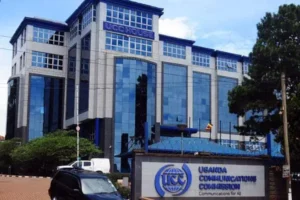
Adding to public anger were contradictory statements issued by the Uganda Communications Commission (UCC) in the days preceding the shutdown. While earlier communications suggested there would be no blanket disruption of internet services, the country was nevertheless plunged into a near-total digital blackout just two days before polling.
This inconsistency, critics say, denied citizens and businesses the opportunity to plan, mitigate losses, or seek clarification—raising further questions about transparency and regulatory responsibility.
Security vs. Citizens’ Livelihoods
Authorities have repeatedly justified election-period shutdowns on grounds of national security and public order. However, Lady Juicy insists that the economic and social costs were almost entirely transferred to the public, with no compensation framework, apology, or post-election accountability.
Small traders lost customers. Online freelancers missed payments. Students were cut off from research and learning platforms. Mobile money agents—critical to Uganda’s cash-light economy—were rendered idle.
“Responsibility cannot be ignored or passed silently,” she asserts. “Any decision that disconnects a nation must come with clear accountability, transparency, and mechanisms to protect citizens.”
Conclusion: Democracy Cannot Thrive in the Dark
In her conclusion, Lady Juicy warns that while internet shutdowns may be framed as temporary security measures, their consequences are lasting and deeply personal.
The loss of data, income, time, and public trust, she argues, should never be treated as acceptable collateral damage in a democratic process. If elections are meant to serve the people, then safeguarding citizens’ rights—both offline and online—must remain paramount.
Going forward, she calls for transparency, public dialogue, legal justification, and alternative security measures that protect both national stability and citizens’ livelihoods—without disconnecting the very population democracy is meant to empower.
Hashtags
#UgandaToday #PhoenixNewsFeeds #OperaNewsFeeds #InternetShutdownUG #DigitalRights #ElectionAccountability
Publisher