UgandaToday: Museveni’s “Indian Ocean” Claim Rile Kenyans: An East African Diplomatic Storm Unfolds
By Uganda Today – Analysis Desk
A Remark That Shook the Region
President Yoweri Kaguta Museveni’s recent assertion—suggesting Uganda “owns the Indian Ocean”—has triggered a wave of sharp reactions across Kenya, igniting online uproar, political debate, regional mockery, and renewed conversation on East Africa’s geopolitical tensions.
From ordinary Kenyans on social media to seasoned legislators and public intellectuals, the response has been swift and unforgiving.
Museveni’s remarks, widely circulated in both Ugandan and Kenyan media, struck a particularly sensitive chord for Kenya, the only country in the immediate region with a major seaport on the Indian Ocean. For many Kenyans, Uganda’s claim was not only geographically inaccurate but bordered on diplomatic disrespect.
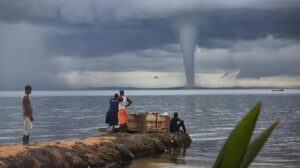
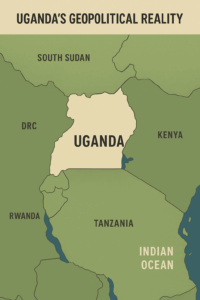
Uganda: The Heart of the Region, Yet Landlocked
Uganda, much like Rwanda, Ethiopia, South Sudan, and Burundi, remains landlocked—dependent on Kenya and Tanzania for maritime access.
This geographical reality means:
-
Uganda has no coastline
Advertising
-
Uganda cannot legally claim territorial maritime space
-
Uganda cannot operate an official naval force under international maritime law
For Kenya, which has invested heavily in the Port of Mombasa for more than a century, Museveni’s comments appeared to trivialize both geography and sovereignty.
Kenyans Respond: A Storm of Sarcasm, Outrage, and Nationalistic Humor
Kenyans—famous for their razor-sharp online humor—unleashed a barrage of reactions:
-
“Next he will say Uganda owns Mount Kenya,” one Kenyan X user wrote.
-
“How can a landlocked country own an ocean?” others mocked.
-
Political commentators accused Museveni of “regional provocation disguised as rhetoric.”
Some Kenyan MPs went further, stating that Uganda’s leadership was now “speaking outside the boundaries of reason.”
Diplomatic Repercussions: What Does This Mean for EAC Unity?
The East African Community (EAC) is undergoing delicate integration processes, including:
-
A proposed political federation
-
Defense cooperation frameworks
-
Shared infrastructure projects
Museveni’s remarks risk derailing ongoing efforts—especially at a time when regional trust is already low due to:
-
Uganda–Kenya trade disagreements
-
Rwanda–Congo tensions
-
South Sudan’s unresolved internal conflicts
Analysts warn that careless geopolitical statements can easily be exploited by critics of regional integration.
Museveni’s Rhetoric: Strategic or a Political Slip?
Ugandan political observers argue that Museveni’s statement may have been:
1. Political Humor Gone Wrong
Museveni often uses metaphor and exaggerated rhetoric in speeches.
2. A Strategic Political Flex
An attempt to portray Uganda as a bold, sovereign actor in regional politics.
3. A Deflection Tool
Used at a time when domestic issues—economic strain, political criticism, and security concerns—dominate Ugandan public discourse. Whatever the intention, the fallout is real.
How Should Uganda Navigate This Controversy?
Experts recommend:
-
A clarification or diplomatic softening of Museveni’s statement
-
Reaffirming respect for Kenya’s territorial rights
-
Emphasizing Uganda’s commitment to EAC stability
-
Avoiding statements that may be misinterpreted in regional politics
Uganda’s biggest economic lifeline—oil exports, trade routes, imports—still depends heavily on Kenya’s Indian Ocean access. Any diplomatic rift could have serious economic implications.
Conclusion: A Storm Over Water Uganda Does Not Own
Museveni’s Indian Ocean claim, whether intentional or rhetorical, has underscored the fragility of East African unity—and the power of words in shaping regional sentiment. While Uganda remains landlocked, its political statements continue to ripple far beyond its borders.
Hashtags
#UgandaToday #MuseveniRemarks #KenyaUgandaRelations #EastAfricaPolitics #EACDiplomacy #RegionalTensions #PhoenixNewsFeeds, #OperaNewsFeeds
Publisher