
How Ugandan Communities Are Turning Trees into Livelihoods
“Conservation cannot succeed if people see it as taking away their land or livelihood,” an ECOTRUST official notes. “When communities are empowered to manage their resources, they become the most effective stewards of the environment.”

UgandaToday: How Ugandan Communities Are Turning Trees into Livelihoods
For decades, conservation in Uganda was framed as a difficult trade-off between protecting nature and supporting human livelihoods. Forest protection often meant restricting access, leaving communities that depended on these ecosystems for survival marginalized and economically strained.
Today, that narrative is steadily evolving. Across the country, conservation is shifting from exclusion to inclusion—recognizing that when communities are empowered, both people and nature can thrive.
From Exclusion to Partnership
At the center of this transformation is Environmental Conservation Trust of Uganda, a not-for-profit organization that has championed community-based conservation since 1999. Its approach is rooted in a simple but powerful idea: communities are not obstacles to conservation—they are its strongest allies.
“Conservation cannot succeed if people see it as taking away their land or livelihood,” an ECOTRUST official notes. “When communities are empowered to manage their resources, they become the most effective stewards of the environment.”
Forests as Economic Assets
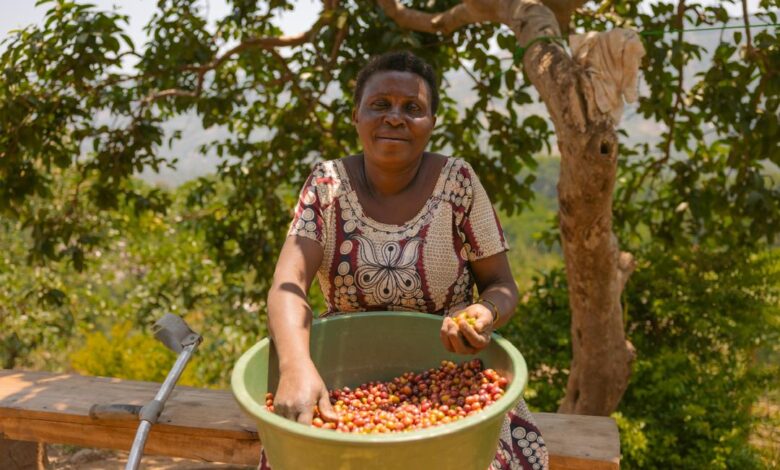
Rather than being viewed as restricted zones, forests are increasingly recognized as sources of sustainable income. Standing forests provide high-value non-timber products such as honey, medicinal plants, and essential oils—many of which command premium prices in international organic and fair-trade markets.
Agroforestry is also gaining traction, with farmers integrating crops like coffee, cocoa, and vanilla under forest canopies. This approach not only diversifies income but also enhances soil fertility, prevents erosion, and reduces reliance on chemical inputs.
In this model, forests are no longer barriers to survival—they are engines of economic opportunity.
Conservation Finance: Turning Nature into Opportunity
ECOTRUST’s innovative Conservation Finance model reframes environmental protection as a viable business opportunity. By organizing communities into structured groups, the model attracts private investment and links local conservation efforts to global markets.
A key mechanism is Payments for Ecosystem Services (PES), where landowners are financially rewarded for maintaining ecological benefits. Through carbon credit systems, communities earn income by preserving and planting trees that absorb carbon dioxide. These credits are then purchased by international companies seeking to offset emissions.
Similarly, biodiversity credits incentivize the protection of wildlife habitats and ecosystems, further expanding income streams for rural households.
Restoration as a Business
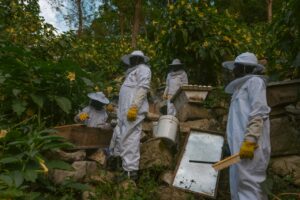
Through these initiatives, many families are establishing “restoration businesses.” Activities such as tree nursery management, sustainable beekeeping, and land restoration are generating consistent income while rehabilitating degraded landscapes.
One of the flagship initiatives, the Trees for Global Benefits programme, has become a global benchmark for community-led carbon offsetting. By combining restoration with performance-based payments, it has restored over 30,000 hectares of land across Uganda.
Reducing Human-Wildlife Conflict
Beyond financial gains, restoration efforts are addressing long-standing challenges such as human-wildlife conflict. By re-establishing forest corridors and mapping animal movement routes, communities are enabling wildlife to move safely without encroaching on farmland.
For many farmers, this has been life-changing. Areas once prone to crop destruction are now more secure, allowing for stable harvests and reduced tension between people and wildlife.
As one farmer reflects, “We are learning to share the forest, not fight it.”
Social and Environmental Gains
The benefits of community-driven conservation extend far beyond income. Participating communities report improved soil health, increased crop yields, and greater resilience to climate change.
Reliable income from forest-based enterprises is also improving social outcomes—children are attending school more consistently, and women, who play a central role in agroforestry and beekeeping, are gaining financial independence and stronger decision-making power within households.
Connecting Local Efforts to Global Markets
ECOTRUST plays a critical intermediary role by linking rural communities to international environmental markets. By facilitating the sale of carbon and biodiversity credits, it ensures that smallholder farmers can benefit from global sustainability initiatives—opportunities once dominated by large corporations and governments.
A Win-Win Future for Uganda
Uganda’s transition from “guarding” nature to partnering with it represents both an ecological and economic breakthrough. It underscores a vital truth: conservation does not have to come at the expense of livelihoods.
When communities are empowered and forests are valued as both ecological and economic assets, the outcome is a sustainable win-win—protecting the environment while securing the future of those who depend on it.
#UgandaToday #PhoenixNewsFeeds #OperaNewsFeeds #ClimateAction #SustainableLivelihoods #ConservationUganda
Error: Contact form not found.