Kampala, Uganda — Political commentator Masudi Abubakar has cautioned Ugandans against dismissing the social media posts of Chief of Defence Forces, Muhoozi Kainerugaba, arguing that his online pronouncements increasingly foreshadow actions on the ground.
In a strongly worded narration gaining traction online, Abubakar contends that what many perceive as casual or controversial tweets by the First Son often evolve into tangible policy directions or enforcement campaigns across the country.
From Tweets to Enforcement: The Kampala Crackdown
Abubakar points to a recent tweet in which Gen. Muhoozi spoke about “cleaning up” the streets of Kampala, insisting that no one would stand in his way. At the time, critics dismissed the remarks as typical social media bravado.
However, in the weeks that followed, authorities intensified operations targeting roadside vendors, kiosks, and informal businesses in Kampala and other urban centres. The demolitions—widely described by affected traders as abrupt and forceful—have left many questioning whether the military chief’s online statements are quietly shaping enforcement priorities.
According to Abubakar, the scale and decisiveness of these operations suggest a command influence that goes beyond routine urban regulation.
“People underestimate Muhoozi’s tweets,” he argues. “But what we are seeing across cities and towns is not accidental—it reflects a directive tone that institutions are compelled to follow.”
A Pattern of Provocative Messaging
Gen. Muhoozi has built a reputation for provocative and unfiltered commentary on X (formerly Twitter), frequently addressing political, social, and even diplomatic issues.
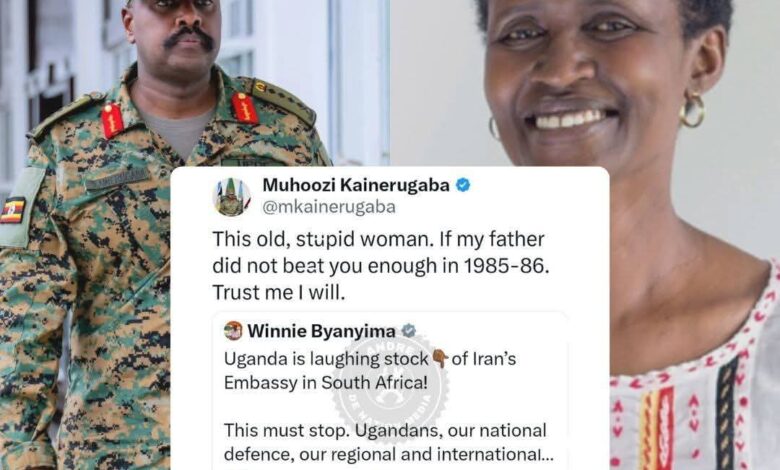
One notable incident involved his remarks directed at Winnie Byanyima, the Executive Director of UNAIDS. In that exchange, Muhoozi referred to Byanyima as “a stupid woman,” sparking widespread criticism from civil society groups and political observers.
The episode underscored the controversial nature of his online persona and raised concerns about the implications of such rhetoric, especially given his powerful position within Uganda’s military establishment.
Fear, Power, and a Shift in Governance Style
Abubakar further claims that a climate of fear within state institutions may be enabling the rapid execution of actions perceived to be aligned with Muhoozi’s statements.
“Everyone fears him, so there are no negotiations like with Yoweri Kaguta Museveni,” he asserts, suggesting a departure from the more consultative—albeit often criticized—approach associated with the current president.
The analyst also links Muhoozi’s style to that of Paul Kagame, whom the Ugandan general has openly admired in past remarks. Kagame’s governance model is often described as disciplined and results-driven, but also strict and uncompromising.
Churches “Next on the Menu”?
Perhaps most controversially, Abubakar references a recent tweet allegedly hinting at increased scrutiny—or action—against religious institutions.
“Next on the menu is churches,” he warns, interpreting Muhoozi’s rhetoric as a signal of broader societal reforms that could extend into sensitive sectors.
While there has been no official policy announcement to that effect, the claim has heightened anxiety among some religious leaders and congregants.
Uganda at a Crossroads?
Abubakar concludes with a stark assessment: that Uganda may already be transitioning into what he calls “Muhoozi’s time,” where authority is asserted more directly and forcefully.
He contrasts this with President Museveni’s long tenure, which he describes as tolerant of systemic decay so long as political stability was maintained.
“Muhoozi is the opposite,” he argues. “He will use brute force to stay in power and to undo the rot his father nurtured.”
A Debate That Continues
As public debate intensifies, analysts remain divided over whether Muhoozi’s tweets are merely personal expressions or indicators of an emerging governance philosophy.
What is increasingly clear, however, is that his digital voice commands attention—and, as Abubakar warns, may carry consequences far beyond the screen.
#UgandaToday #PhoenixNewsFeeds #OperaNewsFeeds #MuhooziTweets #KampalaEvictions #UgandaPolitics