Uganda’s First Oil Edges Closer as EACOP Reaches 91 Per Cent Completion
+256 702 23 93 37: 1,443 Kilometres Towards the Indian Ocean EACOP is a 1,443-kilometre pipeline designed to transport Uganda’s crude oil from Kabaale in Hoima to the Chongoleani Peninsula near Tanzania’s Tanga Port.

UgandaToday: Uganda’s First Oil Edges Closer as EACOP Reaches 91 Per Cent Completion
By UgandaToday Business Desk
Uganda’s long-awaited oil dream is entering a decisive phase, with the East African Crude Oil Pipeline (EACOP) now reported to be approximately 91 per cent complete.
The development is bringing Uganda closer to commercial oil production and exports after years of exploration, construction and debate over the country’s petroleum ambitions.
The Petroleum Authority of Uganda says the overall completion rate of the EACOP project stood at 91 per cent in August 2026.
1,443 Kilometres Towards the Indian Ocean
EACOP is a 1,443-kilometre pipeline designed to transport Uganda’s crude oil from Kabaale in Hoima to the Chongoleani Peninsula near Tanzania’s Tanga Port.
It is being developed as a heated pipeline because Uganda’s crude has characteristics that require it to be maintained at an elevated temperature during transportation.
Once operational, the pipeline will provide Uganda with a route to international markets through Tanzania.
First Oil Draws Near
The latest progress has renewed expectations that Uganda will become a commercial oil-producing country any time from now
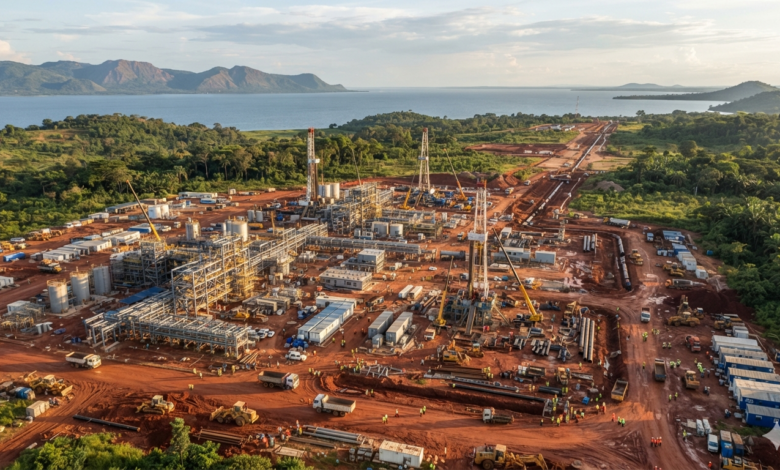
The country’s oil development is centred around the Kingfisher and Tilenga projects in the Albertine Graben.
According to recent reporting, the central processing facility at the Kingfisher project was approximately 99 per cent complete, while EACOP stood at 91 per cent.
What Oil Could Mean for Uganda
For the government, first oil represents the culmination of a project that has been promoted as a major driver of economic transformation.
Oil production is expected to create opportunities in logistics, construction, hospitality, manufacturing and other support industries.
The government also expects petroleum revenues to contribute to infrastructure development and broader economic growth.
But the arrival of oil wealth comes with another responsibility: ensuring that the revenues are transparently and responsibly managed.
The Debt and Revenue Question
Uganda’s oil expectations are arriving at a time when the country is also facing fiscal pressures.
The International Monetary Fund is expected to send a team to Uganda in September for further discussions on a possible new financial-support programme.
The IMF has noted that Uganda’s economy is growing strongly, partly because of expected oil production, but has also highlighted concerns about debt servicing and the country’s fiscal position.
This means first oil could not come at a more consequential moment for the Ugandan economy.
Can Oil Transform Ordinary Ugandans’ Lives?
The biggest question for many Ugandans is whether petroleum wealth will translate into better living standards.
The country has watched other oil-producing nations struggle with corruption, inequality and poor management of natural resources.
Uganda therefore faces a historic choice.
Oil can become a catalyst for industrialisation, infrastructure and jobs—or become another source of political and economic controversy.
The Countdown Continues
With EACOP at about 91 per cent completion, the physical infrastructure required to export Uganda’s crude is nearing the finish line.
The next few months could therefore represent one of the most consequential periods in Uganda’s economic history.
After years of waiting, Uganda is finally approaching the moment when the phrase “first oil” could move from political promise to economic reality.
#UgandaToday #UgandaOil #FirstOil #EACOP #OilAndGas #AlbertineGraben #Hoima #UgandaEconomy #Tanzania #Energy #OilProduction bit.ly/3REw5gR