Rwanda’s Clean-City Lesson: How Tough Plastic Rules and Citizen Action Are Transforming Kigali
+256 702 23 93 37: From Plastic Ban to Behavioural Change A plastic ban on its own cannot create a clean city. Rwanda combined regulation with a broader culture of public responsibility. One of the most visible examples is Umuganda, the country's monthly community work programme. On the last Saturday of every month, communities come together to undertake projects that can include cleaning public spaces, maintaining roads and drainage systems, planting trees and improving community infrastructure.

UgandaToday: Rwanda’s Clean-City Lesson: How Tough Plastic Rules and Citizen Action Are Transforming Kigali
By UgandaToday Reporter
Rwanda has demonstrated that a cleaner African city is not simply the product of geography, wealth or good fortune. It can be the result of deliberate policy, consistent enforcement and citizens taking responsibility for the spaces in which they live.
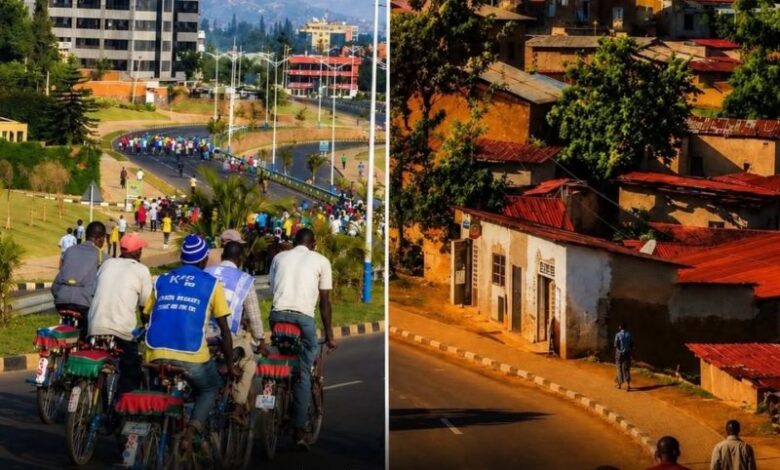
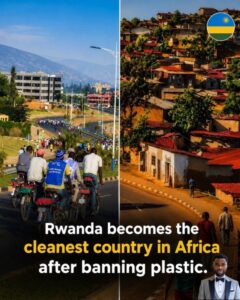
A striking image circulating on social media contrasts the orderly, green and clean streets of Kigali with densely populated neighbourhoods, accompanied by a message declaring: “Rwanda becomes the cleanest country in Africa after banning plastic.”
While the claim that Rwanda is categorically the cleanest country in Africa is broader than the available evidence can establish, the country’s record on plastic control, sanitation and community participation has made it one of Africa’s most frequently cited examples of environmental management.
The experience offers important lessons for Uganda, Ghana and other African countries struggling with plastic pollution and inadequate waste management.
Rwanda Took Decisive Action Against Plastic
Rwanda’s journey did not begin with the pristine streets for which Kigali is now known.
The country introduced a ban on plastic carry bags in 2008, prohibiting their manufacture, importation, use and sale. In 2019, Rwanda strengthened the framework through Law No. 17/2019, extending the prohibition to a wider range of single-use plastic products.
The regulations are backed by enforcement agencies including the Rwanda National Police, customs authorities, the Rwanda Investigation Bureau and the Rwanda Environment Management Authority.
Violations can attract significant penalties. For example, Rwanda’s environmental regulations provide for confiscation and administrative fines for people importing, wholesaling or retailing prohibited plastic products.
This is a critical part of Rwanda’s experience: the policy did not stop at legislation.
From Plastic Ban to Behavioural Change
A plastic ban on its own cannot create a clean city.
Rwanda combined regulation with a broader culture of public responsibility. One of the most visible examples is Umuganda, the country’s monthly community work programme.
On the last Saturday of every month, communities come together to undertake projects that can include cleaning public spaces, maintaining roads and drainage systems, planting trees and improving community infrastructure.
The programme has helped turn cleanliness and community improvement into collective responsibilities rather than tasks left exclusively to municipal authorities.
Recent Umuganda activities have continued to focus on drainage maintenance, environmental protection, hygiene, tree planting and disaster-risk reduction.
Kigali’s Clean Image Has Been Built Over Time
The transformation of Kigali should therefore not be attributed to the plastic ban alone.
The ban has been part of a wider environmental-management approach. Rwanda’s environmental authority says the country’s plastic restrictions were introduced partly because poorly managed plastics contributed to littering, flooding and poor water infiltration.
UNEP has also documented how Rwanda’s 2008 plastic-bag restrictions, enforcement and promotion of alternatives contributed to cleaner streets and reduced plastic pollution.
The result is a city whose cleanliness has become part of its international image.
But behind that image are laws, institutions, enforcement officers, community programmes and, importantly, citizens who have adapted their behaviour.
Ghana’s Plastic Challenge Offers a Different Picture
The comparison with Ghana highlights how difficult the plastic-waste problem can become when consumption, disposal and waste-management systems fall out of balance.
A World Bank environmental analysis found that plastic pollution in Ghana had reached crisis proportions, with large quantities of plastic waste improperly disposed of. The report noted that plastics contribute to clogged drainage systems, pollution and flooding.
This does not mean Ghana lacks environmental policies or citizens concerned about cleanliness. Rather, it illustrates the scale of the challenge facing rapidly urbanising African countries.
Plastic waste that is casually thrown onto streets does not simply disappear. It can be carried into drainage channels, wetlands, rivers and eventually the ocean.
The cost is ultimately borne by communities through flooding, degraded environments, public-health risks and expensive clean-up operations.
The Real Difference Is Enforcement
The lesson from Rwanda is therefore bigger than banning plastic bags.
A government can pass an excellent environmental law, but if nobody enforces it, its impact will remain limited.
Likewise, citizens can participate in occasional clean-up campaigns, but if waste continues to be generated without effective collection, recycling and disposal systems, the problem will return.
Rwanda’s experience points towards a combination of policy, enforcement, infrastructure and public participation.
Its plastic regulations are backed by inspection and penalties, while Umuganda provides a recurring mechanism for citizens to participate directly in community improvement.
Africa Can Learn From the Rwandan Example
There is no single African model that can simply be copied from one country to another. Rwanda’s political, administrative and social circumstances are different from those of Uganda, Ghana, Kenya, Tanzania and other countries.
But the principle is transferable.
Clean cities require governments to establish clear standards, businesses to provide environmentally responsible alternatives, municipalities to maintain effective waste-collection systems and citizens to stop treating public spaces as somebody else’s responsibility.
Rwanda’s experience also shows that environmental protection can create economic opportunities. The Rwandan government says the plastic restrictions have encouraged businesses and cooperatives to produce environmentally friendly alternatives, including paper, cloth and sisal-based products.
The Message for Uganda
For Uganda, the debate over plastic waste is particularly relevant.
Kampala and other rapidly growing urban centres continue to face challenges involving solid waste, drainage, littering and plastic pollution. The Rwandan example invites a broader question: what would happen if environmental laws were accompanied by unwavering enforcement and a culture of collective responsibility?
The answer may not require Rwanda to be copied wholesale.
It may simply require African cities to recognise a basic truth: cleanliness is not achieved by slogans. It is built through rules that are enforced, services that work and citizens who participate.
Rwanda’s story is therefore less about the absence of waste and more about what happens when a country decides that managing waste and protecting public spaces are national responsibilities.
For a continent battling rapid urbanisation and mounting plastic pollution, that may be the most important lesson of all.