Kampala’s Street Trade Order Crackdown Resumption: Between Urban Order And Livelihood Survival
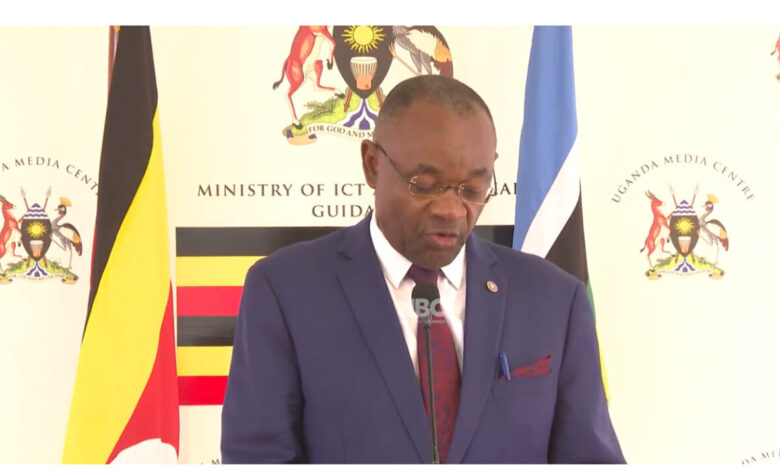
+256 702 239 337: In his recent announcement signaling the resumption of the exercise, Magyezi emphasized that the government would proceed “firmly but humanely,” suggesting that lessons had been learned from the earlier backlash. It is only demolition of Pentecostal churches that will be spared for the time being

UgandaToday: Kampala’s Street Trade Order Crackdown Resumption: Between Urban Order And Livelihood Survival
By Uganda Today Political Desk
Background: The Rise and Resistance of the Trade Order
The enforcement of a sweeping urban trade order aimed at eliminating street vending, demolishing roadside kiosks, and clearing informal structures has once again returned to the national spotlight. Initially rolled out in mid-2023 under the stewardship of the Raphael Magyezi-led Ministry of Local Government, the exercise began in earnest around May–June 2023, with Kampala Capital City Authority (KCCA) taking the lead in Kampala.
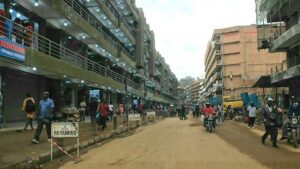
The crackdown sought to restore order in the capital by removing what authorities described as “illegal encroachments” on road reserves, walkways, and public spaces. However, the operation quickly met fierce resistance from vendors, small-scale traders, and sections of the public.
By late June 2023, the enforcement was temporarily suspended following widespread protests, political pressure, and concerns about the humanitarian implications of abruptly displacing thousands of urban poor who depend on street trade for survival.
The Human Cost: Livelihoods on the Line
At the heart of the resistance was a simple but powerful argument: for many Ugandans, street vending is not a choice but a necessity.
From roadside fruit sellers to makeshift kiosk operators, the informal sector sustains a significant portion of Kampala’s population. The abrupt demolitions left many without income, shelter, or alternative means of survival.
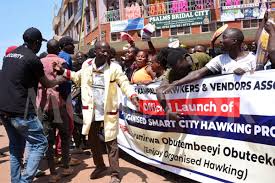
Scenes of confrontation between enforcement officers and traders—some captured in viral videos circulating on social media—highlighted the tension between state authority and citizen desperation.
Government’s Position: Order, Planning, and Modernization
Government officials have consistently defended the exercise as a necessary step toward urban transformation. Authorities argue that unregulated street vending:
- Obstructs pedestrian movement
- Contributes to traffic congestion
- Undermines formal businesses
- Poses public health risks
Minister Magyezi has reiterated that the enforcement is part of a broader strategy to align Ugandan cities with modern urban planning standards.
In his recent announcement signaling the resumption of the exercise, Magyezi emphasized that the government would proceed “firmly but humanely,” suggesting that lessons had been learned from the earlier backlash. It is only demolition of Pentecostal churches that will be spared for the time being
Political Undertones: A Balancing Act
Beyond urban planning, the saga carries significant political weight.
The crackdown has exposed a delicate balancing act for the government—between enforcing order and maintaining political goodwill among urban voters, many of whom operate within the informal economy.

Opposition figures and civil society actors have criticized the exercise as heavy-handed and insensitive, accusing authorities of targeting the poor while failing to provide viable alternatives.
At the same time, sections of the business community and middle-class residents have welcomed the initiative, citing the need for cleaner, more organized urban spaces.
The Suspension: A Tactical Retreat
The June 2023 suspension was widely interpreted as a tactical retreat rather than a policy reversal. It followed:
- Public outcry and protests
- Media coverage highlighting human suffering
- Political pressure from various stakeholders
During the suspension period, government pledged to engage stakeholders and explore relocation strategies, including designated markets and structured vending zones.
However, implementation of these alternatives has remained uneven and, in some cases, inadequate.
Resumption of Enforcement: What Has Changed?
With the renewed push announced by Minister Magyezi, critical questions arise:
- Have alternative trading spaces been sufficiently prepared?
- Will enforcement be more consultative this time?
- Can the state avoid a repeat of past confrontations?
Early indications suggest that authorities intend to adopt a more phased and coordinated approach, though skepticism remains high among affected communities.
VIDEO: Street-Level Reality of the Crackdown
A tense standoff between enforcement officers and street vendors during the initial phase of the crackdown in Kampala.
The Broader Question: Whose City Is It?
The ongoing saga raises fundamental questions about urban governance in Uganda:
- Who has the right to occupy and use city spaces?
- How can cities modernize without excluding the poor?
- What is the role of the informal economy in urban planning?
As Kampala and other cities grapple with rapid urbanization, the answers to these questions will shape not only policy outcomes but also social cohesion.
Conclusion: A Test of Policy and Compassion
The resumption of the trade order enforcement marks a critical moment for Uganda’s urban policy. Its success—or failure—will depend not only on enforcement strength but also on the government’s ability to balance discipline with empathy.
Without inclusive solutions, the risk remains that the cycle of enforcement, resistance, and suspension will simply repeat itself.
#UgandaToday #PhoenixNewsFeeds #OperaNewsFeeds #KampalaCrackdown #UrbanGovernance #StreetVendorsUG