How Community-Led Forest Restoration is Rebuilding Livelihoods in Uganda
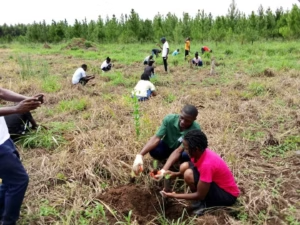
In areas like Masindi, Mubende, and parts of Eastern Uganda, degraded landscapes once symbolized economic desperation. But today, local communities—supported by NGOs and government programmes—are restoring forests through:

UgandaToday: How Community-Led Forest Restoration is Rebuilding Livelihoods in Uganda
🌳 Introduction: A New Story Emerging from Uganda’s Forests
Across Uganda, a quiet transformation is taking root—literally. In districts once defined by deforestation and environmental degradation, communities are now turning to forest restoration as a pathway to economic survival and resilience.
What was once seen as a trade-off between conservation and livelihoods is rapidly evolving into a powerful truth:
protecting forests can generate income, strengthen communities, and combat climate change simultaneously.
🌱 From Degradation to Regeneration
Uganda has lost a significant portion of its forest cover over the past decades due to:
- Charcoal burning
- Agricultural expansion
- Illegal logging
In areas like Masindi, Mubende, and parts of Eastern Uganda, degraded landscapes once symbolized economic desperation. But today, local communities—supported by NGOs and government programmes—are restoring forests through:
- Tree planting initiatives
- Assisted natural regeneration
- Community forest management systems
These approaches fall under what experts call Nature-Based Solutions (NbS)—using nature itself to solve environmental and social challenges.
💼 Turning Trees into Income
For many rural households, forest restoration is no longer just about conservation—it’s about income generation.
Key livelihood opportunities emerging:
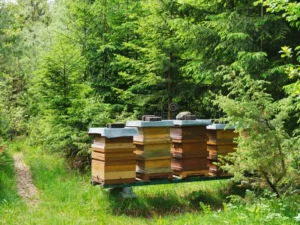
🌿 1. Beekeeping
Restored forests provide ideal habitats for bees, enabling communities to produce:
- Honey
- Beeswax
- Propolis
Beekeeping requires minimal land and offers quick financial returns, especially for women and youth groups.
🌾 2. Agroforestry
Farmers are integrating trees with crops such as:
- Coffee
- Bananas
- Beans
This improves:
- Soil fertility
- Crop yields
- Climate resilience
Farmers practicing agroforestry report more stable incomes even during drought seasons.
🌳 3. Timber and Non-Timber Products
Sustainably managed forests produce:
- Timber
- Fruits
- Medicinal plants
These diversify household incomes while maintaining ecological balance.
👩🌾 Women at the Center of Change
Women, often the most affected by environmental degradation, are now leading restoration efforts.
Through savings groups and cooperatives, women are:
- Managing tree nurseries
- Producing seedlings
- Selling forest-based products
This has led to:
- Increased household income
- Improved food security
- Greater financial independence
🌍 Climate Impact: Forests as Carbon Sinks
Restored forests play a critical role in:
- Absorbing carbon dioxide
- Regulating rainfall patterns
- Preventing soil erosion
In the face of climate change, these ecosystems act as natural shields, protecting both people and agriculture.
📊 The Economics of Restoration
Emerging evidence shows that:
- Every dollar invested in forest restoration can yield multiple economic returns
- Communities involved in restoration experience improved resilience to shocks
This challenges the long-held perception that conservation is costly.
🏢 Business Opportunity in Forests
Private sector players are beginning to recognize forests as:
- Carbon credit opportunities
- Sustainable supply chains
- Corporate social responsibility investments
Companies linked to:
- Coffee
- Agriculture
- Tourism
are increasingly investing in forest-friendly practices.
⚠️ Challenges That Remain
Despite progress, challenges persist:
- Land tenure conflicts
- Limited financing
- Weak enforcement of environmental laws
Without addressing these, gains could be reversed.
🔮 The Future: Scaling What Works
Experts argue that Uganda must:
- Scale community-led restoration models
- Invest in green financing
- Strengthen policy support
If properly supported, forest restoration could become:
a cornerstone of Uganda’s green economy
#UgandaToday #Biodiversity #ClimateAction #NatureBasedSolutions #GreenEconomy #FoodSecurity