Ssemakadde Raises Constitutional Questions Over Presidential Pardon of Hajji Ssebuufu
+256 702 239 337 Mercy or Misapplication? Legal Debate Emerges. “Article 121 vests the prerogative of mercy in the President. That power is not ornamental; it is constitutional. However, it is also not imperial,” Ssemakadde stated.



UgandaToday: Ssemakadde Raises Constitutional Questions Over Presidential Pardon of Hajji Ssebuufu
Mercy or Misapplication? Legal Debate Emerges
The President of the Uganda Law Society, Isaac Ssemakadde, has raised weighty constitutional concerns following the presidential pardon granted to Hajji Muhammad Ssebuufu, a convicted prisoner identified as Prisoner No. 489.
In a pointed constitutional critique, Ssemakadde clarified that while the prerogative of mercy is firmly established under Article 121 of the 1995 Constitution of Uganda, its application must meet the standards of transparency, accountability, and fidelity to justice.
“Article 121 vests the prerogative of mercy in the President. That power is not ornamental; it is constitutional. However, it is also not imperial,” Ssemakadde stated.
Constitutional Power, Not Imperial Authority
Under Article 121 (1) (a) of the 1995 Constitution, the President of Uganda is empowered to grant pardons on the advice of the Advisory Committee on the Prerogative of Mercy.
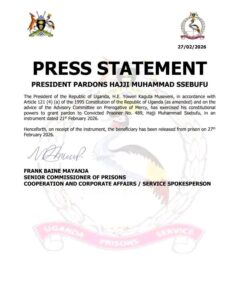
According to an official press statement issued by the Uganda Prisons Service and signed by Senior Commissioner of Prisons Frank Baine Mayanja, President Yoweri Kaguta Museveni exercised this constitutional mandate to pardon Hajji Muhammad Ssebuufu in an instrument dated 21st February 2026. The beneficiary was subsequently released on 27th February 2026.
(See attached press statement below.)
However, Ssemakadde argues that the issue is not whether the President has the power — but how that power is exercised.
Questions the Public Deserves Answered
The Uganda Law Society President emphasized that the prerogative of mercy exists to:
-
Cure miscarriages of justice
-
Temper harshness with humanity
-
Serve the broader public interest
He warned that it must not become:
-
A political tool
-
A mechanism for selective absolution
-
An instrument that undermines judicial consistency
“When high-profile convicts are pardoned, the public is entitled to clarity,” Ssemakadde stated, posing critical questions:
-
What were the grounds for the pardon?
-
What advice was tendered by the Advisory Committee?
-
Was there evidence of rehabilitation, ill-health, or compelling humanitarian justification?

Transparency and the Integrity of Constitutional Democracy
Ssemakadde stressed that constitutional democracy is sustained not merely by written provisions, but by the integrity with which those provisions are exercised.
“Mercy without transparency risks looking like impunity. Power without explanation invites suspicion. And justice without consistency erodes public confidence,” he cautioned.
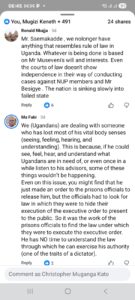
The statement has sparked broader public debate, including social media reactions questioning the state of the rule of law and the independence of institutions.
Broader Implications for Rule of Law
Critics argue that the manner in which presidential pardons are communicated and justified affects public trust in both the Executive and the Judiciary.
While the Constitution grants the President authority to exercise mercy, Ssemakadde maintains that the same Constitution implicitly demands accountability in the execution of that power.
“The Constitution grants mercy — but it also demands accountability,” he concluded.
#UgandaToday #PhoenixNewsFeeds #OperaNewsFeeds #RuleOfLaw #Constitutionalism #Overcomer