Should the African Union and Global Community Enforce Presidential Term Limits in Africa?
Opposition in Shackles Across these countries, opposition politics is fraught:

UgandaToday:
Should the African Union and Global Community Enforce Presidential Term Limits in Africa?
For decades, Africa has stood at a crossroads—torn between democratic aspirations and entrenched authoritarianism. The debate over presidential term limits has never been more urgent. Across the continent, leaders who once championed liberation and reform have become architects of constitutional manipulation, entrenching themselves in power while silencing dissent.
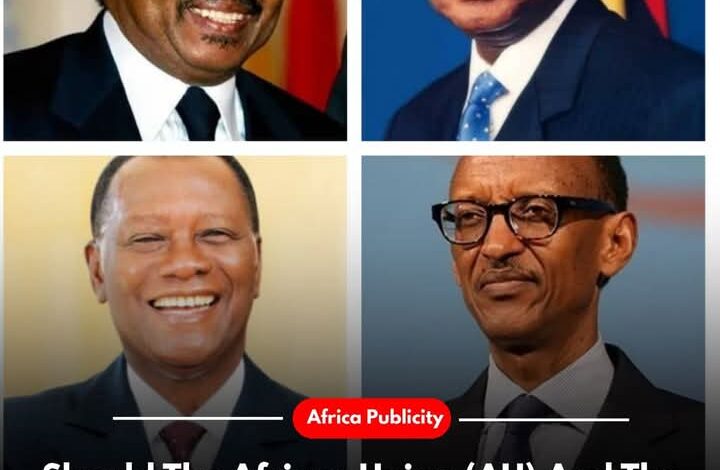
At the heart of the debate is whether the African Union (AU) and the international community should step in to enforce term limits in Africa, where leaders like Yoweri Kaguta Museveni (Uganda), Paul Kagame (Rwanda), Alassane Ouattara (Côte d’Ivoire), and Paul Biya (Cameroon) have stretched, altered, or outrightly dismantled constitutional safeguards designed to prevent life presidencies.
The Leaders Who Outstayed Their Welcome
Yoweri Kaguta Museveni – Uganda
Museveni came to power in 1986, after a five-year guerrilla war against Milton Obote and Tito Okello’s governments. Initially hailed as a liberator, he promised a “fundamental change” and castigated leaders who “overstayed their welcome.” Four decades later, Museveni remains in power, having abolished term limits in 2005 and scrapped the presidential age limit in 2017.
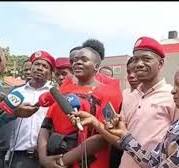
Opposition politicians such as Dr. Kizza Besigye and Robert Kyagulanyi (Bobi Wine) have faced arrests, beatings, abductions of their supporters, and draconian laws aimed at silencing dissent. Uganda’s elections are marred by intimidation, internet shutdowns, and widespread claims of fraud.
Paul Biya – Cameroon
If there is a poster child for “sit-tightism,” it is Paul Biya. He has been in power since 1982, making him Africa’s second-longest-serving leader after Equatorial Guinea’s Teodoro Obiang Nguema. In 2008, Biya engineered a constitutional amendment scrapping term limits, clearing his way to rule indefinitely.
Cameroon’s opposition is battered by repression, while dissenters often face enforced disappearances. Today, at 91 years old, Biya still clings to power, often ruling from abroad as the country grapples with an ongoing Anglophone crisis marked by violence and human rights abuses.
Paul Kagame – Rwanda
Kagame rose to prominence as the commander of the Rwandan Patriotic Front (RPF), which ended the 1994 genocide. In 2000, he became president. Though initially lauded for restoring stability and championing Rwanda’s economic progress, Kagame has been accused of turning Rwanda into a one-man state. In 2015, a controversial referendum allowed him to potentially stay in power until 2034.
Opposition figures like Victoire Ingabire have faced imprisonment, while dissidents abroad—such as Patrick Karegeya—have been mysteriously assassinated. Civil society operates under a climate of fear, and elections are often characterized by near-total victories for Kagame—raising questions about their credibility.
Alassane Ouattara – Côte d’Ivoire
Ouattara, once celebrated as a technocrat and reformer, came to power in 2010 after a violent post-election crisis that claimed more than 3,000 lives. After completing two constitutional terms, he initially announced he would step down in 2020. However, citing the death of his successor, Ouattara declared himself eligible under a new constitution and sought a third term. This triggered widespread protests, in which dozens were killed and hundreds arrested.
His critics accuse him of deepening Côte d’Ivoire’s divisions by bending constitutional rules for personal ambition.
Opposition in Shackles
Across these countries, opposition politics is fraught with:
-
Torture and abductions of government critics.
-
Unjustified laws that criminalize protests, media freedom, and assembly.
-
Intimidation of rivals through arrests, fabricated charges, and prolonged detentions.
-
Election rigging through compromised electoral commissions, ballot stuffing, and restricted campaigns.
The message is clear: democracy is tolerated only when it does not threaten incumbents’ grip on power.
The Case for Enforcing Term Limits
Supporters of externally enforced term limits argue that:
-
AU’s Credibility is at Stake – The AU Charter on Democracy, Elections, and Governance condemns unconstitutional changes of government, yet the body remains silent on leaders who manipulate constitutions for life presidencies.
-
Peace and Stability – Endless presidencies fuel unrest, as seen in Côte d’Ivoire, Uganda, and Cameroon, where disputed elections have triggered protests and bloodshed.
-
Africa’s Image Abroad – Authoritarian leaders undermine Africa’s global standing, discouraging foreign investment and making democracy look fragile.
-
Generational Leadership – Without term limits, Africa risks recycling leaders into their 80s and 90s while sidelining a new generation of leadership.
But Should the AU and Global Powers Interfere?
Skeptics caution that external enforcement may infringe on sovereignty. They argue that change must come from within African societies. Yet, critics counter that sovereignty should not be a shield for tyranny. The AU has acted decisively against coup plotters—suspending countries like Mali and Niger—yet has failed to censure leaders who subvert democracy under the guise of legality.
A Continental Crossroads
The battle over term limits is, at its core, a struggle over Africa’s democratic soul. Will the AU and international community muster the courage to confront leaders who cling to power at all costs? Or will they continue to issue tepid statements as constitutions are shredded and opposition voices silenced?
For now, one truth is evident: as long as leaders like Museveni, Kagame, Ouattara, and Biya continue to bend rules, Africa’s dream of democratic renewal will remain elusive.